

Raila Responds to Ruto's Proposal to Create Office of Opposition Leader
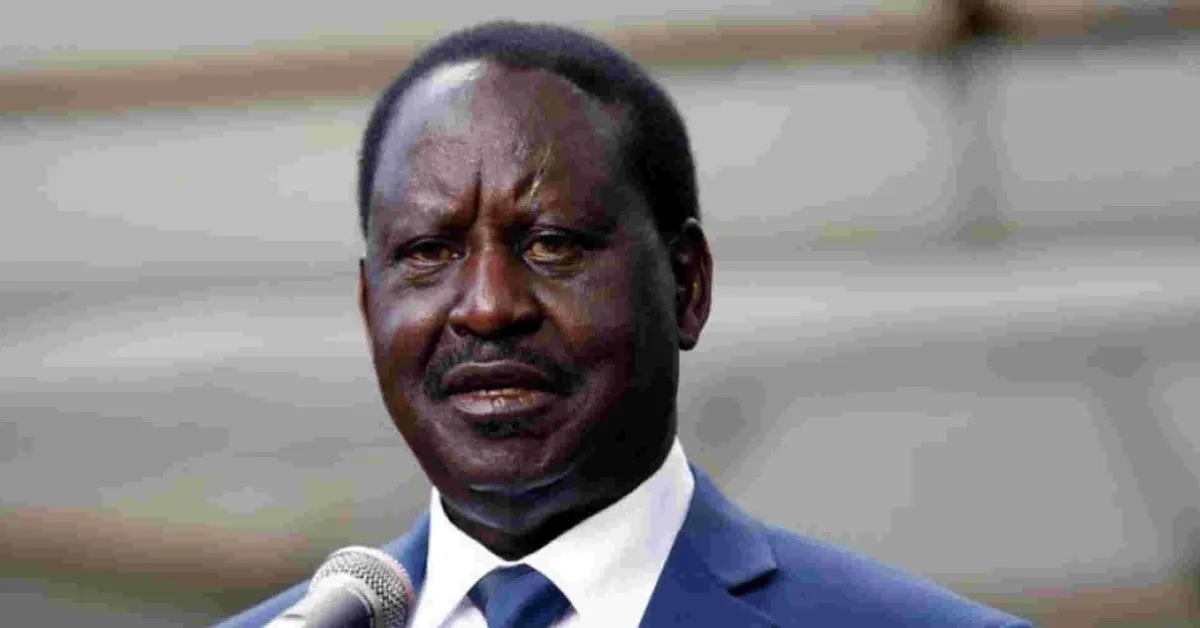
Azimio la Umoja One Kenya coalition leader Raila Odinga has hit out at President Ruto over his proposal to amend the Constitution to create the office of the official opposition leader.
In a statement on Sunday, Odinga said the proposal by Ruto to make changes to the Constitution seeks to re-introduce the same matters that the Building Bridges Initiative (BBI), which he opposed, had suggested.
“The memorandum of President William Ruto to the speakers of both the National Assembly and the Senate proposing several amendments of the Constitution of Kenya is puzzling to many Kenyans and myself as it undoubtedly seeks to re-introduce the same matters that had for many months been suggested by the BBI,” said Odinga.
"For a similar period, the same had been vehemently opposed by Mr. Ruto when he went around the country campaigning in the years 2018-2021. Ruto has appropriated the views of these people and speaks of the proposals as his own…”
“Had Mr. Ruto been honest about the BBI proposals, everything he has suggested in his memorandum would be law today," he added.
Odinga further pointed out Ruto’s proposals cannot be presented as he has done or processed through the steps he is laying out, citing the Supreme Court verdict on the BBI, which declared that a sitting president cannot propose a constitutional amendment.
"I will not be hypocritical about his memorandum as far as the content of the proposals is concerned because these are in truth BBI proposals. However, they cannot be presented as he has done nor can they be processed through the procedure that he is prescribing.”
"All proposals for amendments of the Constitution must start with the people. The amendments must chiefly centre on the interests of the common mwananchi," Odinga added.
In a memorandum to Parliament on Friday, Ruto urged MPs to consider amending Chapter 9 of the Constitution to establish the office of official leader of the opposition, whose functions will be provided for in subsequent laws enacted by the House.
He argued that such an office would institutionalize governance, strengthen oversight and deepen democracy in the country.















Comments
I would rather go to bed…
Permalink
I would rather go to bed with a self proclaimed prostitute than screw a hypocritical nun. Which of the 2 prostitutes do you Kenyans in the motherland think fits Ruto?
You'll get AIDS if you Sleep…
Permalink
In reply to I would rather go to bed… by MakOnyango (not verified)
You'll get AIDS if you Sleep with him😁.
William Ruto has nothing to…
Permalink
William Ruto has nothing to offer Kenyans.
He has filled the government of Kenya with criminals. He’s a disgrace.
Raila is losing it again. He…
Permalink
Raila is losing it again. He says if Ruto was honest, Bbi contents would be law by now. While at the same time he claims that Ruto cannot propose a constitution change since it’s unconstitutional. Well if Ruto was honest then during Bbi, it still would be unconstitutional.
WSR was not opposed to all content in BBi but only the kangaroo intention of extending a seating president’s expired term.
Parliament has a constitutional mandate to amend laws as needed.
Trying to catch and tame big…
Permalink
Trying to catch and tame big fish with goodies.
Add new comment