
Opposition to Submit ICC Petition Against Ruto Over Protest Violence
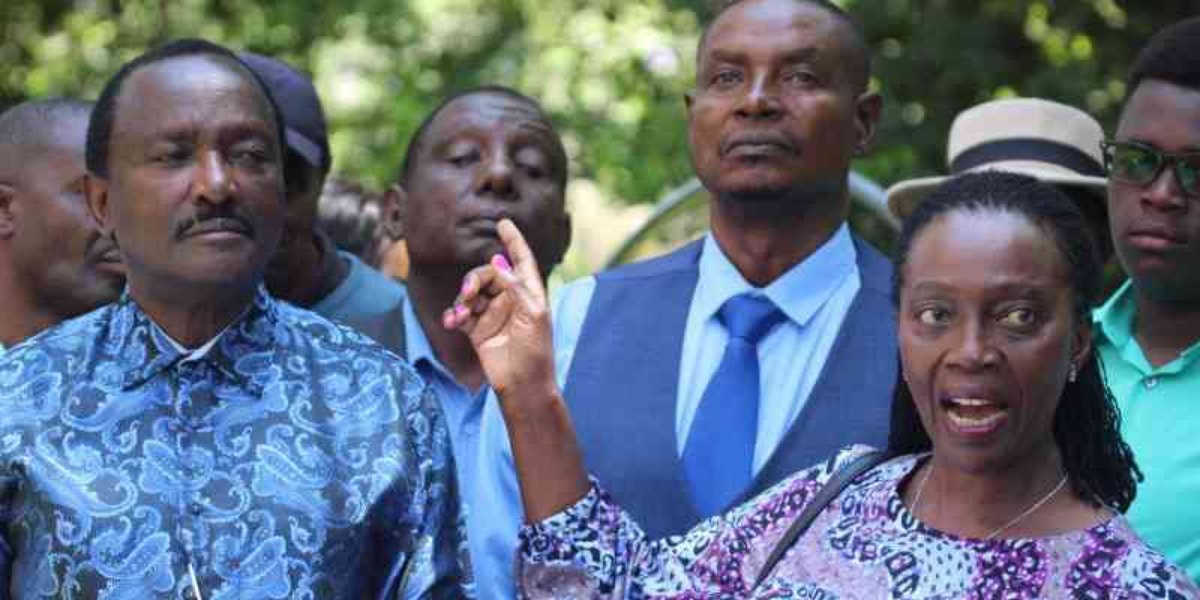
Kenya's political stability faces mounting pressure as opposition leaders intensify their criticism of President William Ruto's government, with accusations of crimes against humanity being prepared for submission to the International Criminal Court (ICC).
The announcement, made on June 18 by a coalition of opposition figures, has heightened scrutiny over recent police responses to protests and ignited debates about human rights and democratic governance within the country. The alliance, comprised of Martha Karua, Kalonzo Musyoka, Rigathi Gachagua, Justin Muturi, Eugene Wamalwa, and Mukhisa Kituyi, alleges that the Ruto administration is complicit in state violence, thereby contravening both Kenya's Constitution and the Rome Statute, ratified by Kenya in 2005.
The opposition group depicts a situation where extrajudicial killings and police aggression are allegedly employed as tools of intimidation rather than legitimate law enforcement. These allegations are directly linked to the recent demonstrations, where police actions resulted in chaos and accusations of excessive force. Reports from protestors include claims of live ammunition being used against them, alongside photographic and video evidence suggesting looting of businesses by uniformed officers during the unrest.
The presence of masked officers without identification has further fuelled public anxiety, leading the opposition to characterise these policing tactics as akin to an unaccountable militia. Adding to the controversy, opposition leaders have criticised the Kenya-led Multinational Security Support (MSS) Mission in Haiti, arguing it represents an authoritarian trend. They suggest the mission exemplifies militarised governance and raises concerns about the administration's conduct both internationally and domestically.
Internally, the opposition is also experiencing turbulence. Former Murang'a gubernatorial candidate Irungu Nyakera has publicly criticised former Prime Minister Raila Odinga, accusing him of betraying his advocacy for human rights. Nyakera points to Odinga's subdued response to recent incidents of police brutality as evidence of a political compromise stemming from Odinga's recent cooperation with the Kenya Kwanza administration.
"Where once he led from the front," Nyakera wrote on social media, "Raila now remains conspicuously silent in the face of the very violence he once condemned."
He further suggests that Odinga's association with the ruling coalition has suppressed dissent within his own party, citing instances such as the alleged stifling of ODM Chairperson and Homa Bay Governor Gladys Wanga.
Wanga recently deviated from the party line by denouncing the death of Albert Ojwang, a teacher and online influencer who died in police custody under suspicious circumstances.
Nyakera and others view the incident as representative of a larger trend involving increased state violence coupled with reduced accountability among political figures. Raila addressed the issue, decrying Ojwang's death as indicative of a decline in public trust in the state's security apparatus. Critics, however, argue that his comments lack the forcefulness of his earlier rhetoric against similar abuses.



Comments
No comments yet — be the first.