
Ruto Unveils New Economic Blueprint to Replace Vision 2030
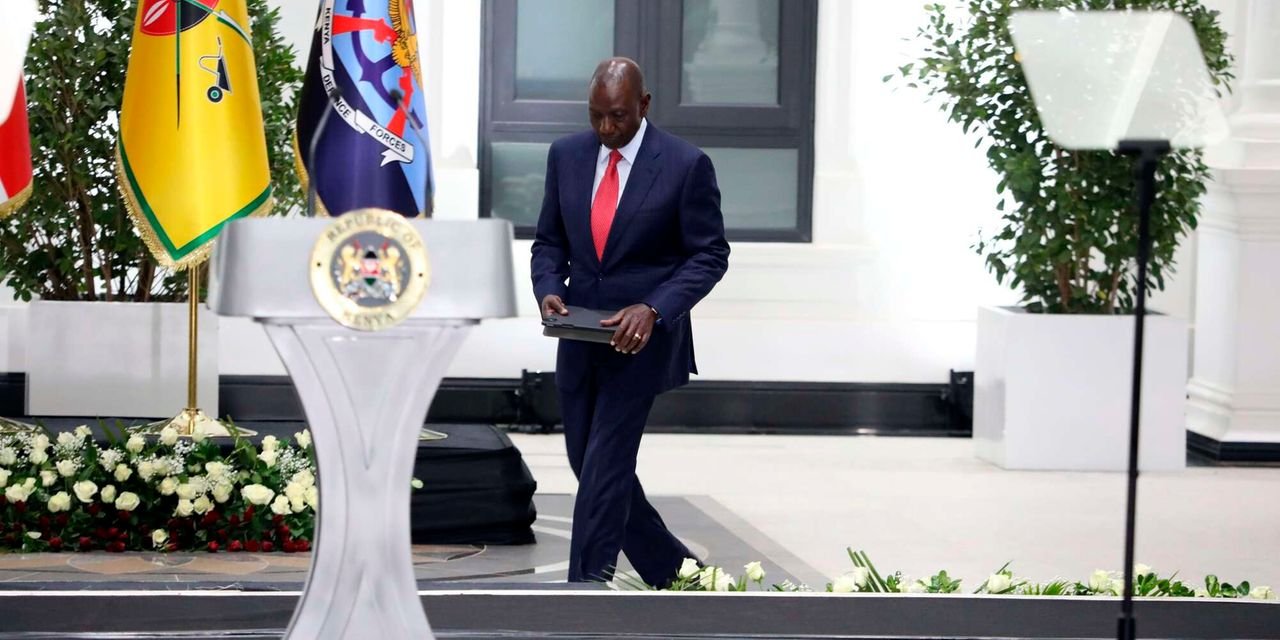
President William Ruto has proposed a new constitutional development charter to guide Kenya's long-term priorities after Vision 2030 ends.
The proposal, announced in a national address on Thursday evening, will form the basis of a nationwide public consultation beginning on 12 August. The proposed framework, known as the People-Driven National Development Charter, is intended to provide a long-term national development plan that remains in place regardless of changes in government. The consultation process will seek views from citizens, political leaders, businesses, universities, professional organisations, faith groups, civil society and young people.
Although Vision 2030 still has four years to run, President Ruto said planning for the country's next development framework should begin now. He said Kenya needs a long-term strategy that provides continuity and certainty if it is to compete in a changing global economy.
The President said the proposed charter should be anchored in the Constitution rather than in the priorities of individual governments. He argued that constitutional rights such as healthcare, education, housing, food security, clean water and social protection already define Kenya's development obligations. He said the country now needs a shared national framework to turn those commitments into measurable long-term goals.
Before announcing the proposal, President Ruto said he had consulted former national leaders, politicians, academics, business leaders, professionals, religious leaders, civil society representatives and young people. He said decisions about Kenya's long-term future should be based on broad public participation rather than government alone.
A significant part of the President's address focused on countries that have achieved stronger economic growth through consistent reforms and long-term planning. He said Kenya and South Korea had similar income levels in the mid-1960s, but South Korea has since become one of the world's leading industrial economies while Kenya's income growth has been much slower.
He also pointed to China's economic reforms from the late 1970s, saying China developed into one of the world's largest economies despite starting from a lower income level than Kenya. President Ruto also referred to Vietnam, Bangladesh, India and Cape Verde as countries that transformed their economies through sustained reforms. Within Africa, he said Ghana's income per person is now higher than Kenya's, while Zimbabwe's recent economic recovery has lifted its income levels slightly above Kenya's despite years of economic difficulties.
He said these examples show that Kenya's challenge has not been a lack of potential but inconsistent implementation of national policies. According to the President, the country has repeatedly missed opportunities created by major shifts in the global economy.
Looking ahead, President Ruto said Africa is entering another period of economic opportunity. He pointed to the continent's young population, expanding consumer markets, renewable energy resources and mineral wealth as advantages that could support future growth. He said Kenya should aim to become one of Africa's leading economies.
As part of the preparations for the proposed charter, the President said he appointed a team led by Prof Hiroyuki Hino and Prof Anyang' Nyong'o to develop recommendations for Kenya's post-2030 development agenda. He said the government has already received the team's proposals, which will help shape the public consultation process.
Vision 2030 was introduced during the presidency of Mwai Kibaki following consultations held between 2006 and 2007. The programme aimed to transform Kenya into a newly industrialised, middle-income country through economic growth, social development and stronger democratic governance. Its economic, social and political pillars have guided government planning and investment for almost two decades.
President Ruto acknowledged the role Vision 2030 has played in promoting long-term national planning while noting that some of its objectives have not yet been achieved. He said the proposed charter is intended to build on that framework rather than replace it.
Kenya's history of national development planning began before Vision 2030. After independence, the government adopted Sessional Paper No. 10 of 1965 on African Socialism and its Application to Planning in Kenya, which established the country's first comprehensive economic policy framework by supporting a mixed economy with both public and private sector participation.
Later governments under President Daniel arap Moi introduced national and district development plans before the Kibaki administration launched Vision 2030. If adopted, the proposed charter would become Kenya's fourth major national development framework since independence. Unlike previous strategies, it would seek to place long-term development planning within the Constitution to reduce policy changes following elections.





Comments
No comments yet — be the first.