


Facebook Deepens User Data Mining in Kenya
 By John WanjohiPublished · 244 reads
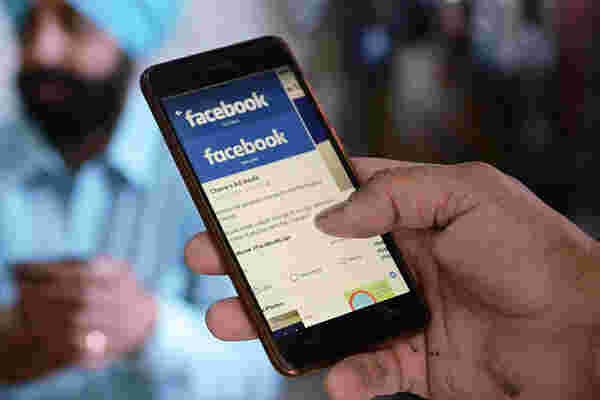
It has now emerged that Facebook is collecting additional citizen data beyond its users using the Wi-Fi Express program the company unveiled last year in Kenya, Tanzania, Nigeria, India, and Indonesia, the Business Daily reports.
This comes at a time when the California-based social networking company is facing protests over its data mining and consumer data protection.
In recent weeks, a mass user withdrawal has hit Facebook following exposés that it acted as a gateway for data mining firm such as Cambridge Analytica to collect data on millions of users.
Get the day’s top stories by email
The Mwakilishi Daily News Digest: Kenya and diaspora news, once a day. Free, and you can unsubscribe anytime.
In 2017, Facebook unveiled a new service again dubbed Facebook Express in Kenya and Nigeria and later in India, Tanzania and Indonesia.This is a standard paid-for Wi-Fi service rolled out as a ‘feel-good’ peoples’ Internet.
Facebook's Express Internet service, which was launched in thousands of hotspots, including over 1,000 in Kenya is thought to have expanded the company’s data phishing capacity with unknown consequences to users.
Also read Kenya Airways Could Launch Accra-Canada Flights if Ghana Airline Deal Succeeds
Express Internet has a service that grants consumers free access to Facebook and some extras, such as weather forecasts.
It is relatively cheaper compared to the packages offered by other internet providers. For instance, a 3GB monthly data package goes for Sh500.
Facebook sought ISP partners in Kenya, where it supplied them with the equipment for their Wi-Fi access points, selling each access point at around $250 (Sh25,000) and around another $200 (Sh20,000) to install.
However, many ISP have raised questions into the software in the access points. Majority of world’s Wi-Fi access points are sourced from either Microtiq and Ubiquiti, and come with an operating system known as firmware.
Facebook sought it from Ubiquiti on condition that it would grant it authority to introduce its own software dubbed ‘little black box’ into each access point, but the firm refused, forcing to turn to lesser known supplier Cambrian, which agreed to have it insert the black box.
Facebook receives all the information submitted by Facebook users via Facebook, which accounts for about 20 per cent of most ISP’s data. It is for this reason that the purpose of black boxes in the access points is seen by many as deeply worrying.
Love & Relationships
From our sister site diaspora.love
Navigating Cultural Expectations While Dating in the Diaspora
Balancing modern dating with traditional family expectations: how to stay true to your roots while being open to new connections.
Read on diaspora.love ›
Verification and Staying Safe on diaspora.love
What is checked on diaspora.love (and what is not), what the blue checkmark means, how to spot a fake profile and how reporting works.
Read on diaspora.love ›
Long Distance Relationships: Making It Work Across Borders
Many diaspora couples start out in different cities or even countries. Practical advice for keeping the spark alive when you are miles apart.
Read on diaspora.love ›Read next

Supercoin Seeks Kenya Licence Ahead of Planned Shilling Stablecoin Launch

US Consortium Beats Chinese Rivals for Kenya's $60 Billion Mrima Hill Critical Minerals Prize
Kenya: NSE to Extend Trading Hours to 4 p.m Starting 2027




Comments (1)
Running after the dangling carrot...which comes with some good perks....but we'll always be their guinea pigs. God have mercy!