
Nairobi Imams Embark on Hajj Pilgrimage Supported by Governor Sakaja
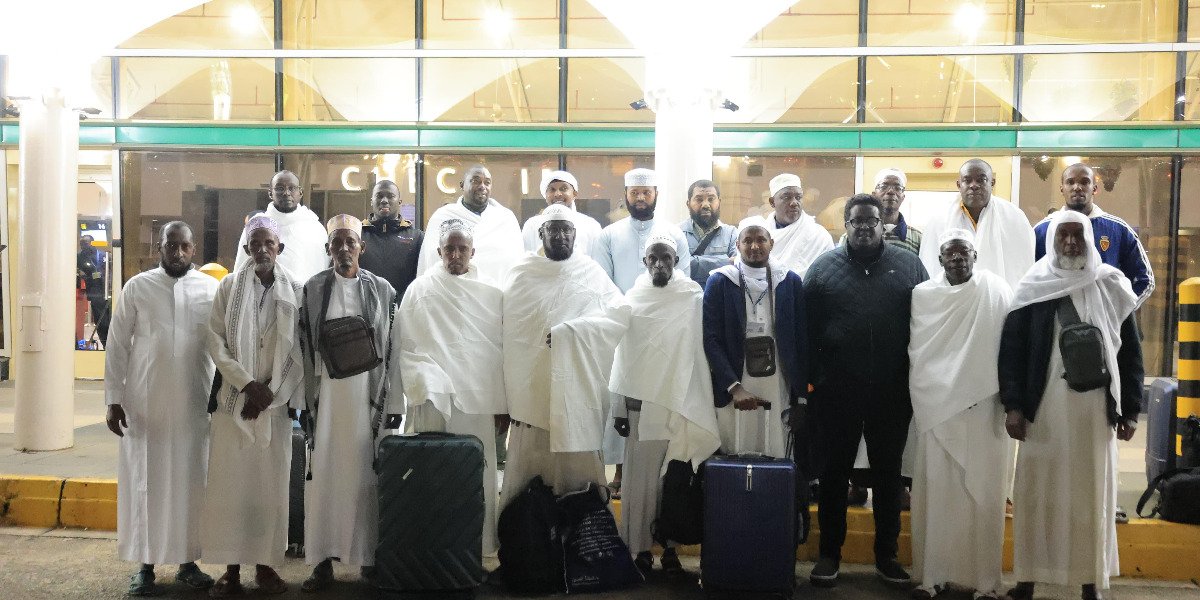
A delegation of 47 Imams from diverse communities across Nairobi departed Monday for Mecca, Saudi Arabia, to undertake the Hajj pilgrimage, a core tenet of Islam.
Governor Sakaja's sponsorship covers all travel and accommodation expenses for the Imams, primarily those hailing from under-resourced areas, including Kibera, Majengo, Maringo, and Utawala. In an official statement, Sakaja's office highlights his desire to uplift and empower religious leaders from underprivileged communities to perform this fundamental religious duty. The initiative has received widespread commendation from religious leaders.
Ustadh Hassan Ally Amin, chairman of the Council of Imams and Preachers of Kenya, expresses profound appreciation for the governor's contribution.
Speaking at Jomo Kenyatta International Airport (JKIA) during the group’s departure, Ustadh Amin emphasised the profound significance of Hajj. He noted that the pilgrimage is not merely a physical undertaking, but also a journey of devotion, humility, and spiritual renewal, reinforcing both personal faith and the unity of the global Muslim community.
“We are privileged by Allah to go and worship Him. This opportunity is one that every Muslim treasures,” he stated, acknowledging Governor Sakaja’s invaluable contribution.
He further emphasised the virtue of gratitude, stating, “If you cannot express appreciation to those who extend kindness, you cannot truly give thanks to Allah. That is why we acknowledge the governor’s generosity in facilitating this sacred journey.”
Hajj, one of the Five Pillars of Islam, is a mandatory religious duty for Muslims who are physically and financially capable of undertaking it. The pilgrimage takes place annually during Dhul Hijjah, the final month of the Islamic calendar, and serves as a profound act of submission, equality, and reflection. It commemorates the trials of Prophet Ibrahim (Abraham), his wife Hajar, and their son Ismail, whose unwavering faith in Allah forms the foundation of this Islamic rite.
Millions of Muslims from around the world converge in Mecca each year to partake in the pilgrimage, engaging in rituals that symbolise spiritual purification and devotion. The rituals undertaken during Hajj include:
Tawaf: Circling the Kaaba, the most sacred site in Islam, seven times.
Sa’i: Reenacting Hajar’s desperate search for water between the hills of Safa and Marwa.
Stoning the Devil: A symbolic act of throwing stones at pillars representing the devil, signifying the rejection of evil and temptation.
The pilgrimage is believed to cleanse the soul and reaffirm one’s devotion to Allah, making it a transformative experience for participants. Health Cabinet Secretary Aden Duale was also present at JKIA to bid farewell to a larger contingent of Kenyan pilgrims heading to Mecca. He announced that this year, approximately 4,500 Kenyans would travel under the Kenya Hajj Mission, an initiative aimed at organising and facilitating pilgrimage logistics for citizens.
Duale, alongside representatives from the Saudi Embassy and the Supreme Council of Kenya Muslims (SUPKEM), extended well wishes to the departing pilgrims, underscoring the importance of the spiritual journey. The Kenya Hajj Mission plays a crucial role in ensuring the safe and orderly travel and accommodation of Kenyan pilgrims, providing logistical support and guidance throughout the journey.
Historically, Hajj has been a unifying force in Islam, bringing together millions of faithful from different cultural and national backgrounds. According to official statistics, the annual pilgrimage attracts an average of over two million participants, with 1.5 million coming from outside Saudi Arabia.



Comments (1)
Do we now leave in A Theocracy? Why waste public funds for religious excursions! What about those who are none believers, others who are going without basic necessities e.g. food, shelter, clean water. Sakaja how about you spend some of this money cleaning the filth around Nairobi. You are such a disappointment!