
How Far Does $100K Go in America's Top Cities for Kenyan Immigrants?
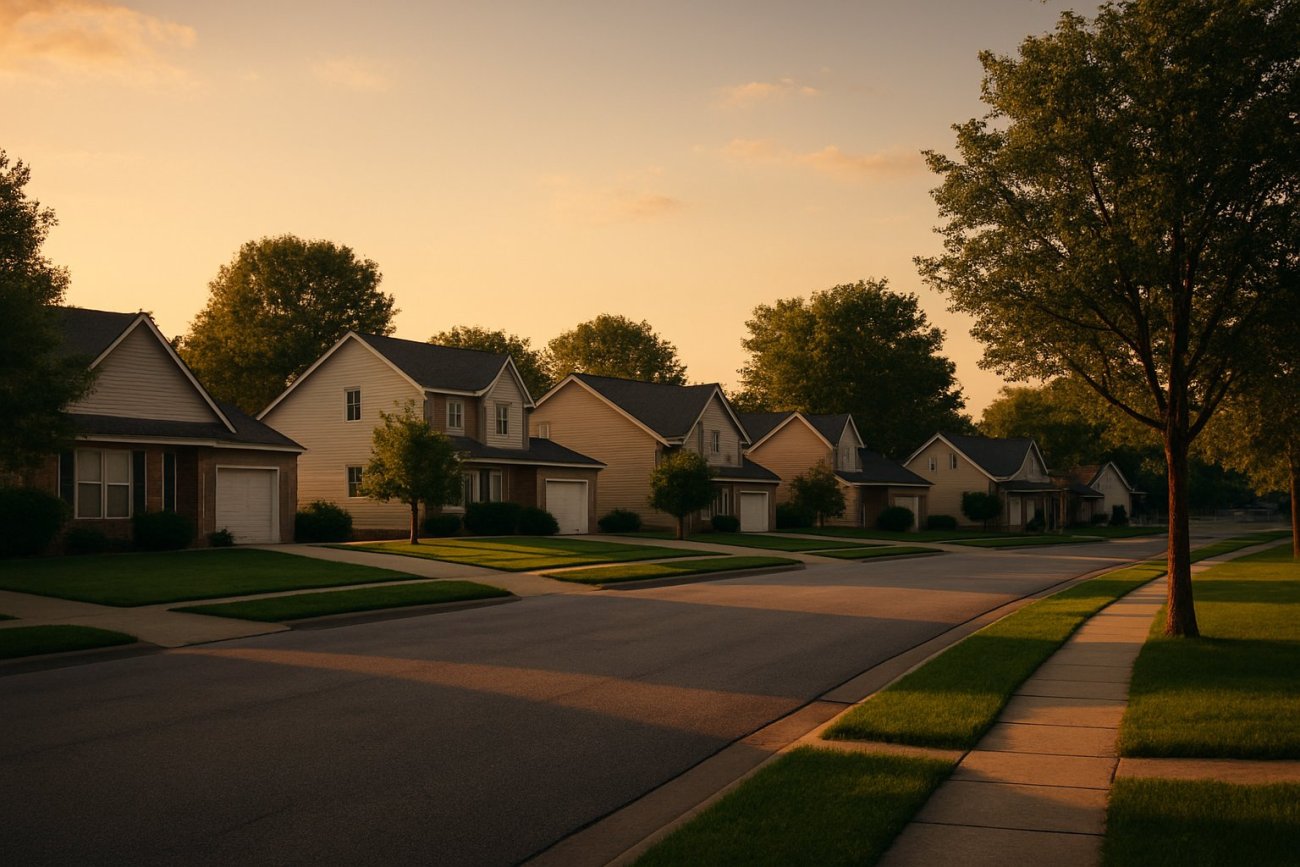
A six-figure salary is often seen as the benchmark of financial success in America. But for Kenyan immigrants spread across U.S. cities, the real purchasing power of $100,000 varies dramatically depending on where you live. The same income that provides a comfortable life in Dallas can feel tight in Boston or the Washington D.C. metro area.
Below is a breakdown of how far $100,000 goes in the cities and states where Kenyan immigrants are most concentrated, based on current cost-of-living data from tax calculators, housing market reports, and community feedback.
Dallas-Fort Worth, Texas
Texas has become one of the most popular destinations for Kenyan immigrants, and for good reason. With no state income tax, a $100,000 salary in Dallas takes home approximately $78,000 after federal taxes and FICA.
The median home price in the Dallas-Fort Worth metro area sits around $400,000. A Kenyan family earning $100,000 can comfortably afford a three to four-bedroom home in suburbs like Garland, Irving, or Mansfield. Monthly mortgage payments on a $320,000 loan (after a 20% down payment) run approximately $2,100 including taxes and insurance. Rent for a two-bedroom apartment averages $1,400 to $1,800 in decent neighborhoods.
After housing, utilities, groceries, car payments, and insurance, a family of four on $100K in Dallas can expect $1,500 to $2,500 in monthly discretionary income. This is one of the strongest value propositions for Kenyan families in America.
Atlanta, Georgia
Atlanta has emerged as a major hub for Kenyan professionals, particularly in healthcare and logistics. Georgia's state income tax of 5.49% reduces take-home pay to approximately $73,000.
Housing in Atlanta's metro area remains affordable compared to coastal cities. Median home prices in suburbs like Marietta, Lawrenceville, and Douglasville range from $350,000 to $420,000. A $100K earner can manage a mortgage of roughly $2,000 to $2,400 monthly. Apartments in the city center are pricier, with two-bedroom units averaging $1,600 to $2,200.
Atlanta's advantage is its balance — big-city job opportunities with southern-town costs. After expenses, families typically see $1,200 to $2,200 in monthly surplus.
Washington D.C. Metro Area (Maryland and Northern Virginia)
The D.C. metro area, including Maryland suburbs like Silver Spring, Rockville, and Baltimore, hosts one of the oldest and most established Kenyan communities in America. However, this is also where $100K stretches the least.
Maryland's state income tax combined with local county taxes can reach 5.75% to 8%, reducing take-home pay to approximately $70,000. Northern Virginia is similar, with a 5.75% state tax.
Housing is the biggest challenge. Median home prices in Montgomery County, Maryland exceed $550,000, while closer-in D.C. suburbs easily top $600,000. Many Kenyan families earning $100K in this region opt for townhouses or condos, or buy further out in areas like Frederick, Maryland or Prince William County, Virginia, where prices start around $400,000.
A two-bedroom apartment in a safe D.C.-area suburb averages $2,000 to $2,600. After all expenses, a $100K earner in the D.C. metro area may have only $500 to $1,200 in monthly discretionary income — and that is without children's college savings.
Minneapolis-St. Paul, Minnesota
Minnesota has long been a destination for Kenyan nurses and healthcare workers. The state's progressive income tax (7.05% at the $100K bracket) brings take-home pay to approximately $71,000.
Housing in the Twin Cities metro remains reasonable. Median home prices in suburbs like Brooklyn Park, Maple Grove, and Eagan range from $330,000 to $400,000. A $100K family can afford a comfortable single-family home with monthly payments around $1,900 to $2,300.
Minnesota's high quality of life — excellent public schools, extensive parks, and strong healthcare systems — adds value beyond the raw numbers. Families here typically see $1,000 to $2,000 in monthly surplus.
Boston, Massachusetts
Boston attracts Kenyan professionals in healthcare, biotech, and academia. However, it is one of the most expensive metro areas in the country.
Massachusetts' 5% flat income tax reduces take-home pay to about $73,500. But housing is where the math becomes brutal. Median home prices in Boston's inner suburbs like Malden, Quincy, and Waltham range from $550,000 to $700,000. Many Kenyan families earning $100K in Boston rent rather than buy, with two-bedroom apartments averaging $2,200 to $3,000.
After housing, utilities, transportation, and groceries, a $100K earner in Boston may have as little as $300 to $800 in monthly discretionary income. Homeownership on a single $100K salary is extremely difficult without dual income.
Columbus, Ohio
An increasing number of Kenyan families are discovering Columbus and other Midwest cities as hidden gems. Ohio's low cost of living and 3.5% state income tax mean take-home pay of approximately $74,000.
Median home prices in Columbus suburbs like Dublin, Westerville, and Hilliard range from $300,000 to $380,000. Monthly mortgage payments on a typical home run $1,600 to $2,000. Property taxes are moderate.
A $100K family in Columbus can realistically save $2,000 to $3,000 monthly after all expenses. This is why financial advisors increasingly point Kenyan immigrants toward Midwest cities for wealth building.
The Bottom Line
For Kenyan immigrants, $100,000 delivers very different lifestyles depending on geography:
- Columbus, Ohio: $2,000 to $3,000 monthly surplus — strongest wealth-building potential
- Dallas-Fort Worth, Texas: $1,500 to $2,500 monthly surplus — no state tax advantage
- Atlanta, Georgia: $1,200 to $2,200 monthly surplus — balanced opportunity and cost
- Minneapolis, Minnesota: $1,000 to $2,000 monthly surplus — high quality of life
- Washington D.C. Metro: $500 to $1,200 monthly surplus — career capital but expensive
- Boston, Massachusetts: $300 to $800 monthly surplus — hardest to stretch
The tradeoff is often between career advancement and cost of living. Coastal metros like D.C. and Boston offer the highest salaries and career ceilings, but the cost of entry — particularly housing — consumes much of the gain. Cities like Dallas, Columbus, and Atlanta may offer fewer career highs but allow families to own homes, save for their children's education, and send money home to Kenya.






Comments
No comments yet — be the first.