
Kenya Launches Emergency Measures as Drought Deepens
Kenya’s government has unveiled a series of emergency and long-term interventions to protect millions of citizens affected by severe drought.
Officials warn that without urgent action, many households face acute hunger and malnutrition. At least 2.1 million people across 32 counties are currently experiencing food stress, according to the National Drought Management Authority (NDMA). The November 2025 report by the Food Security Monitoring Committee highlights widespread crop failure and increasing pressure on pastoral livelihoods.
Erratic rainfall and prolonged dry spells have depleted water sources and weakened livestock herds. Deputy President Kithure Kindiki chaired a high-level crisis meeting on Tuesday, emphasising the need for coordinated action.
“The food stress we are witnessing is largely the result of poor and erratic rainfall, which has led to widespread crop failure and reduced pasture for livestock,” he said.
The meeting brought together Cabinet Secretaries, governors, senior officials and agency heads to assess the emergency and plan resource mobilisation. A follow-up session with humanitarian organisations, development partners, and the private sector is expected to produce a detailed drought mitigation roadmap.
The Kenya Meteorological Department has warned of a 60 percent likelihood of La Niña conditions in December. Rainfall during the October–December short rains season is expected to be below average in northeastern counties, the southeastern lowlands, and parts of the Coast.
Temperatures are projected to remain above normal nationwide, accelerating the depletion of rangeland and water resources and placing additional strain on pastoral and agropastoral households. In response, the government aims to reduce reliance on rain-fed agriculture by accelerating irrigation projects.
Plans include constructing 50 large dams, 200 medium dams, and more than 1,000 small dams, which are expected to bring an additional 2.5 million acres under cultivation. Officials describe these projects as essential for securing food and water supplies, supporting agro-industrialisation, and strengthening rural economies.
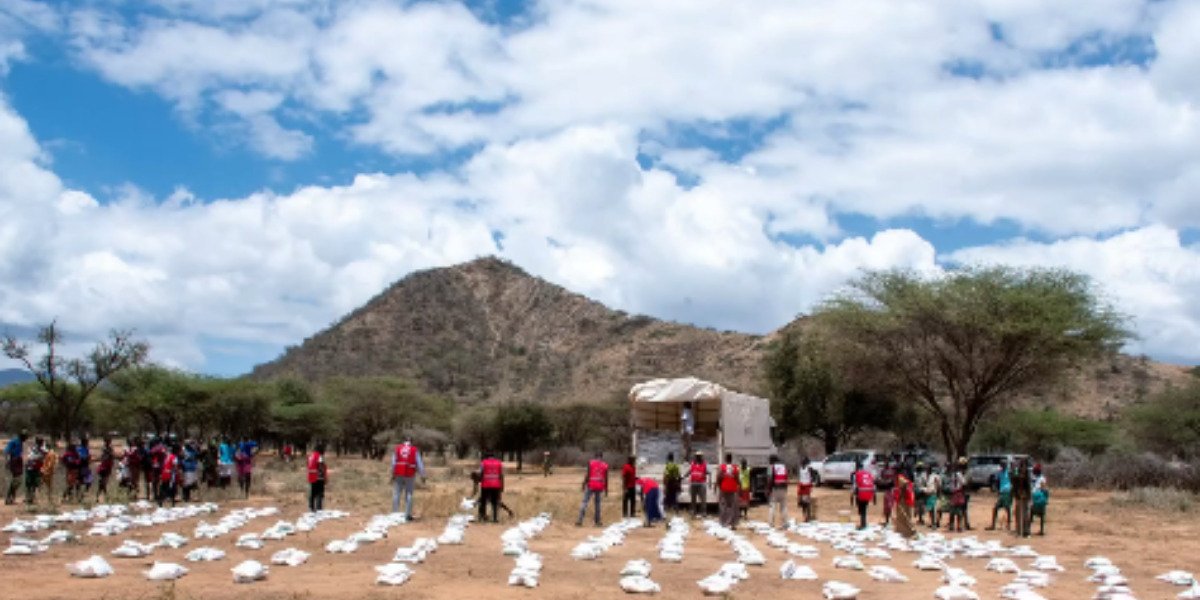
The humanitarian impact is already evident. In Kilifi County, the Red Cross is distributing food in Ganze Sub-County, where over 46 water pans have dried up. Similar conditions are reported in Turkana, Machakos, Makueni, Kitui, Taita Taveta, Kajiado, Tana River, Mandera, Wajir, Garissa, Marsabit, and Isiolo, among other heavily affected counties.





Comments
No comments yet — be the first.