
How the Supreme Court Will Operate After Justice Ibrahim Mohamed’s Death
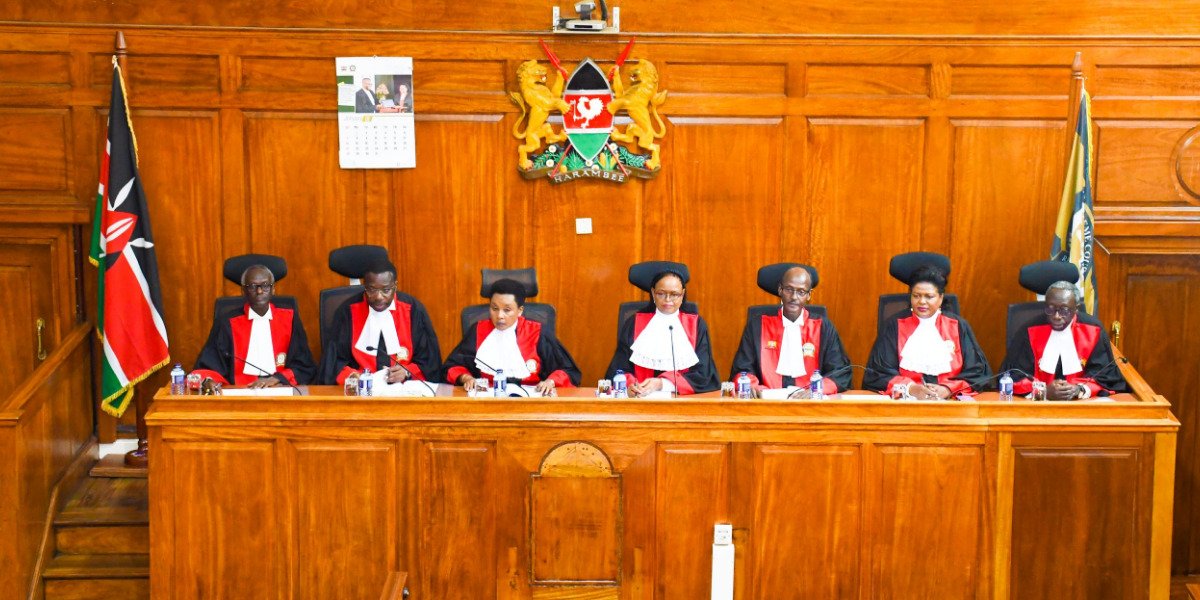
The death of Supreme Court Judge Mohamed Ibrahim has created a vacancy at Kenya’s highest court, but constitutional provisions allow the court to continue operating without interruption.
Under Article 163(2) of the Constitution, the Supreme Court is considered properly constituted as long as at least five judges are available to hear cases. This means the court can continue to discharge its functions despite the vacant position. Where a judge is unable to complete a matter due to death or incapacity, existing rules allow for substitution so that pending judgments can still be finalised.
The Constitution does not set a specific deadline for filling a vacancy on the Supreme Court, but the recruitment process is clearly defined. The Judicial Service Commission (JSC) is required to formally declare the vacancy, publish a notice in the Kenya Gazette, and advertise the position through national media and official Judiciary platforms.
Members of the public are invited to submit views before shortlisted candidates are interviewed in public. Applicants are subjected to extensive vetting. The JSC conducts background checks in coordination with the Kenya Revenue Authority, the Ethics and Anti-Corruption Commission, the Directorate of Criminal Investigations, and credit reference bureaus.
To qualify, candidates must meet the requirements of Article 166(3) of the Constitution, which include at least fifteen years’ experience as a judge of a superior court or in a distinguished legal career such as legal practice, academia, or judicial service. Candidates must also demonstrate high standards of integrity, independence, and ethical conduct.
After the JSC selects a nominee, the name is submitted to the President for formal appointment. Unlike the Chief Justice and Deputy Chief Justice, a Supreme Court judge does not require approval by the National Assembly. Court decisions have previously affirmed that the President’s role is limited to appointment, swearing-in, and gazettement, and does not extend to altering or rejecting the JSC’s nomination.
This arrangement ensures that executive input is incorporated during the selection process while safeguarding the independence of the judiciary at the appointment stage.






Comments
No comments yet — be the first.