
Trump Aims to Declare Strait of Hormuz US Territory Amid Tensions with Iran
In a bold declaration that has sent ripples through international political circles, U.S. President Donald Trump announced plans to declare the strategic Strait of Hormuz a U.S. territory once Iran is defeated. This escalation comes amid ongoing tensions between Washington and Tehran, raising concerns over potential conflicts in one of the world's most critical maritime corridors for oil transportation.
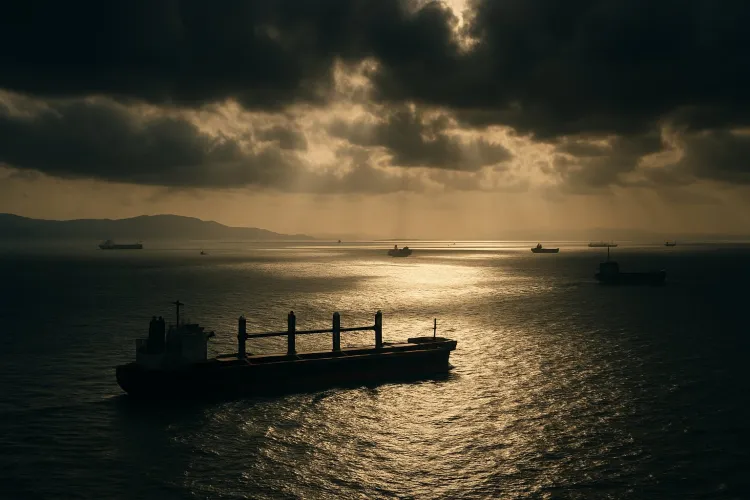
President Trump, in a statement made at a recent press briefing, emphasized the strategic significance of the strait, asserting that control over it would enhance global energy security. "Pretty soon, we will make Hormuz a U.S. territory," Trump stated, underscoring his administration's commitment to countering Iranian influence in the region. The Strait of Hormuz, which lies between the Persian Gulf and the Gulf of Oman, is a vital conduit for a significant portion of the world's traded oil, making its stability crucial to the global economy.
The U.S. President's remarks have already sparked international debate, with challenges anticipated from both regional powers and global stakeholders. The Strait of Hormuz is bordered by Iran to the north and the United Arab Emirates and Oman to the south, making it a geopolitical hotspot. Observers have noted that any move to assert U.S. control over the area could provoke a severe response from Iran, which considers the strait part of its sovereign territory.
Iranian officials, historically vocal against U.S. interference, have yet to formally respond to Trump's comments, though analysts expect a strong diplomatic pushback. In previous instances, Iran has warned of blocking the strait in retaliation against U.S. sanctions and military threats. "The security of the Strait of Hormuz is a red line for us," Iranian officials have frequently declared, highlighting the potential for heightened tensions.
In Washington, the announcement came with assurances from the U.S. Secretary of State Marco Rubio, who emphasized the strategic necessity of the move. "Protecting global trade routes is paramount to international stability," Rubio stated, reinforcing the administration’s rationale for the proposed action. Both the Pentagon and the Department of State have been tasked with formulating comprehensive plans to secure the strait, involving potential increased naval deployments and alliances with regional partners.
The implications of Trump's policy pronouncement extend beyond the immediate geopolitical flashpoints. For developing nations, particularly those reliant on oil imports, the stability of the Strait of Hormuz is directly linked to their economic stability. Any disruption could lead to fluctuating oil prices, impacting economies across Africa and other developing regions reliant on affordable energy imports.
International allies and organizations, including the European Union, have called for restraint and dialogue, emphasizing diplomatic solutions over unilateral actions. The EU's foreign policy chief has highlighted the importance of maintaining open communication channels with Iran to ensure peace and stability in the region.
As the situation evolves, global attention remains focused on the potential repercussions of President Trump's assertive strategy. The coming weeks are expected to bring further diplomatic engagements and, possibly, military maneuvers, as stakeholders seek to navigate the complexities of securing the Strait of Hormuz while averting a broader conflict.



Comments
No comments yet — be the first.