


Eastleigh Building Collapse Exposes Kenya's Growing Construction Safety Crisis
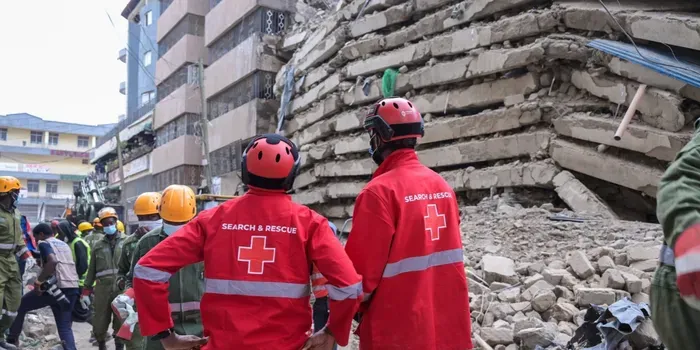
As multi-agency rescue teams recovered six bodies from the rubble of a collapsed building in Eastleigh, engineers and state officials warned that tumbling inspection rates and weak oversight are driving a mounting safety crisis across Kenya's construction sector.
Thursday marked the fourteenth day of grueling recovery operations along 9th Street in Eastleigh, where a multi-storey building collapsed on October 23. Nairobi North County Commissioner Simon Osumba stated that four women and two men were confirmed dead among the victims, while four people were rescued alive.
National Disaster Management Unit (NDMU) Director Duncan Ochieng coordinated the multi-agency response alongside the Kenya Defence Forces, the National Disaster Operations Centre, the Nairobi County Government, and the Kenya Red Cross.
Authorities reported that five people remain unaccounted for out of eleven initially listed as missing, with bodies undergoing identification procedures at the Nairobi City Mortuary. The disaster follows a pattern of structural failures, including a January incident in Nairobi’s South C estate where developers illegally added four unauthorized floors to a building approved for 12 storeys.
Speaking ahead of the upcoming Institution of Engineers of Kenya (IEK) International Convention, IEK President Harrison Keter urged the immediate enactment of the External Building Audit Act. Keter argued that statutory independent audits are vital to catch hidden defects and establish legal accountability as state agencies struggle to keep pace with rapid developments nationwide.
Official figures highlight severe monitoring gaps across the industry. Research by the National Construction Authority (NCA) recorded 87 building collapses between 1990 and 2018.
Meanwhile, the National Building Inspectorate (NBI) audited only 396 buildings in 2025, a dramatic plunge from 20,649 inspections the previous year. Of the buildings checked in 2025, 87 percent failed safety standards or lacked statutory approvals. The NCA also issued 13,348 suspension notices, rejected 1,125 applications, and approved 4,687 compliant projects that year.
Keter pointed out that licensed engineers are frequently saddled with hundreds of concurrent projects, severely undermining site supervision. The Architectural Association of Kenya's (AAK) 2025 report revealed that professional services are utilized in merely 20 percent of construction projects nationwide. Furthermore, only eight counties operated functional online permitting systems last year, leaving widespread reliance on unverified expertise.
State Department for Roads Principal Secretary Joseph Mbugu called on developers and contractors to follow design standards strictly, urging professional boards to take punitive disciplinary action against rogue practitioners. Echoing the need for modernization, State Department for ICT and the Digital Economy Principal Secretary John Kipchumba Tanui emphasized that digital monitoring systems are essential to flag non-compliant sites before fatal disasters occur.






Comments
No comments yet — be the first.