


How Saudi and Kuwait Ebola Restrictions Are Hurting Kenyan Businesses

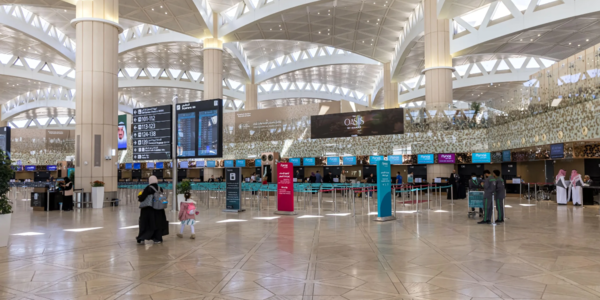
A sudden halt on travel to Saudi Arabia and Kuwait over Ebola fears is threatening millions of shillings across Kenya’s broader service economy, private recruitment agencies have warned.
While the restrictions aimed to contain a potential outbreak, employment agencies say the financial fallout extends far beyond their industry. Sectors such as aviation, public transport, health services, and government licensing are suffering heavy revenue losses as candidate processing and departures grind to a standstill.
Abdalla Mohammed Naim, a director at Naim Investments Limited and former Kenya Association of Private Employment Agencies (KAPEA) national chairman, said the ripple effects have hit multiple businesses and state agencies.
"Many sectors have lost money, and even the Government has lost revenue because there is no travelling," Naim said.
He noted that applicants and agencies had already paid for passport applications, mandatory medical examinations, certificates of good conduct, transport, and airline tickets before the travel restrictions took effect.
The immediate threat centres on more than 50,000 issued work visas that risk expiring as the holy month of Ramadan approaches. Recruitment officials warned that the window to use these documents is closing rapidly.
Former KAPEA national chairman Mwalimu Mwanguzo, who currently heads the association's Supervisory Committee, emphasized the urgency for job seekers caught in the deadlock.
"Travelling is a process, not an event. Some visas now have only one or two weeks left before they expire," Mwanguzo said.
He noted that Kuwait imposed its restrictions immediately after Saudi Arabia’s decision, warning that other Gulf Cooperation Council nations could quickly follow.
"We fear that if we keep quiet, tomorrow we may hear that Qatar, Bahrain or Oman have also imposed bans," he said.
Mwanguzo urged job seekers who already hold visas and flight tickets to remain patient and maintain contact with their recruitment agents. He also called on President William Ruto to intervene directly so that Muslims preparing for the Umrah pilgrimage are not affected by the travel curbs.
Speaking in Mombasa, KAPEA National Chairman Juma Omar Mwangala called on the Ministries of Labour and Foreign Affairs to intensify diplomatic talks with Saudi Arabian and Kuwaiti authorities to lift the bans.
"We also recognise that the current travel disruption affects the two countries," Mwangala said, pointing out that Saudi employers and families had also invested heavily in visa processing and candidate interviews.
Mwangala praised the government's containment measures following the Bundibugyo Ebola outbreak. He commended Health Cabinet Secretary Aden Duale and Director-General Dr Patrick Amoth for tracing all 135 identified contacts, discharging recovered patients, and releasing those who completed quarantine.
Kenya has recorded no new Ebola cases since entering its 42-day countdown period, recently releasing nine individuals from quarantine.
Naim pointed to Uganda as a precedent for how quickly conditions can change. Uganda has faced similar restrictions since June, but local agents there expect Saudi Arabia to reopen travel soon following its clearance as Ebola-free.
Decisions to clear countries rely on assessments by Saudi Arabia's public health body in coordination with the World Health Organisation.
"These decisions are not ours to make. If we continue to contain it well, God willing, the doors will open," Naim said.





Comments
No comments yet — be the first.