


IBM to End Visa and Green Card Sponsorship for Most Consulting Roles, Shrinking a Key Pathway for Kenyan Tech Professionals

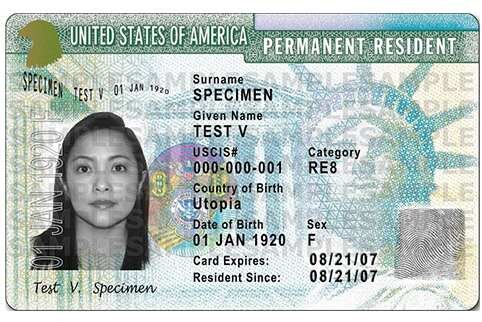
IBM, one of the largest technology employers in the United States, will stop sponsoring work visas and employment-based green cards for most roles in its Consulting arm, Reuters reported on November 10, 2026, a shift that closes one of the most established corporate immigration pathways for Kenyan and other African professionals working in or seeking to enter the U.S. technology services industry.
The reported decision covers the two tracks that skilled foreign workers depend on most: the H-1B specialty occupation visa and the employment-based permanent residence process that begins with a PERM labor certification filed with the U.S. Department of Labor. Reuters reported that IBM will end visa, green card sponsorship for most roles in its Consulting arm. The report did not state an effective date or spell out how the policy will treat consultants whose sponsorship cases are already in progress.
IBM is headquartered in Armonk, New York. Its consulting division, rebranded IBM Consulting in 2021 from its former Global Business Services name, is the part of the company that staffs client-facing technology and management projects, the segment where foreign graduates and experienced professionals have most often entered the firm.
The H-1B program, administered by U.S. Citizenship and Immigration Services (USCIS) under the Department of Homeland Security, admits up to 85,000 new specialty occupation workers each fiscal year — 65,000 under the regular cap and 20,000 under the advanced degree exemption — through an electronic registration lottery that now costs $215 per beneficiary. Visas run for three years and are renewable to six, with extensions beyond that available under the American Competitiveness in the Twenty-First Century Act of 2000 for workers whose green card cases remain pending.
IBM's exit lands in the most expensive sponsorship environment in the program's history. The One Big Beautiful Bill Act, the tax and spending law signed by President Donald Trump in July 2025, imposed a $100,000 fee on many new H-1B petitions filed by larger employers, while basic government charges for an initial petition at a major company already exceed $3,000 once filing, asylum program, training and fraud prevention fees are combined. USCIS has also expanded Fraud Detection and National Security site visits at employer workplaces since 2025, raising the compliance burden on companies that sponsor foreign workers.
Green card sponsorship is costlier still. Under Department of Labor rules the employer must bear all PERM costs, and the sequence — prevailing wage determination, supervised recruitment and certification — commonly takes a year or more before an I-140 immigrant petition, now $715, or $2,805 with premium processing, and an I-485 adjustment application, at $1,440, can carry a case to permanent residence.
For African professionals, employer willingness has long been the binding constraint rather than visa backlogs. Section 202 of the Immigration and Nationality Act caps employment-based green cards at seven percent per country each year, producing queues measured in years and even decades for India and China, while Kenya, Nigeria, Ghana and most other African countries have generally remained current in the EB-2 and EB-3 categories of the State Department's monthly Visa Bulletin. A large employer like IBM willing to run the full sponsorship process was therefore among the fastest realistic routes to a green card for a Kenyan consultant, and its withdrawal shrinks an already limited pool of sponsors in the consulting sector.
The reference to most roles leaves open a narrow set of positions that may still be sponsored, but for consultants outside that group the options narrow quickly. H-1B holders can move to a new employer through a cap-exempt transfer petition, and workers whose I-485 applications have been pending more than 180 days can port to a same or similar job under the portability provisions of the American Competitiveness in the Twenty-First Century Act without restarting the green card process. Those earlier in the pipeline — mid-PERM, or holding an approved I-140 with no filed adjustment application — would need a new sponsoring employer to keep their cases alive.
Outside employer sponsorship, the remaining self-directed routes are the EB-2 National Interest Waiver, which lets advanced degree holders and applicants of exceptional ability petition without a company, and the EB-5 immigrant investor program, which has required $1,050,000, or $800,000 in targeted employment areas, since the Reform and Integrity Act of 2022 reset those thresholds. Kenyan professionals who do reach permanent residence and eventual naturalization can retain their Kenyan citizenship under the Kenya Citizenship and Immigration Act of 2011, which implemented the dual nationality provisions of the 2010 Constitution.
IBM's retreat also cuts a long-standing corporate link to the region. The company has operated in Kenya for decades and opened its first research laboratory in Africa in Nairobi in 2013, and IBM Consulting has been a familiar destination for Kenyan graduates in computer science, engineering and data analytics entering the U.S. labor market.
The decision follows a year in which the Department of Homeland Security, under Secretary Kristi Noem, has rolled out measures affecting H-1B holders, and it signals that even blue-chip employers are recalculating whether sponsorship remains worth the cost. For diaspora job seekers, the immediate consequence is practical: an offer from IBM Consulting can no longer be assumed to come with a visa or green card pathway, and candidates must confirm sponsorship terms in writing before accepting a role.



Comments
No comments yet — be the first.