


US Green Card Overhaul Targets Nurses, Tech Workers With 90-Day Hiring Rule, Raising Stakes for Kenyan Professionals

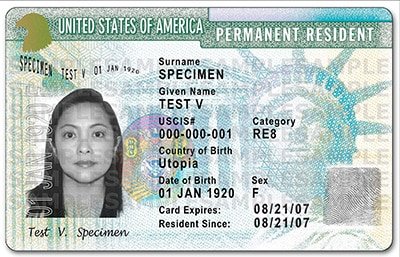
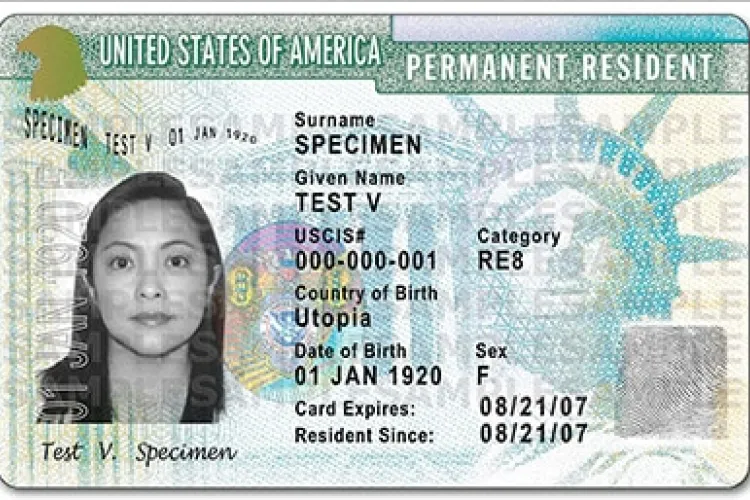
The US Department of Labor has proposed a sweeping overhaul of employment-based green card rules that would bind employers to a 90-day hiring requirement, in a change aimed squarely at the two professions that dominate employer-sponsored permanent residency in the United States: nursing and technology. The proposal, reported on November 16, 2026, from Washington, DC, lands directly on the main channels through which thousands of Kenyan professionals secure American green cards, both those already working in the US and those preparing to migrate.
At the center of the overhaul is a deadline that does not currently exist in the employment-based system. Companies that win approval to sponsor a foreign worker for a green card would have to complete the actual hire within 90 days, replacing a setup in which no firm clock ties an approved sponsorship to an actual job start. For workers, the change would convert a paper approval into a defined start date; for employers, it would convert sponsorship from a flexible administrative step into a hard operational commitment.
The changes reach into the labor certification machinery that every employer-sponsored green card must pass through. Under the Immigration and Nationality Act, a US employer must first obtain a certification from the Department of Labor that no qualified American worker is available for the position, a process run through the Program Electronic Review Management, or PERM, system administered by the department's Employment and Training Administration. That certification is the gateway to green cards in the EB-2 and EB-3 preference categories, which carry a worldwide annual ceiling of 140,000 visas set by federal law.
The two occupations named in the overhaul sit at different points of that pipeline. Federal regulations place professional nurses and physical therapists under Schedule A, Group I, a pre-certified shortage designation that allows hospitals and nursing homes to skip PERM recruitment entirely and file straight for a green card. Technology workers take the longer route: most arrive on the H-1B specialty occupation visa, capped by Congress at 85,000 new petitions a year, 65,000 in the general pool and 20,000 for holders of US advanced degrees, and then rely on their employer to sponsor permanent residency through PERM. The proposed 90-day rule would sit at the end of both roads.
For Kenyan professionals, the two target occupations are the two biggest doors into the US labor market. Kenyan nurses typically qualify by passing the NCLEX-RN licensing examination administered by the National Council of State Boards of Nursing, usually after a credentials review by the Commission on Graduates of Foreign Nursing Schools, before an American hospital or health system files the paperwork for a green card. Kenyan technology workers, concentrated in software engineering, data analytics and health information systems, generally enter on H-1B petitions filed by US companies and later move to permanent residency through the same employer-sponsored system the Department of Labor now wants to tighten.
The Department of Labor does not issue green cards itself. Its certification covers only the labor market question, while US Citizenship and Immigration Services, the agency within the Department of Homeland Security led by Secretary Kristi Noem, adjudicates the actual residency application. But because no EB-2 or EB-3 petition can be approved without the department's certification or a Schedule A designation, a tightening at the certification stage reaches every employment-based case, including nurses and technology workers already deep in the pipeline.
The proposal fits the direction of immigration policy under President Donald Trump, who began his second term in January 2025 and whose administration has pressed federal agencies to tighten the rules governing foreign labor across visa and green card programs.
Before anything takes effect, the package must move through federal rulemaking. A proposed rule has to be published in the Federal Register and opened to public comment, and the Department of Labor must review the submissions before finalizing any provision and setting an effective date. That sequence typically takes months, and it gives hospital systems, technology companies and groups such as the American Immigration Lawyers Association an opening to contest the mechanics of the 90-day clock, including when it starts and what counts as a completed hire.
One unresolved question with direct consequences for Kenyan applicants is whether the 90-day requirement would apply to cases already pending or only to new filings. Workers whose PERM certifications have been approved, or whose green card interviews are already scheduled, would need to establish with their sponsors exactly how the deadline interacts with their position in the queue.
The economic stakes run in both directions. Kenyans working in the United States are part of a diaspora that sends home billions of dollars in remittances every year, flows tracked by the Central Bank of Kenya among the country's largest sources of foreign exchange, and the nurses and technology professionals targeted by the overhaul are among the highest earners in that population. A policy that slows or complicates their path to permanent residency therefore reaches beyond individual careers into the households, land purchases and school payments that are financed by the Kenyan diaspora's American incomes.




Comments
No comments yet — be the first.