
How Mudavadi Became the Face of Kenya's Diaspora Diplomacy
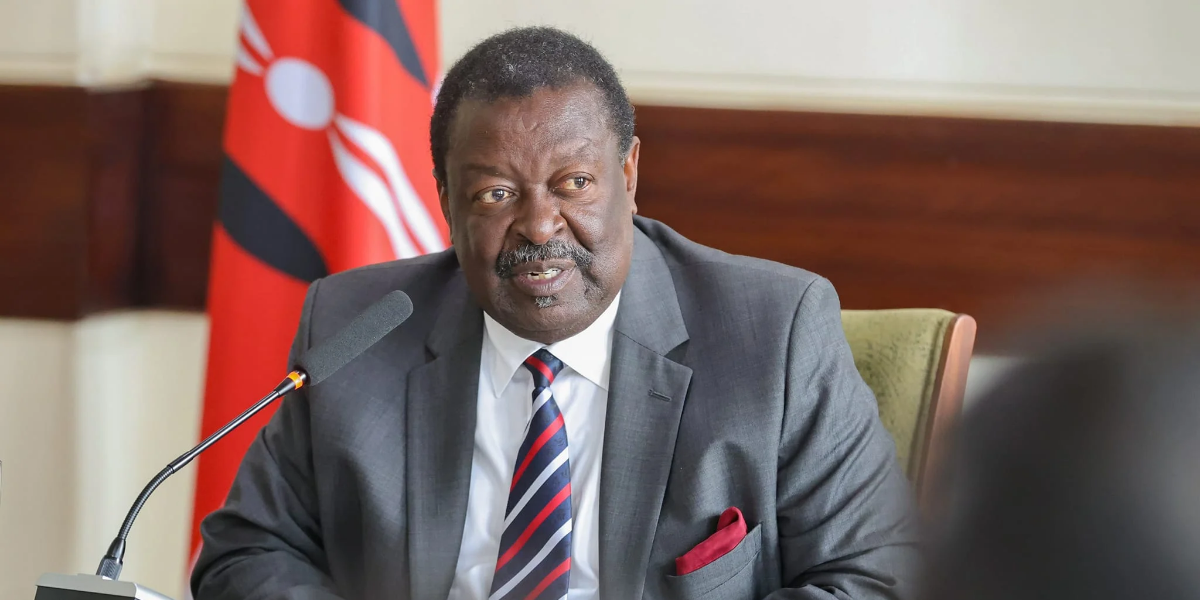
Prime Cabinet Secretary and Cabinet Secretary for Foreign and Diaspora Affairs Wycliffe Musalia Mudavadi has overseen a series of high-profile interventions involving Kenyans abroad, from securing the release of citizens facing legal challenges overseas to coordinating responses to international emergencies affecting Kenyan nationals.
As Kenya's international connections continue to grow through migration, trade and diplomatic partnerships, the responsibilities of the Foreign Affairs Ministry have expanded significantly. For many Kenyans living abroad, the ministry's work directly affects issues such as labour mobility, consular assistance, investment opportunities and protection in times of crisis.
Mudavadi, a veteran politician, has held several senior government positions over more than three decades. Born in Sabatia, Vihiga County, he entered politics in 1989 following the death of his father, Moses Mudavadi, who was a prominent figure in Kenya's post-independence politics.
Since then, he has served as Minister for Finance, Vice President, Deputy Prime Minister and now Prime Cabinet Secretary and Foreign Affairs Cabinet Secretary.
Supporters often describe him as a calm and consensus-driven leader. Within parts of the Luhya community, he is known by the honorific "Mudamba", a title associated with wisdom and respected leadership.
His political career has largely been characterised by a focus on dialogue, coalition-building and institutional stability. His approach to leadership is reflected in his 2019 autobiography, Musalia Mudavadi: Soaring Above the Storms of Passion. In the book, he recounts key moments in Kenya's political history and outlines his views on governance, leadership and coalition politics.
The memoir presents a philosophy centred on patience and long-term stability.
One of the most demanding challenges during his tenure at the Foreign Affairs Ministry involved Kenyan citizens caught up in the Russia-Ukraine conflict. Reports indicated that some Kenyans travelled to Russia after being promised employment opportunities but later became involved in military operations linked to the war.
The situation required diplomatic engagement, consular support and efforts to address concerns about human trafficking. Kenyan missions worked to assist affected citizens and secure the return of several individuals. While some were successfully repatriated, others remain unaccounted for and several reportedly died during the conflict.
Another case that received significant public interest involved Stephen Munyakho, who spent more than a decade in detention in Saudi Arabia following a fatal altercation in 2011. After an appeal court upgraded his conviction from manslaughter to murder, he faced a death sentence.
Kenyan authorities intensified diplomatic efforts to seek a resolution, with Mudavadi playing a leading role in the process. Following extensive negotiations and the arrangement of a substantial diya, or blood money, settlement with support from the Muslim World League, Saudi authorities commuted the sentence. Munyakho was later released and returned to Kenya.
The case reinforced expectations among many Kenyans abroad that the government should actively assist citizens facing legal and humanitarian challenges in foreign countries. While trade and bilateral relations remain central to diplomacy, public attention often focuses on how the ministry responds when Kenyans encounter difficulties overseas.
At the same time, Mudavadi has repeatedly stressed the importance of personal responsibility among Kenyans living abroad. During engagements with diaspora communities, including meetings with Kenyans in Morocco, he warned that the actions of a small number of individuals can affect perceptions of the wider Kenyan community.
"We have seen cases of some people saying that we do not like the bad manners of some Kenyans, and we are concerned that it is not seen as the whole nation's behavior. The question is, should the country suffer because of a few ill-mannered individuals?" he said.
He also urged Kenyans to respect the laws and customs of their host countries, warning that violations can carry serious consequences for both individuals and the country's reputation. Government officials have reported that more than 1,000 Kenyans are serving sentences in foreign countries for offences ranging from minor violations to serious crimes, including drug trafficking.
Cases such as that of Margaret Nduta in Vietnam, whose death sentence for drug trafficking was later reduced to life imprisonment following legal appeals, have highlighted both the risks facing some Kenyans abroad and the limits of diplomatic intervention after criminal convictions. Outside politics, Mudavadi has often spoken about the influence of sport and faith on his outlook.
A supporter of football and rugby, he has argued that discipline, teamwork and resilience are qualities that can be applied to public service and leadership.
His Quaker faith also remains an important part of his public identity. The Christian denomination places emphasis on humility, honesty, peace and consensus. These principles are frequently associated with his leadership style.
His religious beliefs have occasionally been reflected in official ceremonies. In keeping with Quaker practice, which traditionally favours affirmations over oath-taking, Mudavadi has at times chosen to affirm rather than swear an oath when assuming public office.
The ministry's broad responsibilities were again evident following the crash of a Kenyan-registered aircraft in South Sudan on 27 April 2026. Speaking before the Senate Standing Committee on National Security, Defence and Foreign Relations, Mudavadi outlined efforts to identify victims and repatriate remains after the accident.
The Cessna aircraft crashed in the Luri Mountains near Juba while travelling from Yei to the South Sudanese capital. Preliminary investigations suggested poor weather may have contributed to the crash.
Fifteen people were on board, including two Kenyan nationals: pilot Captain Francis Lagat Ruto and Brian Mwenge, a bank manager based in Yei. The severity of the crash left many victims with extensive burns, making visual identification impossible and requiring DNA analysis.
Samples were transported to Kenya for forensic testing, and authorities later confirmed the identities of ten victims, including Captain Ruto. His remains were repatriated and received in Nairobi in mid-June.
The identification process for Mwenge remains under way. Additional DNA samples from family members have been requested to assist forensic experts. Laboratories including KEMRI and Rayan Medical Laboratories in Eldoret are conducting the analysis.
According to the ministry, the aircraft operator has agreed to meet the costs of identification and repatriation. Kenyan officials have remained in contact with affected families through the embassy in Juba, providing updates on recovery efforts, forensic examinations and transport arrangements.
A multi-agency team comprising Kenyan and South Sudanese authorities, aviation officials, legal representatives, forensic specialists and family representatives continues to oversee the process while investigations into the cause of the crash continue.
As Kenya's diaspora population grows and remittances remain an important contributor to the economy, expectations of government support overseas are likely to increase. The effectiveness of Kenya's diplomatic engagement will continue to be measured not only through international partnerships but also through the support provided to citizens living and working abroad.






Comments
No comments yet — be the first.