
Chaos in Nairobi CBD as Police Fire Teargas at Protesting Traders
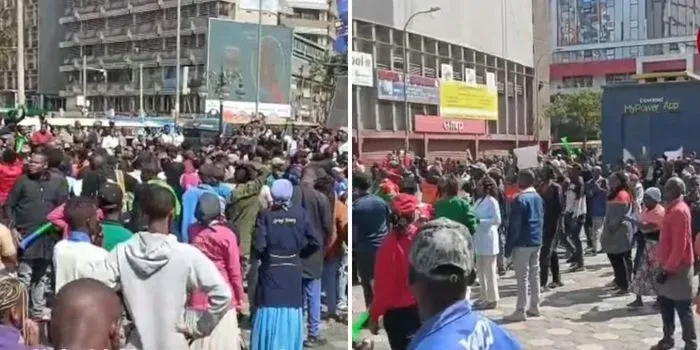
Nairobi’s central business district was disrupted on Friday, 28 August, as small-scale traders protested against a Kenya Revenue Authority (KRA) increase in the customs minimum benchmark for consolidated cargo.
The demonstrations began in Kamukunji before spreading to Moi Avenue and moving towards Times Tower, forcing several businesses to close. Traders carried placards and blew vuvuzelas as they protested the increase, which took effect on 20 August.
KRA raised the customs minimum benchmark from Ksh2.5 million to Ksh3.2 million, an increase of Ksh700,000. Importers and small business owners say the higher benchmark will increase their costs and reduce already narrow profit margins.
Police fired tear gas along Parliament Road and Kenyatta Avenue as the demonstrations intensified. The protests disrupted traffic and pedestrian movement in parts of the CBD.
Traders said the higher benchmark would also increase the prices of goods for consumers. One protester said the increase was unreasonable and would place further pressure on small businesses.
KRA has defended the adjustment, saying it is intended to address undervaluation, misdescription and revenue losses in customs operations. In a statement issued on Thursday, 27 August, the Authority said the review took into account changes in economic conditions and freight charges.
The protests come as the government seeks to expand tax collection and strengthen customs enforcement. Traders, however, say sudden changes to taxation and import requirements can place significant pressure on small businesses and their employees.
Meanwhile, residents of Mukuru kwa Reuben have raised concerns over the allocation of homes under the government's Affordable Housing Programme. Some residents say they paid deposits for units but were later informed that the houses were no longer available.
One resident said she had paid Ksh80,000 for a bedsitter before receiving a message informing her that the units had been sold out. She said residents were not told who had bought the units or what would happen to their applications.
Some residents said they had taken loans to raise the required deposits. They are now seeking clarification on the status of their applications and whether their payments will be refunded or transferred to other units.
The complaints follow President William Ruto's handover of 4,500 homes in Mukuru in May 2025. The homes formed part of a wider plan to deliver more than 13,000 units in several phases.
The housing programme was designed to provide modern homes for residents of informal settlements, including people displaced by demolitions in Mukuru kwa Njenga and other parts of the area. Residents have said they were promised priority in the allocation of the new homes.
The latest complaints have raised further questions among affected residents about the allocation process. Some say they have been left financially strained after paying deposits without receiving the houses they expected.
The concerns in Mukuru come amid earlier criticism of the Affordable Housing Programme over evictions and disputes surrounding land use. Affected residents are seeking greater clarity on how units are allocated and how applicants who have already paid deposits will be treated.




Comments
No comments yet — be the first.