


380,000 Kenyan Students Locked Out as HELB Deficit Hits Sh86.7 Billion

The Higher Education Loans Board (HELB) is facing a deficit of Sh86.7 billion, a shortfall that has left 380,000 students without loans, The Star has reported. The gap between the money the board needs to finance learners and the funds actually at its disposal has emerged as a major crisis in the funding of higher education in Kenya.
HELB, headquartered in Nairobi, is the state agency that disburses loans and scholarships to students in Kenya's institutions of higher learning. With the shortfall standing at Sh86.7 billion, the board is unable to extend financing to the 380,000 students who would otherwise be funded through its programmes.
The board was created under the Higher Education Loans Board Act of 1995 with the mandate of issuing affordable loans, scholarships and bursaries to students pursuing higher education, taking over from earlier government-run student loan arrangements. Its coverage spans learners in public universities, private universities and technical and vocational education and training (TVET) institutions, and its applicant pool includes large numbers of trainees in national polytechnics, technical training institutes and vocational training centres.
Get the day’s top stories by email
The Mwakilishi Daily News Digest: Kenya and diaspora news, once a day. Free, and you can unsubscribe anytime.
HELB financing is the principal source of support for students whose households cannot meet the full cost of tuition and upkeep. The board uses means testing to determine how much each applicant receives, with awards varying according to the financial circumstances of the applicant's household.
Applications are submitted for each academic year, with the board handling requests from first-time applicants and from continuing students. Because loans must be sought afresh each year, a shortfall affects not only new entrants but also learners already partway through their courses. Loan money is channelled partly to institutions to cover tuition and partly to students to pay for accommodation, learning materials and living expenses.
Also read Ruto Asks Western Kenya to Re-Elect Him in 2027, Lists Billions in Projects
Borrowers are expected to begin repaying their loans after completing their studies, with repayment typically effected through deductions from the salaries of employed graduates. Money recovered from former beneficiaries feeds the pool from which new loans are issued, and the board has over the years pursued defaulters as a way of sustaining that revolving fund.
HELB normally opens application windows and publishes disbursement schedules for each academic year. Loans attract interest, and balances that remain unpaid after graduation continue to accrue until cleared.
The board's resources are drawn from two main sources: exchequer allocations approved through the national budget and repayments collected from past borrowers. The Sh86.7 billion deficit reported by The Star represents the distance between what those sources provide and what the board requires to fund the 380,000 students now left without loans.
For each affected learner, the absence of a HELB disbursement means the tuition, accommodation and upkeep costs that the loans are designed to meet remain uncovered. Because the tuition component of the loans is paid directly to the institutions the students attend, the shortfall also bears on the finances of the universities and TVET colleges themselves.
HELB operates as a state corporation under the national government led by President William Ruto. Its allocation is determined in the annual budget prepared by the Treasury and approved by Parliament, so closing the deficit would rest on additional exchequer funding or on increased recoveries from former borrowers.
The board's responsibilities have expanded as the government moved university funding towards a model combining scholarships with loans, placing a heavier share of student financing on HELB. Demand for the board's financing has grown as enrollment in universities and TVET institutions has expanded, and the reported deficit indicates that applications now far outrun the funds available to service them.
The Star, the Kenyan daily that reported the deficit, did not state when the affected students might receive their loans or how the gap would be closed. No timeline for disbursement to the 380,000 students was given in the report, which identified the deficit as the reason they have been locked out of the loans.
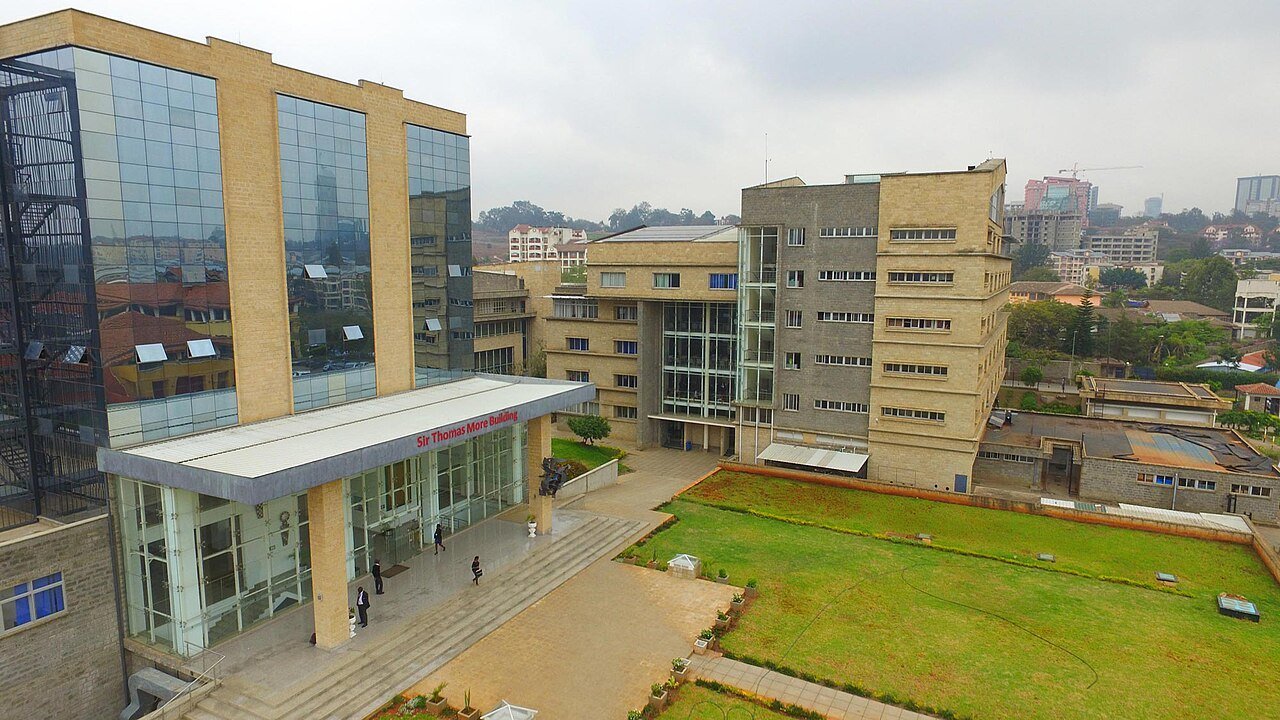
Photo: Strathmore University Kenya / Wikimedia Commons, CC BY-SA 4.0
Love & Relationships
From our sister site diaspora.love
Profile Prompts That Actually Get Responses
Your profile prompts are your chance to show personality. The kinds of prompts that start real conversations, and the ones to skip.
Read on diaspora.love ›
Meeting the Family: A Guide for Cross-Cultural Couples
Meeting each other's families is a big step. What to expect and how to handle different cultural traditions with grace.
Read on diaspora.love ›
5 Tips for Your First diaspora.love Conversation
Starting a conversation on a dating app can feel nerve-wracking. Five tips to make a great first impression and keep the conversation flowing.
Read on diaspora.love ›Read next

Kenya Loses Sh450 Billion Annually to Road Crashes, Chirchir Reveals

US to Cut Health Funding to Kenya Gradually Under New Ksh325 Billion Deal

University Students Tell MPs Not to Raise Kenya’s Legal Drinking Age to 21




Comments
No comments yet — be the first.