
Raila Regrets Collapse of Sh637 Billion Adani Airport Deal
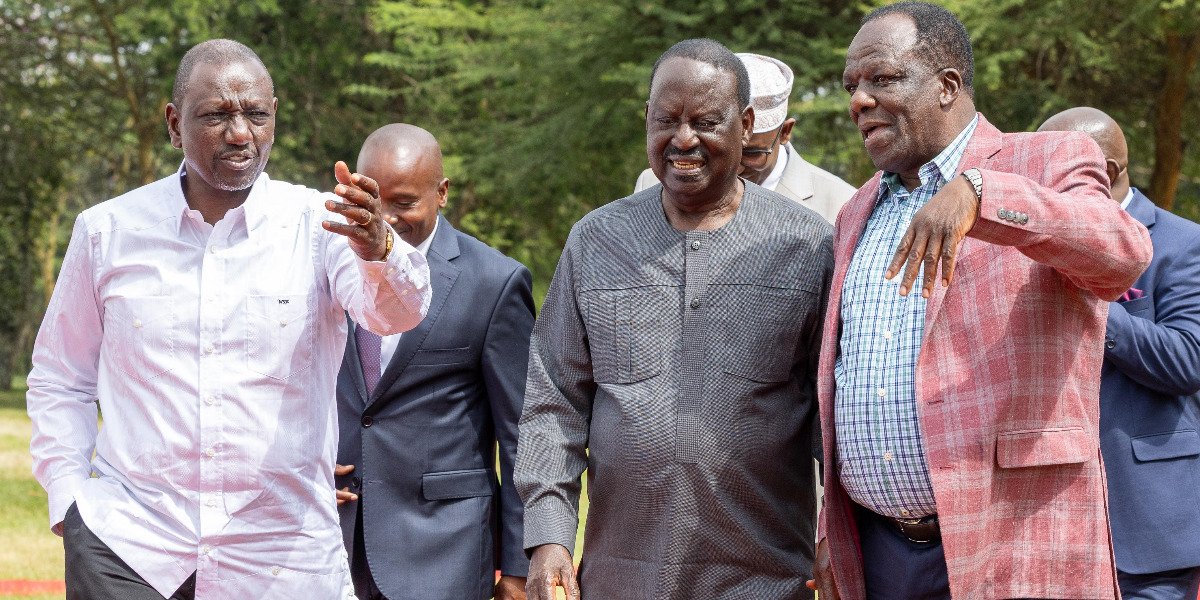
Former Kenyan Prime Minister Raila Odinga has voiced his regret over the abandonment of a Sh637 billion project with India's Adani Group, intended to transform Jomo Kenyatta International Airport (JKIA) into a premier regional hub.
Speaking at the National Executive Retreat in Karen, Nairobi, Raila emphasised the strategic importance of the shelved project, criticising the politicisation that led to its downfall. The proposed partnership with Adani Enterprises involved more than just infrastructure development. According to Raila, it represented a visionary plan to establish Nairobi as the transportation and commercial centre of East Africa.
Under the terms of the agreement, Adani would have managed JKIA and the Kenya Electricity Transmission Company (Ketraco) for three decades. The project also encompassed the long-delayed expansion of the airport's Greenfield terminal, originally approved during Raila's premiership but subsequently abandoned.
The deal had been revived under the current administration, but was once again nullified on the directive of President William Ruto, following disagreements and heightened political scrutiny. Odinga laments the cyclical nature of Kenya's infrastructure setbacks, highlighting previous instances where promising contracts were reversed due to political shifts.
"The Emirates model," Raila argued, "demonstrates how strategic aviation investment, regardless of short-term profitability, can significantly boost tourism, trade, and international stature."
Raila warns that Kenya risks being overshadowed by regional competitors such as Ethiopia and Rwanda, both of which are aggressively expanding their aviation capacities, unless it accelerates its modernisation agenda. He draws on the "Emirates model" as an example of how strategic aviation investment can boost tourism, trade, and international stature. He further stresses that a loss-making national carrier, such as Kenya Airways, can serve a broader economic purpose if anchored by a world-class airport.
Beyond aviation policy, Odinga challenges Kenya's political leadership on matters of governance and civic responsibility. Addressing the turbulence following the controversial Finance Bill 2024, he criticises leaders who exploit national unrest for political gain, warning that opportunism erodes national unity and trust in public institutions. In a pointed appeal, he urges political figures to rise above factionalism and instead focus on pragmatic, citizen-first solutions.
"Leadership is not about riding popular sentiment," he said, "but about courageously steering the nation through adversity."
Raila has acknowledged that the government had taken steps to amend the unpopular bill but insisted that further action was necessary to address the growing socioeconomic burden borne by ordinary Kenyans. Raila's remarks are significant in light of the current political climate, where public demonstrations have underscored deep frustrations with economic policy and perceived political detachment.





Comments
No comments yet — be the first.