
How Nairobi Residents Can Seek Compensation for Flood Damage

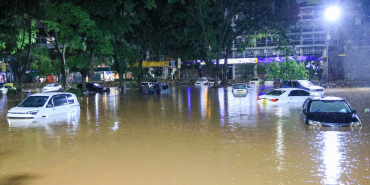
Heavy rains in Nairobi have caused widespread flooding, leaving homes underwater, disrupting businesses, and claiming lives.
The destruction has raised legal questions about whether the county government could be held responsible for the damage. Legal specialists say liability will depend on whether the floods are considered an unavoidable natural disaster or the result of negligence and inadequate planning.
While extreme rainfall may be treated as an “act of God”, lawyers note that blocked drainage systems, poor waste management, and weak urban planning could expose the county to legal claims. Sharon A. Atieno, a senior associate at Roba & Associates Advocates LLP, says constitutional provisions may support such cases.
Article 42 of the Constitution of Kenya guarantees the right to a clean and healthy environment, while Article 70 allows citizens to seek remedies when those rights are violated. She explains that a claim could succeed if a claimant proves that poor planning or failure to maintain infrastructure contributed to flood damage.
Courts, however, require strong evidence, including photographs, engineering reports, and maintenance records, to establish negligence. Atieno also notes that county governments can be sued. Although the Government Proceedings Act provides certain procedural protections, residents may still file constitutional petitions without giving prior notice.
She refers to earlier litigation involving stormwater drainage along Ruaka Road, where courts ordered immediate measures to protect residents from flooding.
Purity Muhindi, an advocate at Muri Mwaniki Thige & Kageni LLP, says counties have clear statutory duties. Under the Fourth Schedule of the Constitution of Kenya, county governments are responsible for stormwater management in urban areas.
She says authorities may be liable if residents demonstrate that damage resulted from negligence, such as failure to maintain drainage infrastructure, poor urban planning, obstruction of natural waterways, or disregard for known flood risks.
Muhindi acknowledges that such cases are difficult to prove because courts require clear evidence linking damage directly to government failure.
Families who lose relatives may pursue compensation for loss of dependency and for violation of the constitutional right to life. She adds that strategic litigation can also prompt systemic reforms, noting previous court orders that required improvements to drainage systems.














Add new comment