
Three Rothschild’s Giraffes Relocated from Naivasha to Nairobi
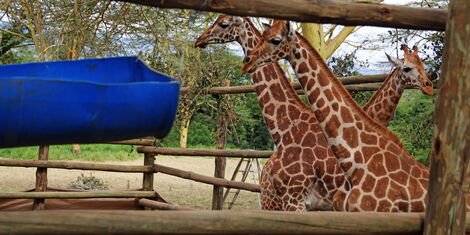
The Kenya Wildlife Service has relocated three young Rothschild’s giraffes from Soysambu Conservancy in Naivasha to the Giraffe Centre in Nairobi.
The giraffes, aged between two and three years, were moved under a long-term conservation programme aimed at improving genetic diversity and reducing the risk of inbreeding among captive and semi-captive populations. KWS said the operation forms part of broader efforts to protect the endangered subspecies, whose numbers have declined because of habitat loss and fragmentation across East Africa.
The Giraffe Centre is expected to gain both scientific and educational benefits from the new arrivals. The giraffes will contribute to ongoing research on giraffe genetics and behaviour and strengthen breeding initiatives. The centre also plays a public education role, giving visitors access to conservation programmes within an urban setting.
KWS said carefully planned wildlife translocations are a key conservation tool. By redistributing animals between protected areas, conservationists seek to maintain healthy populations and support long-term species survival.
Rothschild’s giraffes, also known as Nubian giraffes, are recognised by markings that end above the knees, leaving the lower legs largely white. They are among the tallest giraffe subspecies and have a distinctive arrangement of ossicones, including two prominent horns, a smaller central one, and additional bony bumps behind the ears.
Kenya holds one of the largest remaining populations of Rothschild’s giraffes. The country is also home to Reticulated and Masai giraffes, which can be identified by their different coat patterns. Masai giraffes are common in Nairobi National Park, while Rothschild’s giraffes are mainly found at the Giraffe Centre and Giraffe Manor.
The translocation was carried out in partnership with Soysambu Conservancy and the Giraffe Centre, highlighting cooperation between public agencies and private conservation organisations. KWS said such partnerships are essential in addressing threats including habitat pressure and climate change.





Comments
No comments yet — be the first.