
Nakuru Man Wins Free Dental Care After 120-Hour Tree-Hugging Protest
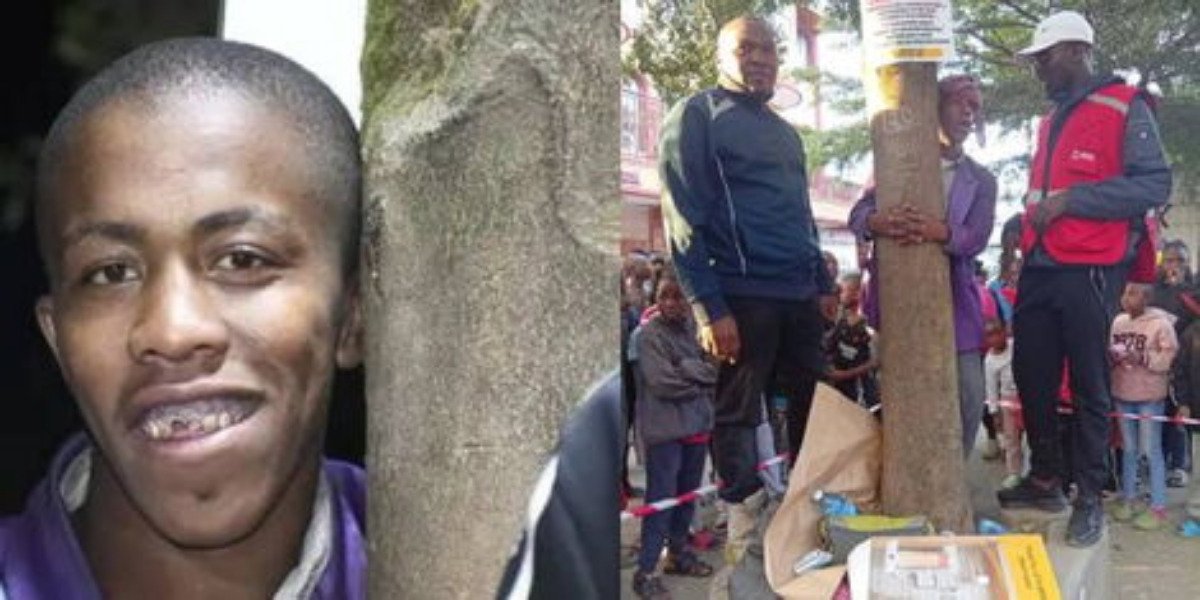
A 21-year-old man from Nakuru has secured free dental treatment from the Kenya Dental Association after completing a 120-hour tree-hugging protest.
David Mwangi Maangi began the challenge on Saturday morning and ended it four days later. The endurance test was intended to highlight discrimination faced by people with dental conditions. Officials from the Kenya Dental Association (KDA) confirmed that they would sponsor his full dental treatment after learning of the protest.
Speaking to Kenyans.co.ke, KDA representative Dr Elikanah Akali said the association had traced Mwangi and arrangements were underway to begin treatment this week. Mwangi said his protest was aimed at drawing attention to barriers that affect young people with poor dental health.
He argued that discoloured or damaged teeth often prevent otherwise qualified candidates from joining institutions such as the police service and the Kenya Defence Forces. He maintained that recruitment decisions should be based on ability rather than appearance.
Tree-hugging protests have become an increasingly visible form of activism in Kenya. The practice began as an environmental gesture but has since been adopted for a range of social causes. It gained prominence after environmental activist Truphena Muthoni completed a 72-hour tree-hugging protest outside the Nyeri Governor’s office to promote conservation. Her action inspired similar demonstrations across the country.
Some attempts have resulted in serious health consequences. Pastor James Irungu collapsed after 79 hours of a planned 80-hour protest in Murang’a and was treated for severe dehydration and multi-organ failure.
In Nanyuki, peace campaigner Paul Kago was admitted to hospital less than a day into a 96-hour challenge. Other cases have ended without incident, including a 50-hour protest by 14-year-old Stephen Gachanja at Nairobi’s Jevanjee Gardens to raise funds for his brother’s surgery.
Public opinion on the protests remains divided. Supporters regard them as an effective way to raise awareness of overlooked issues, while critics describe them as performative and misleading. Saboti MP Caleb Amisi has criticised the practice, referring to some cases as “con games” after an incident in which a man attempting a similar protest in his constituency was assaulted.
Mwangi’s protest resulted in a concrete outcome, with medical support now secured.




Comments
No comments yet — be the first.