
Supreme Court Declines to Halt High Court Proceedings in Gachagua Impeachment Case
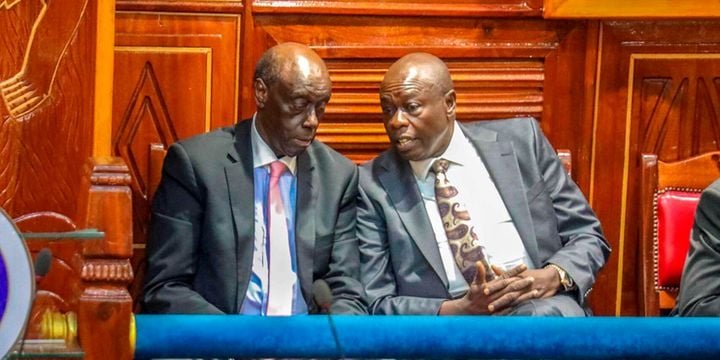
Kenya’s Supreme Court has declined to stop High Court proceedings related to the impeachment of former Deputy President Rigathi Gachagua, ruling that it has no jurisdiction to intervene in matters still before lower courts.
In the same decision, the court rejected an application by the National Assembly seeking to strike out Gachagua’s cross-appeal. The judges held that the issues raised required full consideration, ensuring that the constitutional dispute surrounding the impeachment process will proceed before the Supreme Court.
The ruling was delivered on Friday by a bench led by Chief Justice Martha Koome. The judges clarified that the Supreme Court may only grant interim relief in cases pending before the Court of Appeal and not those before the High Court. They stated that the court “can only grant an order staying further proceedings in the Court of Appeal and no other court below, specifically the High Court”.
The case centres on whether Deputy Chief Justice Philomena Mwilu acted lawfully when she empanelled judges to hear impeachment-related petitions during Chief Justice Koome’s absence. The Court of Appeal previously ruled that the move was unconstitutional, finding that the authority to constitute benches under Article 165(4) of the Constitution rests with the Chief Justice, except in limited circumstances.
Following that ruling, the National Assembly filed an appeal at the Supreme Court challenging the Court of Appeal’s findings. Gachagua, in turn, lodged a cross-appeal contesting other aspects of the decision, including the refusal to order the recusal of judges handling his case.
Gachagua was impeached by the National Assembly in October 2024 under Article 145 of the Constitution. The Senate later upheld the impeachment despite his hospitalisation, after which President William Ruto nominated Prof. Kithure Kindiki as Deputy President. Although the High Court initially issued conservatory orders stopping the Senate process and the swearing-in, those orders were later lifted, allowing Kindiki to take office on 1 November 2024.
The three-judge bench that lifted the orders—Justices Eric Ogolla, Anthony Mrima, and Fredah Mugambi—was later reassigned by Chief Justice Koome after the Court of Appeal found that their empanelment by Deputy Chief Justice Mwilu was unlawful. Gachagua has argued that the judges should have recused themselves, citing alleged bias and procedural irregularities.
His legal team, led by Paul Muite, also applied to have Parliament’s appeal dismissed on the grounds that it amounted to an abuse of process. They further sought the removal of certain documents from the record.
The Supreme Court rejected those applications, finding that the issues raised could not be resolved summarily. The judges held that Parliament’s appeal raised substantive questions, including the proper application of judicial estoppel in constitutional litigation. They also declined to expunge the disputed documents, noting that they had featured in earlier proceedings and were central to the dispute over judicial authority.



Comments
No comments yet — be the first.