

How Dolly Parton Built a $100 Million Music Legacy From Humble Beginnings
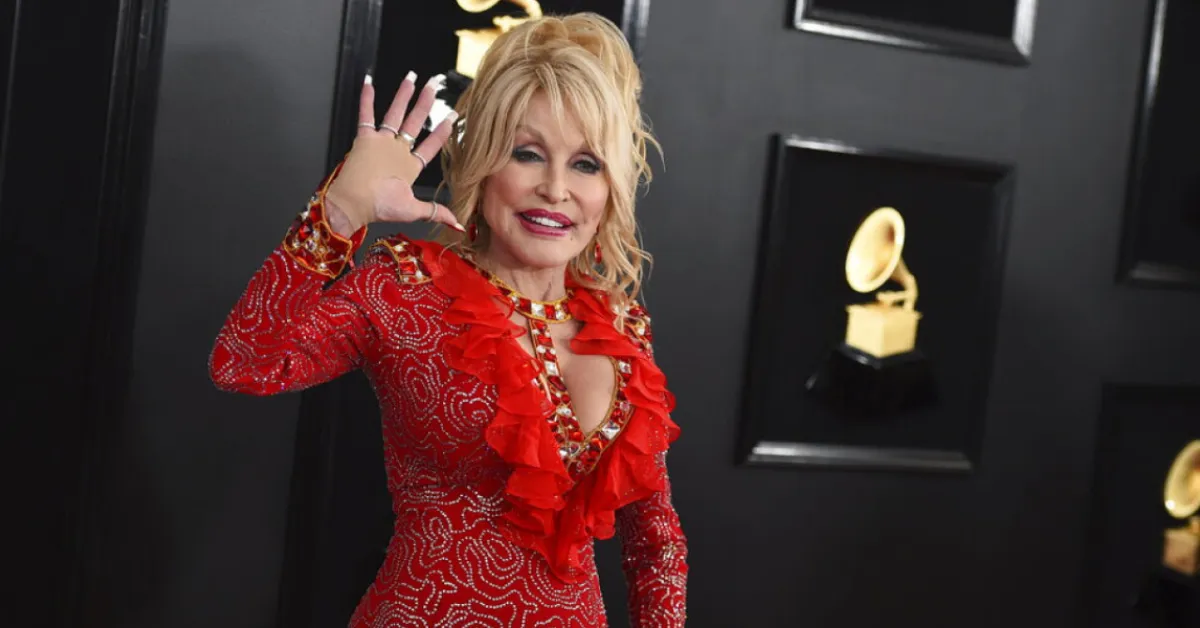
Dolly Parton built a career spanning more than six decades, selling more than 100 million records, winning 10 Grammy Awards and writing more than 3,000 songs.
Born Dolly Rebecca Parton in 1946, she was the fourth of 12 children raised in a poor farming family in Tennessee. Her father, Robert Lee Parton, worked as a tobacco farmer, while her mother, Avie Lee, regularly sang folk songs at home. Other relatives played instruments and wrote music, giving Parton an early introduction to songwriting.
By the age of six, Parton was singing at her local church, where her grandfather was pastor. Her ambitions soon moved beyond the church. As a teenager, she appeared on local television, and in 1959, aged 13, she performed at Nashville’s Grand Ole Opry with her uncle Bill Owens. Johnny Cash introduced her, and she received three encores.
Parton’s appearance also became an important part of her public identity. As a teenager, she admired a flamboyantly dressed local woman whom others regarded as disreputable. Parton instead saw confidence and glamour in her appearance. She later adopted exaggerated hair, make-up, colourful clothing and high heels as part of her own image.
The appearance that some people might have dismissed as provocative became an important part of Parton’s professional identity. She understood that the entertainment industry would make assumptions about her appearance and used those assumptions to her advantage. Behind the wigs, acrylic nails and elaborate costumes was an artist who paid close attention to contracts, ownership, branding and the value of her creative work.
After finishing high school in 1964, Parton moved to Nashville to pursue music professionally. She met Carl Dean on her first day in the city, and they married two years later. Their marriage lasted until Dean died in 2025.
Parton’s career accelerated after country performer Porter Wagoner recruited her for his television programme. Their partnership became one of the most successful duos in country music, but Parton’s growing ambitions eventually created tension. As her solo career developed, she wanted to establish herself independently rather than remain known primarily as Wagoner’s partner.
That period produced some of her most important songs. While travelling with Wagoner in 1969, Parton wrote Coat of Many Colors, drawing on memories of poverty and her mother making clothes for the family. The song turned material hardship into a story about family affection and dignity, reflecting Parton’s ability to find powerful stories in ordinary experiences.
Parton left Wagoner’s show in 1974. To express her feelings about the separation, she wrote I Will Always Love You. The song later became globally associated with Whitney Houston’s 1992 recording, but it began as a personal farewell from Parton to Wagoner.
Parton also faced an important decision when Elvis Presley was preparing to record the song. His management wanted a substantial share of the publishing rights, but Parton refused. She later recalled being deeply disappointed by the decision but ultimately recognised the importance of retaining ownership of her composition. Houston’s later recording became one of the best-known vocal performances in popular music and introduced Parton’s songwriting to a new generation.
Another major success came with Jolene, released in 1974. The song centres on a woman pleading with another woman not to take her husband. Parton later explained that it was partly inspired by a bank employee who had shown interest in Carl Dean. She treated the situation with humour rather than presenting it as a serious marital crisis.
Jolene has since been recorded by numerous artists, including The White Stripes, Miley Cyrus and Beyoncé. Its continued popularity reflects the broad appeal of its themes of jealousy, insecurity and romantic vulnerability.
Parton expanded into film during the 1980s and wrote the title song for 9 to 5. The song developed from an unusual source of inspiration. While working on the film, Parton noticed that the sound of her acrylic nails striking together resembled the tapping of a typewriter. She incorporated the sound into the creative process and produced a song about the frustrations faced by working women.
The success of 9 to 5 reinforced Parton’s development beyond country music. She became an entertainer whose work extended across music, film, television, publishing and business while maintaining control over her public image.
Her business interests became increasingly important as her career grew. Parton established Dolly Records and became a co-owner of the Dollywood Company, which operates Dollywood and other entertainment and hospitality businesses.
Dollywood opened in 1986 in the foothills of the Great Smoky Mountains, an area closely associated with Parton’s childhood and identity. Parton’s business achievements have sometimes been overshadowed by her deliberately playful public image. She has acknowledged that people can underestimate her because of her appearance. Rather than abandoning that image, she used it to distinguish herself while building a business career based on careful decisions about ownership, branding and commercial opportunities.
Her career has also produced a substantial philanthropic legacy. In 1999, Parton established the Imagination Library, partly inspired by her father’s inability to read and write. The programme began by providing free books to children in Tennessee before expanding internationally. The Dollywood Foundation has also supported education, healthcare and communities affected by disasters.
During the Covid-19 pandemic, Parton donated $1 million to Vanderbilt University Medical Centre to support research that contributed to the development of the Moderna vaccine. The donation was part of her wider record of directing some of the wealth generated by her entertainment career towards causes and communities she considers important.
In later years, Parton’s career was also affected by health-related setbacks. She postponed a planned Las Vegas residency in 2026 while receiving treatment for kidney stones. In discussing the decision, she used the humour that has long characterised her public persona, joking about the difficulty of performing in five-inch heels and elaborate costumes.
Her career has therefore extended well beyond record sales and awards. Parton emerged at a time when women faced significant barriers to establishing themselves as independent artists and business figures. She built an independent career while maintaining control over her music, public image and commercial interests.
Her songs continue to draw heavily on her childhood, while her businesses have transformed elements of her Appalachian background into a global entertainment enterprise. Her philanthropy has also directed resources towards children, education and communities.




















Add new comment