

Duale Assures Diplomats Kenya Is Safe for Travel, Trade and Investment
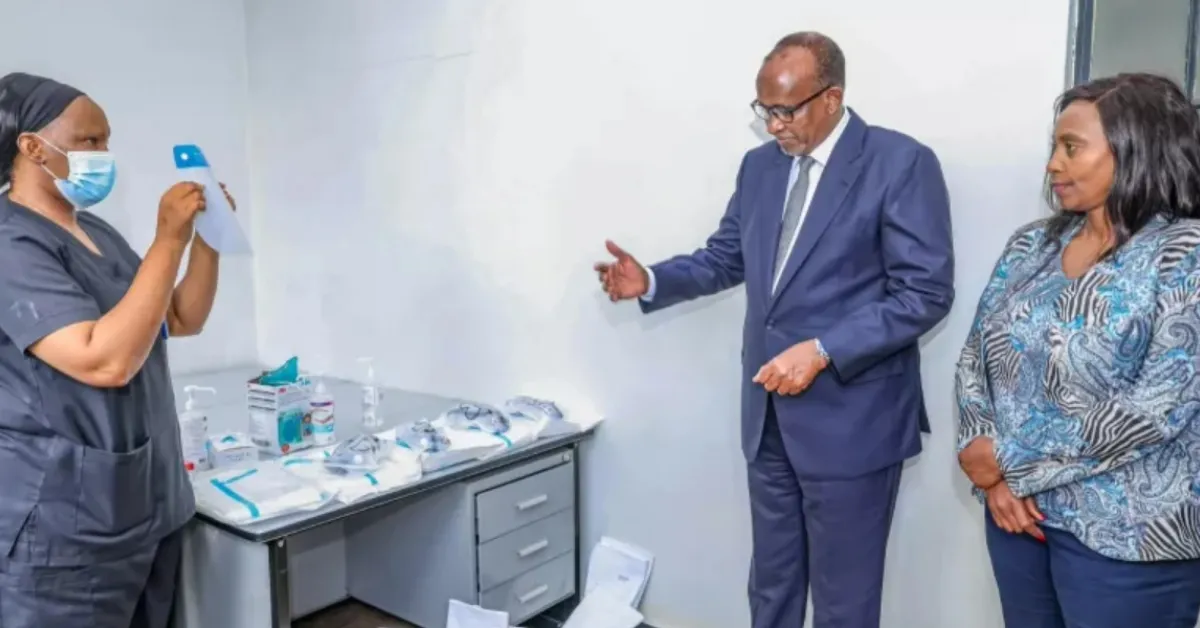
Health Cabinet Secretary Aden Duale has assured diplomats and international partners that Kenya remains safe for travel, trade and investment following the confirmation of an imported Ebola case.
Speaking during a meeting with diplomats, international organisations and development partners on Thursday, Duale said the detection of a single imported case should not be treated as evidence of wider transmission. He said Kenya’s response was being guided by epidemiological data, scientific advice and established public health procedures.
“I assured our international partners that Kenya remains safe, open and vigilant. The single imported case does not, on its own, indicate widespread transmission and our response continues to be guided by verified epidemiological data, scientific advice and established public health protocols,” he said.
The government’s reassurance comes as Kenya faces increased scrutiny from foreign governments and health authorities. As a major regional transport and business hub, Kenya is seeking to prevent concerns over Ebola from affecting tourism, trade and investment while maintaining strict public health measures.
Kenya confirmed that a traveller who had arrived from the Democratic Republic of Congo died after contracting Ebola. Health authorities launched contact-tracing efforts and identified dozens of people who may have been exposed. Some of those identified were placed under quarantine as investigations continued.
The case prompted travel-related advisories from the United States and the United Kingdom. US officials advised potentially exposed people to monitor their health and seek medical attention if they developed symptoms, while British authorities advised against non-essential travel to certain areas.
The World Health Organisation has urged Kenya to avoid broad restrictions on cross-border travel and trade. It has instead supported targeted measures such as surveillance, testing and contact tracing, which can help control transmission while limiting disruption to movement and economic activity.
Kenya has activated a national response framework focused on early detection and containment. Health authorities are strengthening surveillance in healthcare facilities and communities, improving systems for identifying suspected cases and ensuring that patients can be isolated quickly.
The Ministry of Health says designated isolation, treatment and quarantine facilities across the country have a combined capacity of 241 beds. Laboratories have also tested hundreds of samples, with results available within hours rather than days.
Screening has been strengthened at Jomo Kenyatta International Airport for travellers arriving from countries considered to pose an elevated Ebola risk. The enhanced monitoring covers arrivals from the Democratic Republic of Congo, Uganda, Tanzania, Ethiopia, Angola, Zambia, Rwanda, Burundi, South Sudan and the Central African Republic.
The government is also working with neighbouring countries, particularly Uganda and the Democratic Republic of Congo, as well as international health organisations. Duale said cooperation was important for logistics, field operations, patient referrals, transportation and community outreach.
Kenyan authorities maintain that the imported case remains a contained public
health incident rather than evidence of a wider outbreak. They say continued surveillance, laboratory testing, contact tracing and regional cooperation will be critical to detecting and containing any further infections.



















Add new comment