


Loresho, Kitisuru Lead Nairobi Rent Increases as UN Staff Relocate
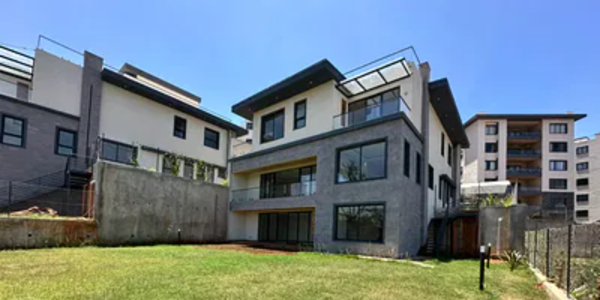
Demand from international workers and United Nations personnel pushed house rents sharply higher across several of Nairobi’s established suburbs in the third quarter of 2026, offsetting a wider slowdown in the city's land market.
Data from the latest HassConsult Property and Land Price Indexes, released on Thursday, November 5, shows that Loresho led quarterly rental growth at 6.2 per cent. Kitisuru followed with a 5.1 per cent rise, Muthaiga recorded 4.5 per cent, and Gigiri saw rental prices increase by 3.9 per cent. Over a 12-month period, Loresho recorded a 14.9 per cent jump in rents.
HassConsult Co-CEO Sakina Hassanali attributed the rental surge to an influx of international staff moving into primary diplomatic zones.
“The concentration of rental growth in Nairobi's established diplomatic and international residential neighbourhoods is significant,” Hassanali said, pointing to the expansion of United Nations operations and personnel relocations to Nairobi as a key driver.
Overall suburban rental asking prices rose by 2.7 per cent during the quarter, up from 1.4 per cent in the previous three months, nearing the fastest quarterly growth in three years. Sale prices in these neighbourhoods also increased, led by Spring Valley at 6.8 per cent, Westlands at 5.9 per cent, Muthaiga at 5.5 per cent, and Karen and Loresho at 5.2 per cent each. The overall suburban property asking-price index grew by 2.3 per cent, marking its strongest quarterly performance in four years.
Hassanali noted that limited housing supply in prime locations, alongside lower borrowing costs and improving private-sector credit, supported the higher property prices.
However, the rental gains in diplomatic nodes contrasted with performance in apartment markets and satellite towns. Apartment rents in Kileleshwa registered the steepest annual fall at 12 per cent, while Ruaka apartments recorded the largest quarterly decline at 2.7 per cent. Parklands apartment sale prices dropped by 2.4 per cent over the quarter.
In the satellite towns, property asking prices fell by 0.6 per cent for a second consecutive quarter, while rental growth slowed to 0.4 per cent. Ngong led house sale price drops among the satellites, falling 1.2 per cent, followed by Ongata Rongai at 1 per cent, Juja at 0.6 per cent, and Kitengela at 0.5 per cent.
The land market also showed signs of cooling. Overall suburban land price growth slowed to 0.7 per cent in the third quarter from 1.4 per cent in the second quarter, marking the slowest quarterly appreciation in three years.
Muthangari led land price declines among suburbs with a 3.1 per cent quarterly drop. Land prices in Gigiri fell by 2.2 per cent, Riverside by 1.5 per cent, Spring Valley by 1.2 per cent, and Ridgeways by 0.6 per cent.
“The sharp moderation in the third quarter suggests that the previous quarter's rebound was a temporary acceleration rather than a sustained shift in land-price momentum,” Hassanali said, adding that Nairobi's land market was settling into a period of more measured growth.
Despite the broader land slowdown, 13 of the 18 suburbs tracked by the index gained value. Karen topped quarterly land growth at 3.0 per cent, followed by Westlands at 2.7 per cent and Kitisuru at 2.6 per cent. Kilimani posted a 1.2 per cent gain. On an annual basis, Karen led land appreciation at 10.9 per cent, followed by Runda at 8.4 per cent and Langata at 7.7 per cent.
In satellite towns, land prices grew by 0.65 per cent, down from 1.4 per cent in the previous quarter. Nine of the 14 satellite towns recorded gains, led by Ngong at 2.2 per cent, Kiserian at 2.0 per cent, and Athi River at 1.9 per cent. Syokimau saw the largest land price drop at 2.2 per cent, followed by Ongata Rongai at 2.0 per cent and Tigoni at 0.9 per cent.
HassConsult noted that land appreciation in 12 of the 14 satellite towns over the past two years trailed the returns of rolling 91-day Treasury bills, with only Ruiru and Juja outperforming the benchmark.






Comments
No comments yet — be the first.