


New Green Card Route Proposed for Immigrants Facing US Deportation, Newsweek Reports

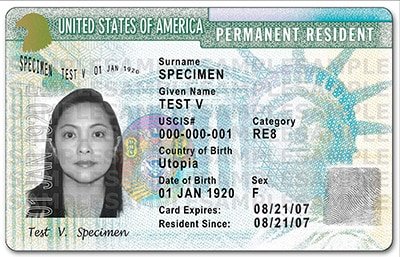
A new green card route has been proposed for immigrants facing deportation in the United States, according to a report published by Newsweek on November 23, 2026. The proposal, highlighted in Newsweek's November 23 immigration bulletin, would create an additional pathway to lawful permanent residence for foreign nationals caught in removal proceedings, the court process through which the federal government seeks to deport people from the country.
The report is the first public signal of the measure, which remains at the proposal stage and has not been enacted. Nothing in the November 23 bulletin indicated an effective date, and any new route to permanent residence would have to be adopted through legislation or federal regulation before a single applicant could use it.
The development matters to Kenyan and other African nationals who are among the foreign nationals processed each year through U.S. immigration courts, where the defenses available against deportation are few. It also arrives amid the enforcement expansion of President Donald Trump's second term, which has widened interior arrests and increased the number of people placed in proceedings.
Under current law, an immigrant in removal proceedings has only a handful of ways to leave the courtroom with a green card. The most direct is adjustment of status under Section 245 of the Immigration and Nationality Act, under which an immigration judge may grant permanent residence to a respondent who has an approved family or employment petition and a visa immediately available. Most people put into proceedings have no such petition, which is why removal orders far outnumber grants of relief.
The best-known shield is cancellation of removal under Section 240A of the same act. A non-permanent resident must show ten years of continuous physical presence in the United States, good moral character, and that deportation would cause exceptional and extremely unusual hardship to a spouse, parent or child who is a U.S. citizen or lawful permanent resident. Congress caps the relief at 4,000 grants per fiscal year nationwide, a ceiling that limits how many people can receive it no matter how strong their cases are.
A third route, registry under Section 249 of the act, is open only to people who have maintained continuous presence in the country since before January 1, 1972, a date that excludes virtually everyone now moving through the system. The combined effect of those constraints is that relief in immigration court is the exception rather than the rule, and a dedicated green card route for respondents in proceedings would mark a structural change to that system.
Removal cases unfold in the immigration courts of the Executive Office for Immigration Review, a Department of Justice agency reporting to Acting Attorney General Todd Blanche. Prosecution of the cases falls to the Department of Homeland Security under Secretary Kristi Noem, whose Immigration and Customs Enforcement officers make the arrests and file the charging documents. The courts' pending inventory has grown beyond three million cases, leaving many respondents with waits of several years for a final decision, a timescale over which a newly created route, if adopted, could reach people whose cases are still open.
A green card ends the deportation case and confers the right to live and work permanently in the United States, to travel abroad and return, and to petition for certain relatives. After five years of residence, or three years for permanent residents married to U.S. citizens, a green card holder may apply for naturalization.
Immigrants from Kenya and other African countries in removal proceedings typically rely on cancellation of removal or family-based adjustment, and their stake in any new route is direct: a grant of relief in court closes the case and restores a stability that a pending proceeding does not provide. U.S. Citizenship and Immigration Services, the agency that issues green cards, would administer any adopted pathway alongside its existing benefits.
Federal immigration rules take effect only after publication in the Federal Register and, in most cases, a public comment period, while legislation requires passage by both chambers of Congress and the president's signature. Until one of those steps occurs, the proposal reported by Newsweek provides no protection from removal, and respondents in immigration courts remain limited to the forms of relief already written into the Immigration and Nationality Act.
Photo: National Photo Company Collection / Wikimedia Commons, Public domain






Comments
No comments yet — be the first.