
Amnesty Director Quits Following President Ruto’s Panel Restructuring
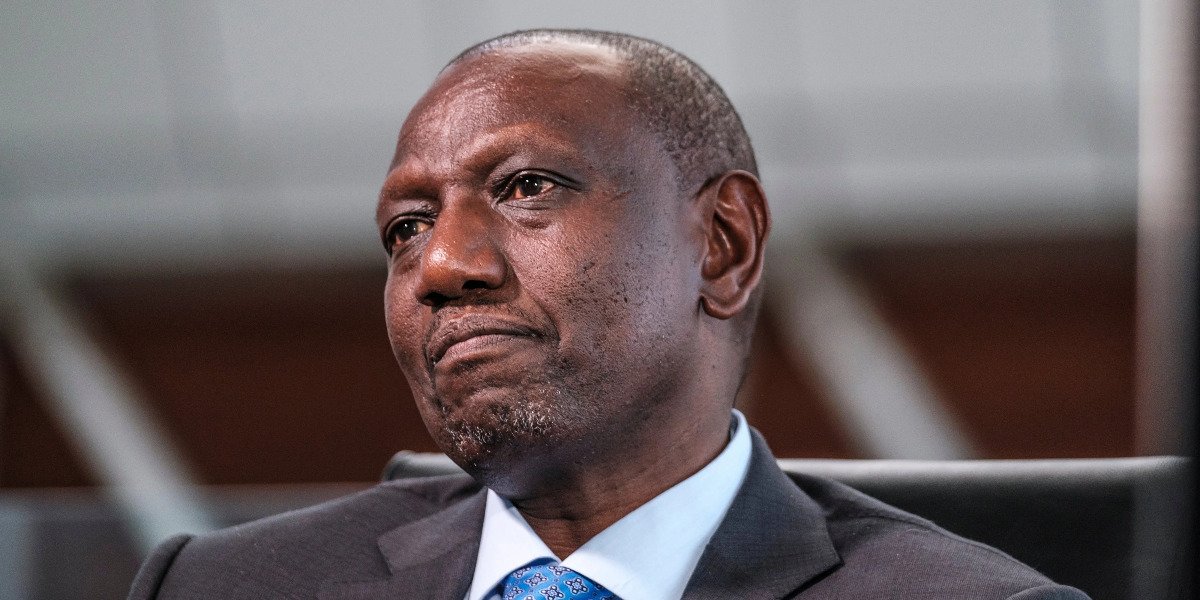
The Executive Director of Amnesty International Kenya, Irungu Houghton, has resigned from a government-appointed panel tasked with compensating victims of demonstrations and public protests, citing constitutional concerns following a High Court ruling that declared the panel unlawful.
In a letter dated 9 January 2026, Houghton said he was withdrawing immediately from the Panel of Experts on Compensation of Victims of Demonstrations and Public Protests. He argued that the panel no longer had legal standing after the Kerugoya High Court ruled on 4 December 2025 that the President lacked constitutional authority to establish it.
The court found that responsibility for assessing and compensating victims of protest-related violence lies exclusively with the Kenya National Commission on Human Rights (KNCHR), an independent constitutional body. It held that the creation of a parallel mechanism by the executive violated the Constitution.
Houghton said continuing to serve on the panel would legitimise a structure already declared unconstitutional. He also raised concern that his name had been included as an appellant in an application seeking to suspend the High Court ruling, stating that this was done without his knowledge or consent.
He noted that he had suspended his participation in the panel in September 2025 while awaiting the court’s decision and did not take part in any appeal against the judgment. He said he had consistently maintained that the panel should comply fully with the ruling once it was delivered.
The resignation follows a government decision to extend the panel’s mandate by six months, despite the court’s findings. In a Special Gazette Notice issued on 5 January 2026, the panel was stripped of its authority to verify victims or disburse compensation and reconstituted as an advisory body.
Under the revised mandate, the panel’s role is limited to making recommendations to the President based on reports prepared by KNCHR. Verification of victims and administration of compensation are to be handled in line with the court’s directions.
Houghton warned that continued litigation over the panel’s legality could delay justice for victims and their families. He said adherence to constitutional principles and respect for institutional roles should take priority over administrative or political considerations.
Despite the legal dispute, government officials have said compensation for victims of protests and riots will continue. In a statement issued on 9 January 2026, the panel said it would comply with the High Court ruling and clarified that the appeal filed by the state does not suspend implementation of the judgment.
The statement said administrative measures were being taken to align the compensation process with the court’s orders. It did not give a timeline for when payments would be made under the revised framework.
The courts have played a significant role in recent cases involving protest-related accountability. In April 2025, the High Court awarded Ksh2.2 million to 11 demonstrators whose rights were violated during the 2024 anti-tax protests and struck down a police ban on protests in Nairobi’s central business district.
More recently, on 5 January 2026, the Eldoret High Court ordered parents of students at Litein Boys High School to collectively pay Ksh69 million for property damage caused during riots at the school.

Comments
No comments yet — be the first.