
Explained: Why 2026 Safari Rally Winner Takamoto Katsuta Gets No Prize Money
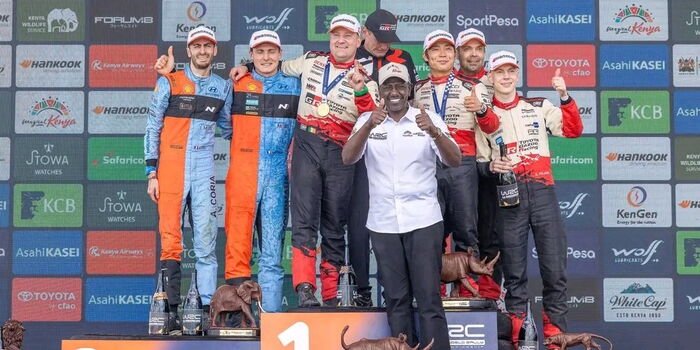
Japanese driver Takamoto Katsuta won the 2026 Safari Rally in Naivasha on Sunday, claiming his first victory in the World Rally Championship after a weekend marked by multiple retirements among the leading contenders.
Katsuta’s success marks a major personal milestone and strengthens the position of Toyota Gazoo Racing in the manufacturers’ standings. His victory came after a series of mechanical problems and incidents reshaped the competition during the final stages of the rally.
At the start of the third day, Katsuta was not among the leading drivers. The standings changed when several frontrunners withdrew from the race. Oliver Solberg retired with transmission and alternator failures, while Sébastien Ogier left the rally because of an alternator malfunction.
Defending champion Elfyn Evans also lost time after suffering a puncture that ended his challenge for the win. Katsuta took advantage of these setbacks and maintained a steady pace through the final stages. He finished 27.4 seconds ahead of Hyundai driver Adrien Fourmaux, who secured his team’s first podium finish of the season.
The victory does not bring direct prize money. The World Rally Championship does not award cash prizes to rally winners. Drivers instead receive income through team contracts, performance bonuses and sponsorship agreements. Katsuta’s financial reward will depend on the terms of his contract with Toyota, although the result is likely to strengthen his commercial value.
President William Ruto presented Katsuta with a handcrafted wooden carving to mark the victory. The same tradition was observed when Kalle Rovanperä won the rally in 2024.
Toyota’s performance in Naivasha extended its lead in the manufacturers’ championship to 157 points, with Hyundai on 114. The result continues the team’s strong record at the Kenyan event.
During the closing ceremony, President Ruto also announced a policy change affecting the rally’s future. He said the government will stop funding and promoting the Safari Rally from 2027, leaving the event to be organised and financed by the private sector.
“This is the last Safari Rally where we will be spending public money to promote. From next year, this event will be fully funded and supported by the private sector,” he said.
He added that public funds would instead be directed towards schools and grassroots sports programmes. Kenya’s current hosting agreement with the FIA is approaching its end.
The Safari Rally returned to the World Rally Championship calendar in 2021 after a 19-year absence. The government initially secured a five-year hosting contract, which was later extended to include the 2026 edition.
Discussions are under way about a possible extension of Kenya’s place on the championship calendar. Private sponsors are expected to play a larger role if the event continues.
The rally remains one of Kenya’s most prominent sporting events and contributes to sports tourism, particularly in Nakuru County.

Comments
No comments yet — be the first.