
Supreme Court Ruling Clears Path for Deportations: Implications for Haitians and Syrians

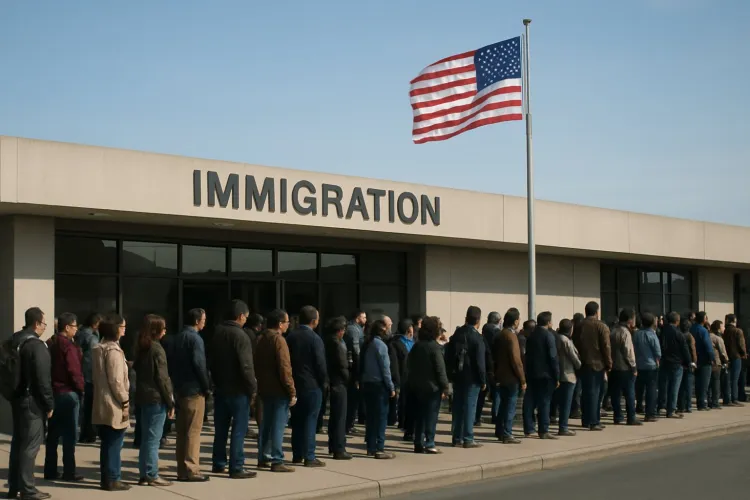
In a significant legal and humanitarian development, the United States Supreme Court has ruled in favor of the Trump administration's authority to terminate Temporary Protected Status (TPS) for tens of thousands of Haitian and Syrian nationals residing in the country. The decision, delivered on June 25, 2026, permits the government to proceed with its plans to deport individuals who had previously been shielded from removal due to dire conditions in their homelands.
Temporary Protected Status is a provision under the Immigration Act of 1990 that allows foreign nationals from countries experiencing conflict, environmental disaster, or other extraordinary conditions to reside and work in the United States without facing deportation. The current administration has argued that the circumstances in Haiti and Syria have improved sufficiently to end these protections. "The law is clear," stated the U.S. Secretary of State, emphasizing the administration's position that "TPS is not intended to be permanent."
The Supreme Court's decision reflects a contentious debate over the scope of executive power and the criteria for designating and terminating TPS. The ruling impacts approximately 50,000 Haitian and 7,000 Syrian nationals, many of whom have established deep roots in American communities over decades. Advocacy groups have expressed concern about the potential humanitarian consequences of this decision. "Sending individuals back to countries that are still struggling with significant challenges is not only inhumane but also counterproductive," commented Todd Blanche, the U.S. Acting Attorney General, acknowledging the legal but controversial nature of the ruling.
The court's decision arrives amidst ongoing instability in Syria and Haiti. Syria continues to grapple with the aftermath of a protracted civil war and sporadic violence, while Haiti is facing political turmoil and the lingering effects of natural disasters. This context has raised questions about the feasibility and morality of returning TPS holders to such environments. Human rights organizations have urged the international community to provide more robust support to these nations to help address systemic issues exacerbating displacement.
For many TPS holders, the ruling represents a distressing uncertainty about their future. With livelihoods and families built in the U.S., the prospect of deportation looms large. "These are people who have contributed to our economy and society," stated a spokesperson from the American Immigration Council, calling for legislative action to provide a path to permanent residency for long-term TPS beneficiaries.
The broader international implications of this decision are being closely monitored, particularly in regions where migration pressures are acute. Countries in Africa and other developing regions may face increased burden as displaced persons seek new destinations. The ruling underscores the need for comprehensive international collaboration to address global migration challenges.
As the situation unfolds, the U.S. Congress is expected to revisit discussions on immigration reform, with potential legislative proposals aiming to balance national security and humanitarian commitments. The upcoming months will be crucial in determining the trajectory of U.S. immigration policy and its impact on both domestic and international arenas.




Comments
No comments yet — be the first.