


USCIS Guidance Could Bring Neighborhood Investigations to US Citizenship Applications, Raising Stakes for Kenyan Green Card Holders

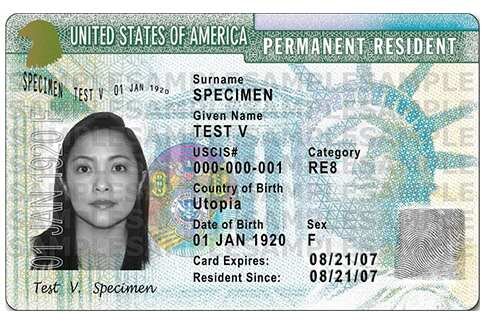
US Citizenship and Immigration Services has issued new guidance that could subject people applying for United States citizenship to investigations in their own neighborhoods, a policy shift that adds an unfamiliar layer of scrutiny for green card holders — including tens of thousands of Kenyans — pursuing naturalization.
The guidance, reported on November 7, 2026, would allow officers adjudicating Form N-400, the Application for Naturalization, to step beyond the standard interview room at a USCIS field office. Officers could visit the home address an applicant listed on the form, question neighbors and landlords, and gather information about an applicant's residence, household and conduct as part of the government's review of whether that applicant meets the good moral character standard.
USCIS, the federal agency headquartered in Camp Springs, Maryland, administers the naturalization system as a component of the Department of Homeland Security, which Secretary Kristi Noem leads. The guidance is the latest in a series of Trump administration measures that have tightened the path to citizenship and expanded vetting of immigrants already living legally in the United States.
The legal backdrop for the new checks is long-standing. Under Section 316 of the Immigration and Nationality Act, a naturalization applicant must be at least 18 years old, have held lawful permanent resident status for five years — or three years if married to a United States citizen — maintain continuous residence in the country, demonstrate good moral character during the statutory period, and pass tests in English and civics. The good moral character review is where neighborhood investigations would bite: an officer who learns from neighbors that an applicant does not actually live at the listed address, or that household circumstances differ from what was described in the application, could treat the discrepancy as grounds for a denial or a request for further evidence.
The scale of the population touched by the change is large. USCIS naturalized nearly 880,000 people in fiscal year 2023, the agency reported, and American Community Survey data place the Kenya-born population living in the United States above 100,000, a community that has grown steadily over the past two decades and for whom the green card is often the final stop before citizenship.
Applying is already a demanding and costly step. The N-400 filing fee stands at $630 for online filing and $760 for paper filing under the fee schedule that took effect on April 1, 2024, and processing commonly runs six months or longer at busy field offices. The prospect of an officer canvassing a neighborhood before or after the interview adds a new element of uncertainty to a process that applicants typically prepare for over several years.
A denial under the new scrutiny would not necessarily end the road. An applicant can file Form N-336, the Request for a Hearing on a Decision in Naturalization Proceedings, within 30 days of an unfavorable decision, or ask a federal district court for a fresh review of the case under Section 336(b) of the Immigration and Nationality Act. But discrepancies surfaced by a neighborhood check can carry heavier consequences than a simple denial, because false statements in naturalization proceedings are grounds for refusing the application, referral for prosecution under federal false statement statutes, and, for those already naturalized, revocation of citizenship through civil denaturalization under Section 340 of the same act.
For the Kenyan diaspora, naturalization is among the most consequential steps in the immigration journey, and it no longer forces a choice of nationality. Kenya's 2010 Constitution restored dual citizenship, implemented through the Kenya Citizenship and Immigration Act of 2011, so a Kenyan who takes the American oath does not lose Kenyan nationality, although Kenyan law requires citizens who acquire another nationality to formally register that status with authorities in Nairobi.
The good moral character assessment covers the five years immediately before an application is filed, meaning that conduct, residence and household arrangements during that window — and how closely they match the sworn answers recorded on the N-400 — will determine how much weight a neighborhood investigation carries in each case.



Comments
No comments yet — be the first.