


New Boundless Data Measures 2026 USCIS Processing Delays for Green Cards, Family Petitions and Naturalization

New data released this week by Boundless Immigration, the Seattle, Washington-based immigration services company, measures how long United States Citizenship and Immigration Services is taking to decide cases in 2026, spanning the four application types that dominate Kenyan diaspora files: family petitions, green cards, card renewals and naturalization. The 2026 figures arrive nearly two years into President Donald Trump's second term, a period in which waiting times have become the central fact of life for Kenyan families split between the United States and Kenya.
USCIS, an agency of the Department of Homeland Security under Secretary Kristi Noem and headquartered in Camp Springs, Maryland, adjudicates every link in that chain. Form I-130 petitions are filed by US citizens and lawful permanent residents for spouses, children, parents and siblings in Kenya; Form I-485 applications convert approved petitions into permanent residence; Form I-90 renews expiring cards; and Form N-400 turns residence into citizenship. The new Boundless analysis focuses squarely on processing delays across those categories, distinguishing itself from earlier 2026 reporting that tracked a drop in the agency's pending backlog and procedural shifts that upended routine filings.
The stakes for Kenyan households are concrete. More than 100,000 Kenyan-born people live in the United States, and the diaspora as a whole sends home remittances that the Central Bank of Kenya has counted at more than $4 billion a year. Every month of delay in a petition or renewal ripples through employment, travel and family reunification plans on both sides of the Atlantic.
For relatives still in Kenya, the delay begins with the I-130 petition and continues through the State Department's Visa Bulletin, which is published monthly. Immediate relatives of US citizens - spouses, parents and unmarried children under 21 - face no annual numerical cap, but other relatives fall under the family preference system, where Section 202 of the Immigration and Nationality Act bars any single country from receiving more than 7 percent of family- and employment-based visa numbers in a fiscal year. Sibling cases in the F4 category have historically run well past a decade, and approved petitions for relatives in Kenya are routed through immigrant visa processing at the US Embassy in Nairobi.
Inside the United States, applicants adjusting status on Form I-485 have paid more since the USCIS fee schedule that took effect on April 1, 2024, which raised the adjustment fee to $1,440 from $1,225 and imposed separate fees for the work-authorization and travel documents that had previously been bundled with the application. Longer adjudication times mean longer stretches in that holding pattern, dependent on interim permits to work and to leave the country without abandoning the case.
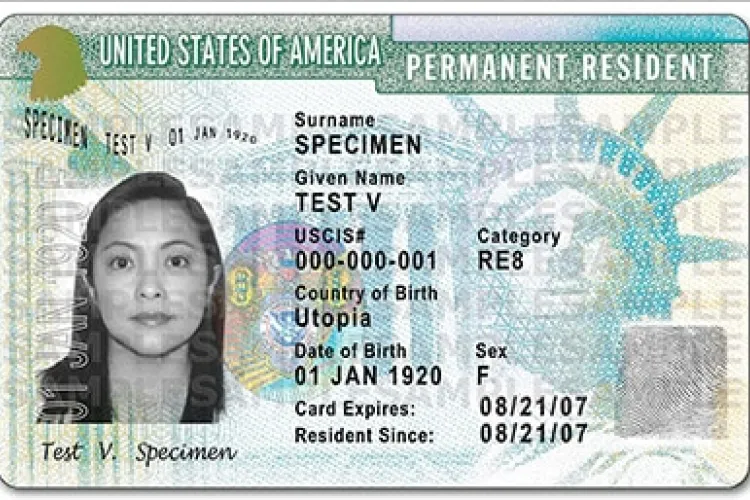
Green card holders caught in renewal queues on Form I-90 face a different problem: a card can expire while the replacement application is pending, even though permanent residence itself does not lapse. USCIS can place temporary I-551 evidence, commonly an ADIT stamp, in a passport to bridge employment verification, banking and reentry at the border, but obtaining that bridge now depends on the same backlogged agency.
Naturalization delays carry their own weight for Kenyans. Under Section 316(a) of the Immigration and Nationality Act, a green card holder must wait five years after becoming a permanent resident to file Form N-400, or three years under Section 319(a) if married to a US citizen, and must pass the English and civics tests. The April 2024 fee schedule raised the naturalization fee to $760 on paper or $710 online, up from $725 under the prior schedule. Kenya changed its own side of the equation in 2010: Article 16 of the Constitution of Kenya permits dual citizenship, implemented through the Kenya Citizenship and Immigration Act of 2011, so a Kenyan who naturalizes in the United States no longer forfeits Kenyan citizenship as the pre-2010 rule required. What delays cost applicants is the US passport, the vote and the ability to petition relatives as an immediate relative of a citizen.
Applicants can track their position against the official clocks USCIS itself maintains. The agency updates its online processing-times tables monthly for each form at each field office and service center, and posts a receipt date showing when a case becomes old enough to submit an inquiry as outside normal processing time. Cases that cross that threshold can be raised through the USCIS Contact Center at 800-375-5283 or through the agency's online e-request tool.
Two further avenues exist for stalled files. The Office of the Citizenship and Immigration Services Ombudsman, an independent DHS component, accepts requests for case assistance at no charge, and members of Congress routinely submit status inquiries on behalf of constituents, a route Kenyan-American voters have used for family petitions and naturalization cases alike. The State Department's Visa Bulletin, refreshed each month, remains the other calendar to watch, since movement in the cut-off dates for Kenya determines when an approved I-130 petition filed years earlier finally turns into an interview at the embassy in Nairobi.


Comments
No comments yet — be the first.