


Fireworks, Prayers and Rangoli Light Up India and the Global Diaspora as Diwali Peaks on November 8

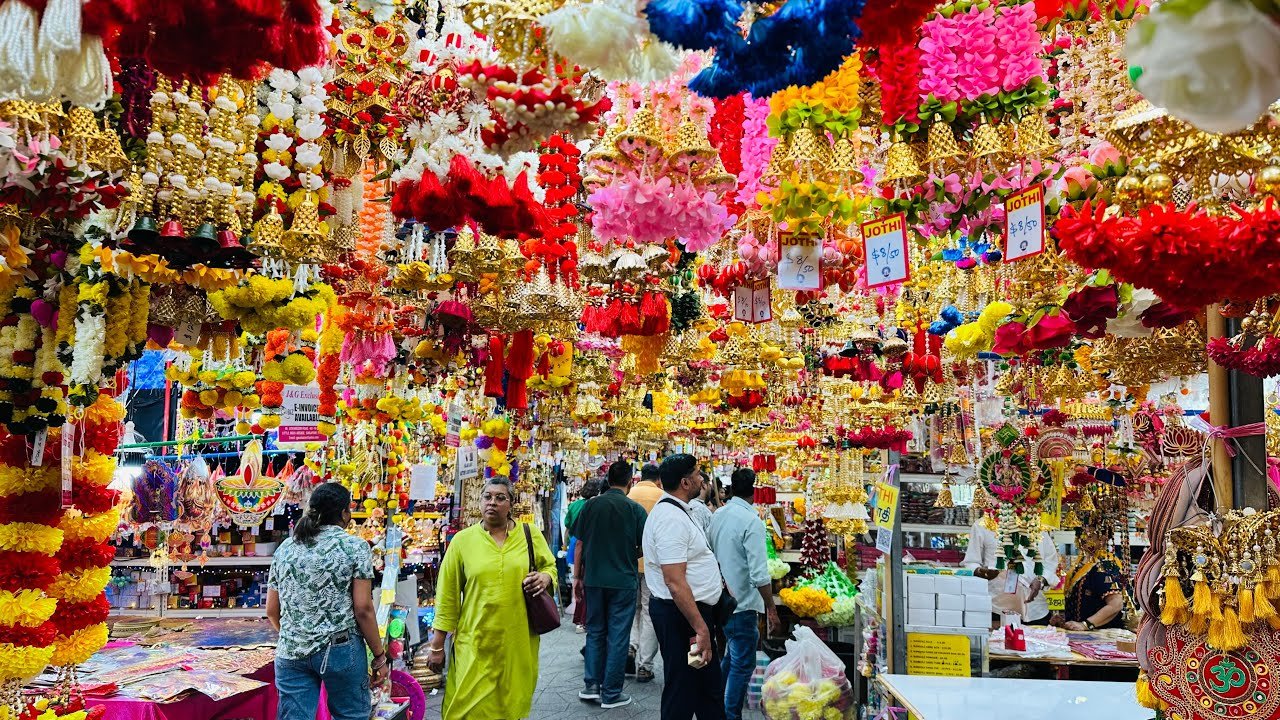
Homes, temples and streets across India glowed with fireworks and lamps on Sunday, November 8, 2026, as Hindus marked Diwali, the festival of lights and the most widely observed celebration on the Hindu calendar. The observance has once again extended well beyond India's borders, with diaspora communities from the Gulf states and Southeast Asia to Britain, the United States, Canada, Australia and the Caribbean staging their own festivities.
The celebrations, documented in photographs from India and its global diaspora, featured fireworks over residential streets, prayers at homes and places of worship, family reunions, elaborate rangoli designs laid out at doorways, communal feasting and the sharing of sweets and gifts between neighbours and relatives.
Diwali takes its name from the Sanskrit term deepavali, meaning a row of lights, and is fixed on the new-moon night of the Hindu month of Kartik, which this year placed the principal day of worship on November 8, 2026. The festival symbolises the victory of light over darkness and of knowledge over ignorance.
At the centre of the main night is Lakshmi, the goddess of wealth and prosperity, whose blessing is invoked in homes that have been cleaned and decorated for her arrival. The date also carries the memory, recorded in the Ramayana, of the return of Lord Ram to the city of Ayodhya after 14 years of exile, an event tradition holds was welcomed by citizens who lined the city's streets with rows of oil lamps.
The festival runs across five days in most traditions. It opens with Dhanteras, a day considered auspicious for purchasing gold, silver and household goods, and continues through Naraka Chaturdashi, the main night of Lakshmi worship, and Govardhan Puja, before closing with Bhai Dooj, a day honouring the bond between brothers and sisters, which falls on Tuesday, November 10, 2026.
Although rooted in Hindu tradition, the date is marked by other faith communities as well. Jains commemorate the attainment of nirvana by Lord Mahavira, while Sikhs observe Bandi Chhor Divas, which recalls the release of the sixth Sikh Guru, Guru Hargobind, from imprisonment in Gwalior in the 17th century. In India, Diwali is a national public holiday, with schools, government offices and financial markets shutting down for the day, and stock exchanges traditionally holding a symbolic muhurat trading session that is considered an auspicious start to the new financial year.
The festival's global reach is reflected in official calendars beyond India. Diwali, or its regional equivalent, is a public holiday in Singapore, Malaysia, Sri Lanka, Nepal, Fiji, Trinidad and Tobago and Guyana, all countries with substantial Indian-origin populations. In Britain, annual Diwali celebrations in London's Trafalgar Square and the illuminated Golden Mile in Leicester rank among the largest outside India. In the United States, New York City public schools close for Diwali, and a growing number of state governments have moved to formally recognise the festival.
Commercially, Diwali is one of the biggest shopping seasons of the year in India, driving surges in sales of gold jewellery, electronics, clothing, vehicles and confectionery, and prompting retailers to mount major promotional campaigns timed to the holiday. Businesses traditionally open new account books on the festival day, treating it as the start of a fresh cycle of trade.
The fireworks that light up the festival have also become a recurring point of contention in Indian cities, where the holiday coincides with the onset of winter smog and air-quality levels typically deteriorate in the days that follow. Authorities in several Indian states have in past years restricted the sale of firecrackers, promoted lower-emission alternatives and encouraged centralised community displays in place of individual fireworks.
The five-day observance concludes on Tuesday, November 10, 2026, with Bhai Dooj, when families mark the final day of the festival with rituals shared between siblings and a last round of festive meals.
Comments
No comments yet — be the first.