


Kenya’s US-Backed Mrima Hill Mining Deal Faces Fresh Legal Challenge

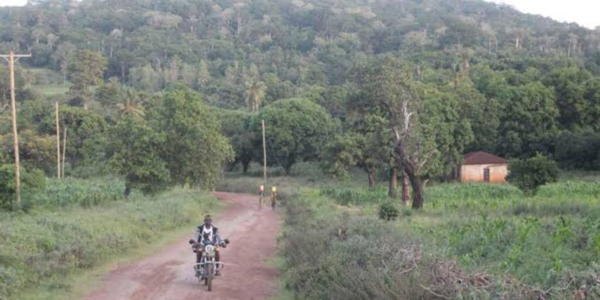
The Kenyan government's selection of a US-led consortium to develop the multibillion-dollar Mrima Hill mineral deposits in Kwale County faces immediate legal and procedural hurdles, including a formal procurement challenge from a rival bidder.
Australian mining firm RareX announced on Friday that it will file a complaint by December 10, 2026, contesting the award to Frontier Minerals. RareX, which bid alongside Iluka Resources and ranked second among three shortlisted contenders, alleges that Frontier Minerals missed the Ministry of Mining's deadline to submit its Expression of Interest.
In a statement, RareX argued that the American consortium was admitted to the tender process under "serious administrative irregularity" and is legally ineligible to receive the contract. The firm wants the tender awarded to its own consortium as the highest-scoring eligible bidder. Reuters also reported that a second rival company intends to challenge the decision, which saw Frontier Minerals beat seven competitors, including Chinese and Australian firms.
The procurement dispute adds to existing legal battles over the Lunga Lunga site. In June 2026, the Centre for Litigation Trust petitioned the court to halt the proposed Kenya-US mining arrangement, citing a lack of consultation with local communities, the Kwale County Government, and Parliament.
The lobby group also questioned whether mining can legally proceed at Mrima Hill, noting that the 390-acre forest is a gazetted National Monument protected under the Mining Act. The area contains a sacred Kaya forest revered by the Digo and other Mijikenda communities, who fear excavation will destroy indigenous vegetation and ancestral heritage sites.
Earlier assessments estimate the Mrima Hill deposits are worth between $60 billion (£45 billion) and $62.4 billion (Sh8.1 trillion). The site holds substantial reserves of niobium, used in specialized steel and alloys for jet engines and pipelines, alongside rare earth elements essential for electric vehicles, defense technology, and high-performance magnets.
Following the award announcement, Kenyans took to social media platform X to demand the public release of the contract terms and question the level of public participation. Users like Nic (@_Sinei1) and Nesh (@just_neshizzo) demanded that the government disclose the agreements, while Manuzwa (@Edibiq) and Vicktor Kiprotich (@vick_kiprotich) questioned whether citizens were ever consulted. Another user, SirAllingtone (@SirAllingtone), noted the limited history of American firms in Kenya's development sector.
Political skepticism has surrounded the tender for months. In June, President William Ruto disclosed on the sidelines of the G7 Summit in France that Kenya and the United States had reached a preliminary development agreement alongside a competitive tender. By September, critics—including former Deputy President Rigathi Gachagua—accused the administration of predetermining the outcome in favor of an American firm.
Speaking to Kenyans in Kansas City, Gachagua claimed President Ruto's trip to New York for the United Nations General Assembly was partly aimed at finalizing the deal. He alleged the arrangement would benefit individuals rather than ordinary citizens, claiming he had previously frustrated an attempt to push the deal through over public participation concerns.
Despite the mounting pushback, the Kenyan government maintains that the bidding process was open and transparent, framing the mining sector as a key pillar for diversifying the economy beyond tourism, agriculture, and financial services.
Washington has also welcomed the deal as part of broader US efforts to secure critical mineral supply chains in countries like Kenya, the Democratic Republic of Congo, and Zambia, reducing reliance on China. The US Bureau of African Affairs congratulated Frontier Minerals on X, stating the partnership would bring market-leading innovation, local value addition, and jobs.
Frontier Minerals brings together three US firms: Bunker Hill Mining Corp, American Resources Corporation, and ReElement Technologies Corporation. A central pillar of its bid is building mineral processing and refining capacity inside Kenya so the country retains more economic value.
Brad Barnett of Frontier Minerals sought to reassure skeptical residents, stating the consortium intends to create lasting opportunities for Kenyan workers and businesses while prioritizing environmental management. Even if the consortium survives the procurement complaints and court challenges, it must still secure a prospecting license and meet regulatory requirements before operations can begin.


Comments
No comments yet — be the first.