
U.S. Supreme Court to Rule on Trump's Birthright Citizenship Order: A Landmark Case That Could Redefine American Citizenship
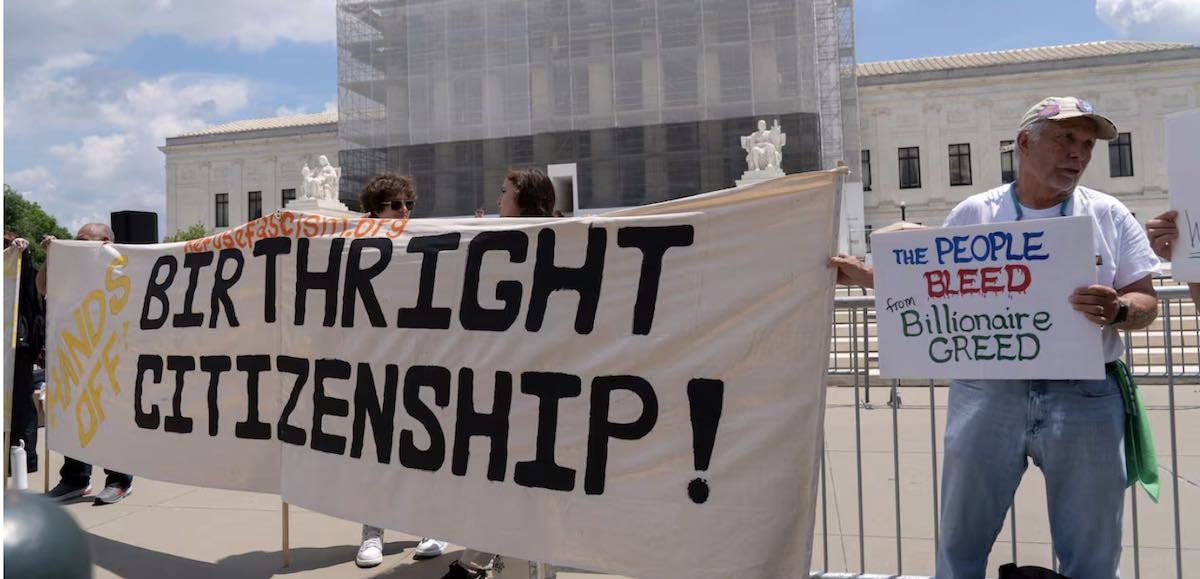
In a decision with potentially far-reaching consequences, the Supreme Court of the United States has agreed to decide whether the executive order signed by Donald J. Trump that attempts to end automatic birthright citizenship is constitutional.
🔹 What’s at Issue
On January 20, 2025, in the opening hours of his second term, President Trump signed Executive Order 14160, titled “Protecting the Meaning and Value of American Citizenship.” The order instructs U.S. federal agencies to stop recognizing as citizens children born on American soil if neither parent is a U.S. citizen or lawful permanent resident.
Historically, for more than a century, U.S. law — through the Citizenship Clause of the Fourteenth Amendment — has granted automatic citizenship to virtually anyone born in the United States, regardless of their parents’ immigration status. That interpretation has been repeatedly upheld — most notably in the landmark 1898 case United States v. Wong Kim Ark.
🔹 Legal Road So Far
Within days of the order, multiple lawsuits were filed by states, immigrant-rights organizations, and individuals — prompting federal judges across the country to issue injunctions blocking the policy.
In April 2025, the Supreme Court agreed to hear arguments — but only on a narrower question: whether lower courts had authority to issue nationwide (“universal”) injunctions blocking the policy. On June 27, the Court ruled that universal injunctions likely exceed the equitable power of district courts, limiting such sweeping bans.
That ruling, however, did not decide whether the birthright-citizenship order itself violated the Constitution. The door remained open for class-action lawsuits — and in July, a judge in New Hampshire granted such a nationwide class-action injunction.
🔹 Why the Supreme Court Took It Up
On December 5, 2025, the Supreme Court accepted the government’s appeal. Chief among the questions for the justices: Does the 14th Amendment’s Citizenship Clause permit the government to strip U.S. citizenship from children born on U.S. soil merely because their parents are non-citizens?
If the Court sides with the administration, it would amount to the most sweeping change in U.S. citizenship law in decades — undoing a centuries-old principle of birthright citizenship and potentially affecting hundreds of thousands of children born annually in the United States.
🔹 The Stakes: Citizenship, Identity, and Immigration Policy
Supporters of the order, including the administration, argue that the Citizenship Clause was meant to apply only to the children of U.S. citizens or lawful permanent residents — not visitors, temporary visa holders, or undocumented immigrants. They assert that automatic birthright citizenship incentivizes “birth tourism” and encourages unlawful immigration.
Opponents, including civil-rights groups like American Civil Liberties Union (ACLU), counter that the order violates established constitutional and statutory protections. “No president can change the 14th Amendment’s fundamental promise of citizenship,” declared ACLU national legal director Cecillia Wang, calling on the Supreme Court to “put the issue to rest once and for all.”
Legal analysts warn that a ruling against birthright citizenship could lead to a cascade of practical complications: children born in the United States who were previously considered citizens might struggle to obtain birth certificates, passports or other documentation; their legal status could be called into question, potentially affecting education, work permits, and access to social services.
🔹 What to Expect — And When
The Supreme Court hasn’t yet scheduled oral arguments. But observers anticipate that the case will move rapidly, with arguments likely next spring and a decision expected by summer 2026, just in time to close out the Court’s term.
For many immigrants, children of immigrant parents, civil-rights advocates, and millions of Americans born on U.S. soil, the outcome could be life-changing.
Comments
No comments yet — be the first.