


Uhuru's Planned Wamunyoro Visit Puts Gachagua's Mt Kenya Leadership to the Test

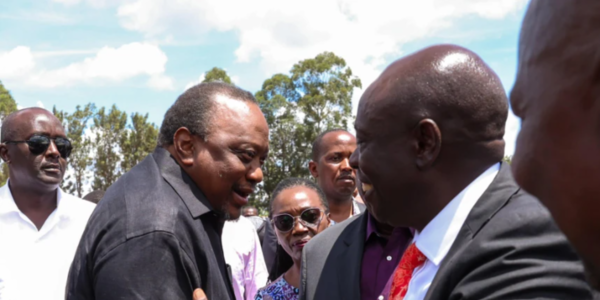
Former Deputy President Rigathi Gachagua faces a complex political balancing act as an anticipated reconciliation with former President Uhuru Kenyatta threatens to reshape opposition dynamics and challenge his ambitions for the 2027 general election.
Uhuru announced last Wednesday that he would visit Gachagua’s Wamunyoro home in Nyeri, joking that he intended to collect Sh1.5 million allegedly given for his 2017 reelection campaign but misspent. The announcement, made during the funeral service for Beatrice Muturi at Nairobi West Presbyterian Church of East Africa in Lang’ata, attended by political figures including Kalonzo Musyoka, Eugene Wamalwa, and Beth Mugo, set no specific date.
The planned visit marks the culmination of months of behind-the-scenes lobbying by the Kikuyu Council of Elders, led by chairperson Wachira Kiago, to mend fences and consolidate the Mt Kenya region following Gachagua’s impeachment in October 2024. Gachagua, who has designated his Nyeri residence as a political "shrine," used recent 56-day consultations prior to an August US tour to rally regional support and vow protection for Uhuru's legacy. During the service, Gachagua blamed President William Ruto for previously driving a wedge between him and Uhuru, declaring that he would never allow anyone to separate them again.
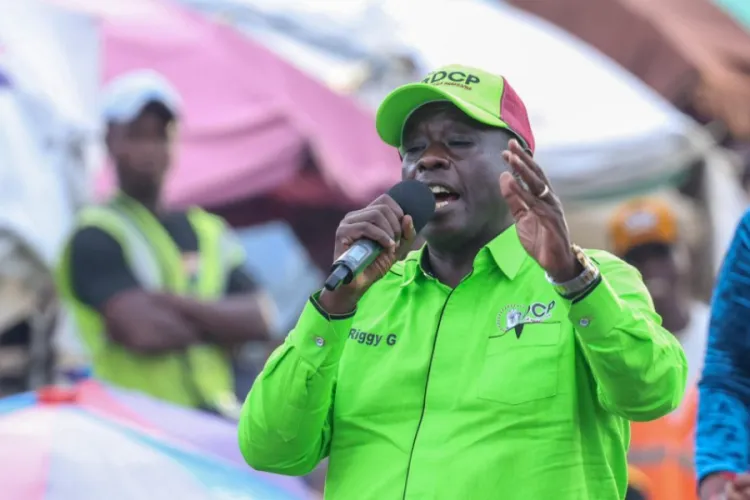
While regional elders have welcomed the development, political analysts warn that Uhuru's return to active regional politics complicates Gachagua’s strategy. Gachagua has been aggressively promoting his Democracy for Citizens Party (DCP), represented by figures like Nyandarua Senator John Methu, as the dominant political vehicle for Mt Kenya, akin to Kalonzo’s Wiper or ODM in Luo Nyanza. However, Uhuru remains a member of the Jubilee Party, which backs former Interior Cabinet Secretary Fred Matiang’i for the presidency.
Other regional heavyweights, including Martha Karua’s Peoples’ Liberation Party, Justin Muturi’s Democratic Party, Peter Munya’s Party of National Unity, and Ndindi Nyoro’s Peoples’ Party of Kenya, also maintain separate political interests. Political analyst Kipkorir Mutai noted that reconciliation with Uhuru will force Gachagua to moderate his push for DCP dominance and accommodate rival factions. US-based analyst Prof David Monda added that Uhuru’s presence as an opposition elder statesman risks relegating Gachagua to a secondary role in broader coalition negotiations.
Gachagua has continued pushing for a three-bloc electoral alliance uniting Mt Kenya, Ukambani, and Western Kenya alongside Kalonzo, Eugene Wamalwa, and Nairobi Senator Edwin Sifuna, drawing comparisons to the 2002 victory of Mwai Kibaki and Kijana Wamalwa. Yet, this regional mobilisation strategy has drawn sharp rebukes from critics who caution against ethnic balkanisation.
National Assembly Majority Leader Kimani Ichung’wah and Matiang’i both warned against majoritarian arrogance, arguing that the vote-rich region cannot secure the presidency independently and must build broader national coalitions based on ideas rather than numbers alone.
Internal regional resistance further complicates Gachagua’s leadership claims. Githunguri MP Gathoni Wamuchomba recently criticized his approach, urging him to convene inclusive regional forums rather than isolating critics. Furthermore, a TIFA Research and Consulting poll conducted between October 26 and November 5 revealed that 43 percent of respondents blamed Gachagua most frequently for opposition disagreements, placing him well ahead of President Ruto's administration at 15 percent, Sifuna at seven percent, Kalonzo at six percent, Matiang'i at four percent, and Uhuru at two percent.
Despite the poll numbers, Gachagua dismissed the findings as an attempt to derail his unification efforts. He maintained that he is the "glue" holding opposition leaders together and announced upcoming joint meetings with Kalonzo, Eugene Wamalwa, and Martha Karua to solidify a single presidential candidate for 2027.
Comments
No comments yet — be the first.