
Kenyan Woman Returns From America to Tell the Untold Story Behind Women's Migration
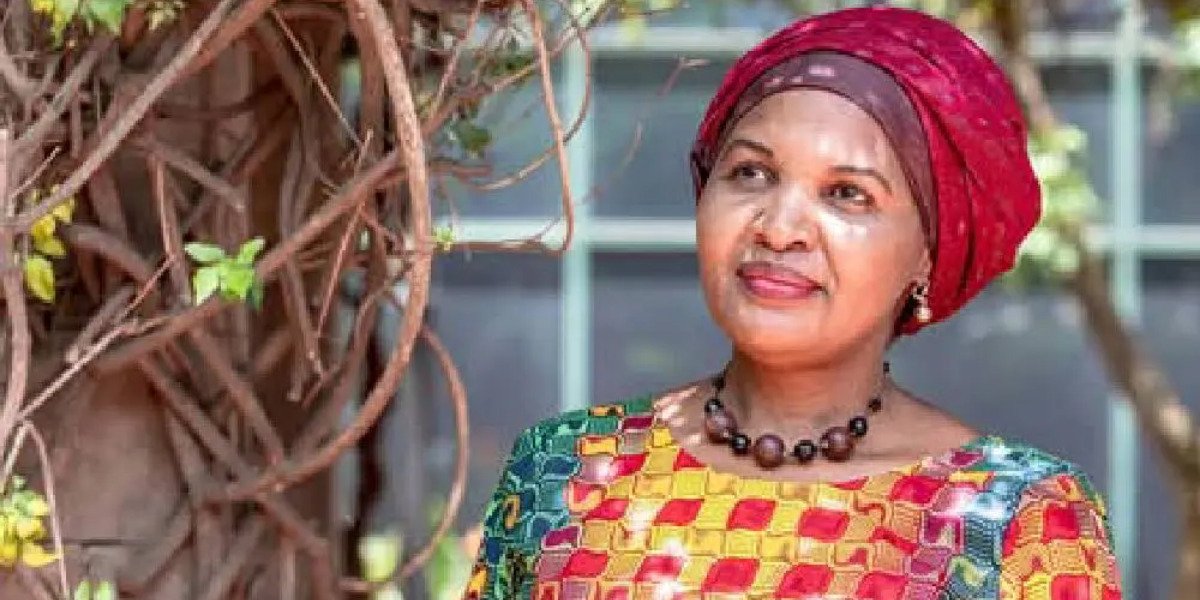
For some survivors of domestic violence, leaving their country is not a choice made for work or education but a necessary step to stay alive.
The experience of Kenyan advocate Esther Kisaghu illustrates how abuse within the home can become a reason for international migration. Public discussion about migration often focuses on employment, education and better living standards. While these remain important reasons for moving abroad, they do not explain every case.
Many people cross international borders because they face serious threats to their safety. Among them are survivors of domestic violence who leave their countries when protection at home is no longer possible.
Kisaghu, a Kenyan advocate and diaspora returnee who now leads the Rose Foundation in Nairobi, said her decision to move to the United States followed years of abuse during her marriage. She said the opportunity to study at the Boston University School of Public Health gave her a way to escape a situation that had become life-threatening.
"I was 26 years old when I married him. Like every young woman, I believed that mine was going to be a happy marriage. I was wrong. Very wrong," she said. The chance to continue her education became, in her words, "an opportunity to keep safe and begin rebuilding my life."
Her experience reflects a challenge facing immigration and asylum systems. Refugee and asylum laws have traditionally focused on people fleeing persecution based on political opinion, religion, ethnicity or actions by the state. Many legal systems have therefore struggled to recognise domestic violence as a basis for protection when the threat comes from a partner rather than the government or an organised group.
However, legal thinking has continued to develop as more policymakers recognise that a state's failure to protect people from severe domestic abuse can amount to persecution. Women make up most survivors who seek protection abroad, but specialists say domestic violence also affects men. Some male survivors leave their countries to escape abusive partners.
These cases are often not reported because of stigma and social expectations. As a result, support services and legal protections continue to focus mainly on women and children, while male survivors receive less attention. During her studies in the United States, Kisaghu said she came to understand domestic violence as a public health issue rather than only a private family matter or a criminal justice concern.
"It was a great revelation," she said. "It gave me a renewed sense of my purpose and passion. I could prevent what befell me from befalling others."
Viewing domestic violence through a public health approach highlights its wider impact. Abuse affects healthcare services, mental health, child welfare, workplace productivity, maternal health and community wellbeing. This approach also places greater emphasis on preventing violence before it occurs instead of responding only after harm has been done.
Outside her studies, Kisaghu worked with organisations supporting survivors across Massachusetts. She observed systems in which healthcare workers, counsellors, lawyers, social workers, police and shelters worked together to assist survivors. She also noted that prevention received less attention than responding to abuse after it had occurred.
"I noticed that outrage from the society comes after the abuse, when there are physical scars," she said. "I noticed that perpetrators are dealt with after the fact. There wasn't a lot being done to prevent it from happening."
After returning to Kenya, Kisaghu established the Rose Foundation to promote public education and violence prevention. The organisation works with schools, healthcare providers, faith leaders and government institutions to encourage greater awareness and challenge attitudes that keep abuse hidden.
"The onus is on us to educate the masses so that they see this is a societal problem, and no longer a private matter that just affects an individual and their family," Kisaghu said. "It's a community problem, and it affects all of us."
The foundation's work reflects wider international efforts to prevent violence and improve protection for survivors. Human rights organisations argue that weak protection in countries of origin leaves some survivors with few options other than leaving their country. They also warn that women who migrate for work may continue to face exploitation if labour recruitment and employment systems do not provide adequate safeguards.
Irungu Houghton, Executive Director of Amnesty International Kenya, said many women who travel abroad for work in search of safety and income instead face further abuse.
"These women travel in search of safety and work to support their families but instead endure unspeakable abuse... because of a failure to introduce deep, binding structural protections," he said.
Concerns have also been raised about support services within Kenya. Doris Kawira, a protection advocate and country director working on displacement issues, said limited funding for shelters and long-term support leaves many survivors without safe options.
"The funding cuts and the lack of comprehensive shelters in Kenya's domestic response are not just numbers on a spreadsheet," Kawira said. "They are felt more acutely by women and girls. We are seeing safe spaces close, pushing individuals into further vulnerabilities, exploitation, and abuse. When a woman has no option for safety at home, migration ceases to be a choice and instead becomes an absolute requirement for physical survival."
These concerns have led to calls for migration policies that recognise gender-based violence as a reason for international protection. Advocates argue that asylum systems should clearly recognise severe domestic violence as grounds for protection when governments fail to provide effective support. They have also proposed emergency humanitarian visa programmes that would allow diplomatic missions and consulates to issue temporary visas to people facing documented and immediate threats.


Comments
No comments yet — be the first.