

Nairobi’s Expansion Puts Kiambu Families Under Growing Land Pressure

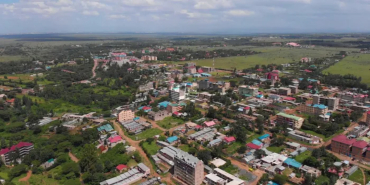
A new book by anthropologist Peter Lockwood examines how Nairobi’s rapid expansion into Kiambu County is reshaping smallholder communities, driving land sales and deepening tensions within families.
In Peasants to Paupers: Land, Class and Kinship in Central Kenya, Lockwood traces the changes taking place in communities on Nairobi’s expanding outskirts. His research began in late 2016, when he moved into a smallholding in Kiambu while preparing to study informal workers in Nyeri and learn Kikuyu through immersion.
He found a community undergoing rapid change as rising land values collided with shrinking family plots. Lockwood describes Kiambu as an important place for examining the inequalities and contradictions associated with Kenya’s development, given its transformation from a rural periphery into an urbanised area.
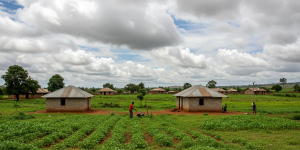
The book places these changes within Kenya’s history of land ownership. Land allocated to Kikuyu farmers in the 1950s averaged about two hectares per household. Inheritance and the division of family holdings have since reduced many plots to less than a hectare. At the same time, Nairobi’s expansion has pushed land prices sharply higher.
This has left families facing difficult choices over whether to retain ancestral land or sell it to developers. For some households, a sale can generate more money than a person could earn through decades of work.
Lockwood's fieldwork, conducted between 2017 and 2022, documents how attitudes towards land sales have changed. Some older men who had previously encouraged their families to preserve their land eventually became sellers themselves. Their decisions were influenced not only by financial pressures but also by a growing sense that retaining small plots offered limited prospects.
Lockwood argues that land sales are not always driven by careful economic calculations. For some working-age men, low-paid and irregular work in Nairobi’s informal economy offers little incentive to continue relying on land. Selling part or all of a family holding can provide immediate income and allow them to spend money in the present, despite the potential consequences for the family's long-term security.
The book also examines disputes over inheritance. In some families, brothers seek to prevent sisters from receiving a share of inherited land, creating further tensions over increasingly valuable and limited property.
Lockwood also follows the experience of a young man identified as “Mwaura”, whose circumstances illustrate the difficulties facing many young people in the area. Limited employment opportunities, underemployment and the loss of land-based security contributed to his growing frustration, alcohol use and disillusionment.
The patterns documented in Kiambu also relate to wider concerns among Kenya’s young population. The protests of 2024, which were driven in part by concerns over the cost of living and political dissatisfaction, reflected some of the economic frustrations Lockwood encountered during his research.
The book argues that stronger government intervention will be needed to address land inequality and youth unemployment and prevent further deterioration of social and economic conditions in peri-urban communities.
Lockwood also refers to the late anthropologist James Ferguson’s proposal for a universal basic income as one possible response to economic insecurity, while recognising the political challenges involved in implementing such a policy.



















Add new comment