
From ‘Hustler Nation’ to ‘Usawa ni Sawa’: Ruto’s Changing Political Message Ahead of 2027
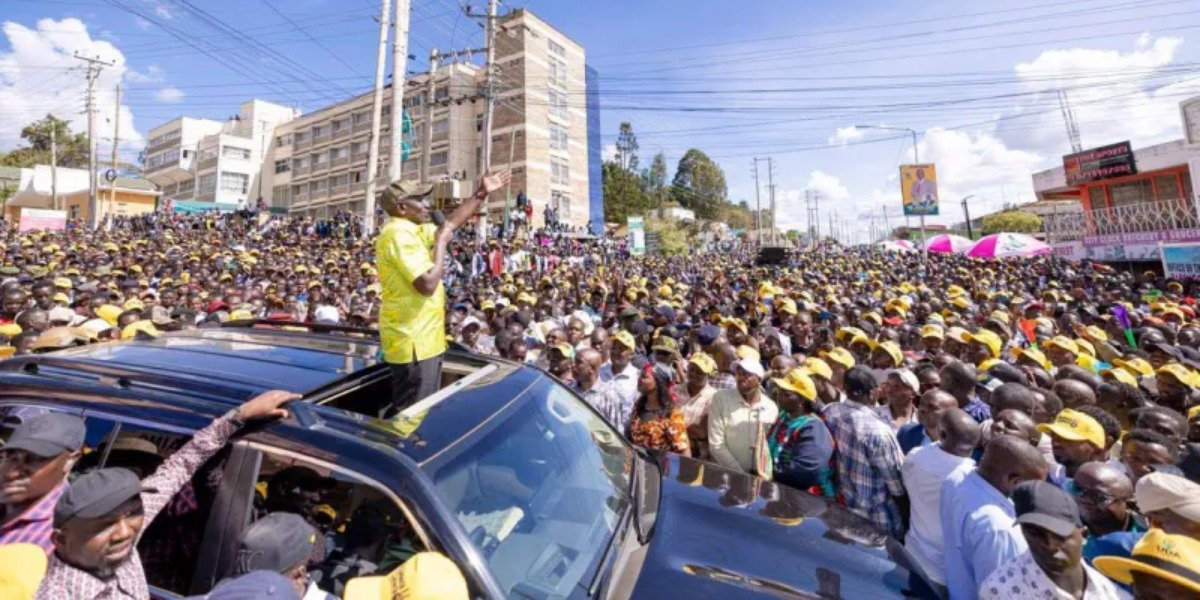
President William Ruto has adopted a new political slogan, “Usawa ni Sawa, Mbele Pamoja” (Equality is Fair, Forward Together), as he seeks to broaden his appeal ahead of the 2027 General Election.
The slogan marks a shift from the “Hustler Nation” message that helped him win the presidency in 2022. That campaign presented the election as a contest between ordinary citizens and powerful political families, with a focus on economic empowerment and opportunities for low-income households.
The new message places greater emphasis on equality, national unity and the fair distribution of development projects and economic opportunities. Ruto has repeatedly used it during public engagements, presenting his administration as committed to ensuring that all regions and communities benefit from government programmes.
The shift was particularly evident during a rally in Bondo, Siaya County, where the President called for an end to discrimination, tribal hostility and political exclusion. He said the country needed to move towards a system in which every region received a fair share of national development.
The change in messaging comes after Ruto formed a broad-based government following his rapprochement with the late former Prime Minister Raila Odinga. His recent speeches have placed greater emphasis on cooperation and inclusive governance, reflecting an effort to appeal to a wider range of voters.
Political commentator James Wambua says the change reflects the evolving political landscape and the need to build a campaign around economic and political fairness. However, he cautions that the slogan alone will not guarantee electoral success.
Its impact will depend on whether voters see evidence of the equality and inclusion it promises. Although “Usawa ni Sawa” presents a message of unity, it enters a political environment in which competing parties are also using memorable slogans to strengthen their public appeal.
Opposition supporters have popularised phrases such as “Wantam” and “Cousins”, adding to the competition over how the public understands the main political issues ahead of the 2027 election. As campaigns gather momentum, the ability to shape public opinion through clear messages is expected to play an important role alongside policy proposals and candidates’ records.
Political slogans have long been part of Kenya’s electoral history. Leaders have used short, memorable phrases to mobilise supporters, communicate their priorities and establish their political identities. Kenya’s first President, Jomo Kenyatta, promoted “Harambee”, which encouraged collective effort and community self-help. His successor, Daniel arap Moi, adopted “Nyayo” to present his leadership as a continuation of Kenyatta’s principles of peace, love and unity. The philosophy later became closely associated with the consolidation of state power.
The 2002 election also demonstrated the influence of political messaging. The National Rainbow Coalition (NARC) campaigned on the promise of change after KANU’s long period in power, helping Mwai Kibaki secure victory. Later, the Jubilee alliance between Uhuru Kenyatta and Ruto used messages centred on national sovereignty, development and political continuity. These included its response to the International Criminal Court cases during the 2013 campaign and the “Tano Tena” slogan in 2017.
Ruto’s 2022 campaign followed a similar approach. The “Hustler Nation” narrative presented him as a champion of ordinary Kenyans against established political families. The wheelbarrow became a symbol of economic empowerment, helping him build support across several regions, including Mt Kenya.
However, the challenges of governing have complicated that message. Public concerns about taxation and the rising cost of living have put pressure on the administration to demonstrate that its economic policies are improving people’s lives.



Comments
No comments yet — be the first.