


Class Action Lawsuit Challenges DHS Freeze on Refugee Green Cards
A class action lawsuit has been filed against the U.S. Department of Homeland Security over its freeze on green cards for refugees, a policy that has brought the adjustment of status process for refugees in the United States to a halt. Newsweek reported the litigation on October 27, 2026, describing the challenged measures as a freezing of the refugee green card system together with a companion termination rule.
The Department of Homeland Security, led by Secretary Kristi Noem from its Washington, D.C. headquarters, runs the refugee green card process through U.S. Citizenship and Immigration Services, the agency that receives and adjudicates adjustment of status applications. The lawsuit was brought in federal court as a class action, allowing a group of representative plaintiffs to press claims on behalf of all similarly situated refugees affected by the freeze.
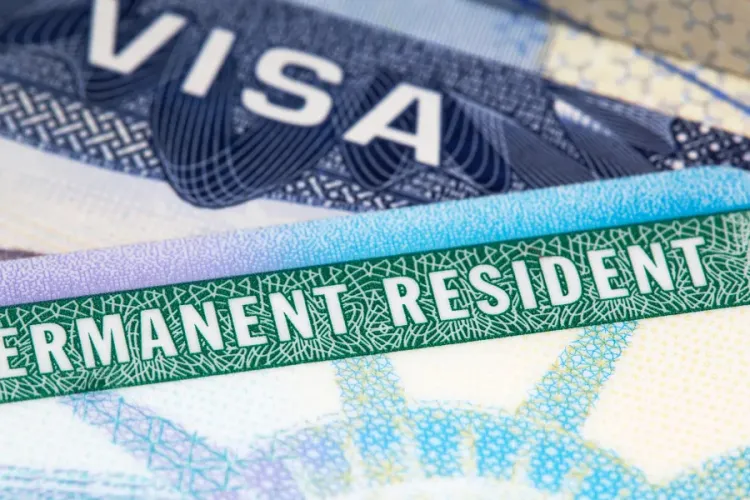
The legal dispute centers on Section 209 of the Immigration and Nationality Act, the provision under which a refugee admitted to the United States may apply for adjustment of status to lawful permanent resident after one year in the country. That pathway, built into the refugee framework created by the Refugee Act of 1980, has for decades functioned as a routine second step after resettlement, with newly admitted refugees filing for their green cards at the one-year mark and receiving them after review by U.S. Citizenship and Immigration Services.
The freeze stops that sequence at its start. With adjudication of refugee green card applications suspended, refugees who have completed their first year in the United States remain in refugee status indefinitely, and the normal file-to-decision pipeline of application, biometrics and interview has stalled across the caseload handled by U.S. Citizenship and Immigration Services.
The consequences compound over time. Lawful permanent residence is the prerequisite for naturalization, and federal law generally requires five years as a green card holder before an immigrant may apply for United States citizenship. Each month that a refugee's adjustment application sits unadjudicated delays the start of that five-year period, pushing the timeline to citizenship back by the same amount. Permanent residence also allows an immigrant to petition for certain family members, a step that remains unavailable while the green card process is frozen.
The termination rule named in the suit raises a separate and sharper set of stakes. Under U.S. immigration law, termination of status removes a noncitizen's lawful footing in the country and can expose the person to removal proceedings. A refugee whose status is terminated before adjusting to permanent residence would lose the protection that came with admission, and a frozen green card process extends exactly the period in which that vulnerability persists.
African refugees are among those directly affected. Refugees from Somalia, the Democratic Republic of the Congo, Eritrea and Sudan are identified among the nationalities caught by the freeze on adjustment of status. Those four countries have for years featured prominently in African admissions to the United States Refugee Admissions Program, and their communities in the United States include many people who entered as refugees expecting to become permanent residents in their second year in the country.
The freeze's reach also extends into East African households across the United States, where families often mix members who arrived through the refugee program with relatives who came through family-based or work-based channels. For those households, the lawsuit will determine when relatives admitted as refugees can finally move from provisional status to permanent residence and, eventually, citizenship.
The case is a distinct legal front from the litigation over the Trump administration's actions on employment-based green cards, which concern company-sponsored permanent residence for professional workers. The refugee suit instead targets a humanitarian pathway established by Congress, and its outcome will turn on the obligations that federal statute places on the Department of Homeland Security toward refugees already admitted to the United States.
As a class action, the case now enters the early stages of federal litigation. The government will have an opportunity to respond to the complaint, the court will decide whether the proposed class can be certified, and the plaintiffs will be able to seek orders blocking the freeze and the termination rule while the case proceeds. A ruling for the plaintiffs could require U.S. Citizenship and Immigration Services to resume adjudicating refugee green card applications nationwide, while a ruling for the department would leave both measures in place through further litigation and any appeals.


Comments
No comments yet — be the first.