


High Court Blocks Ruto’s 40% Housing Plan for Teachers and Police

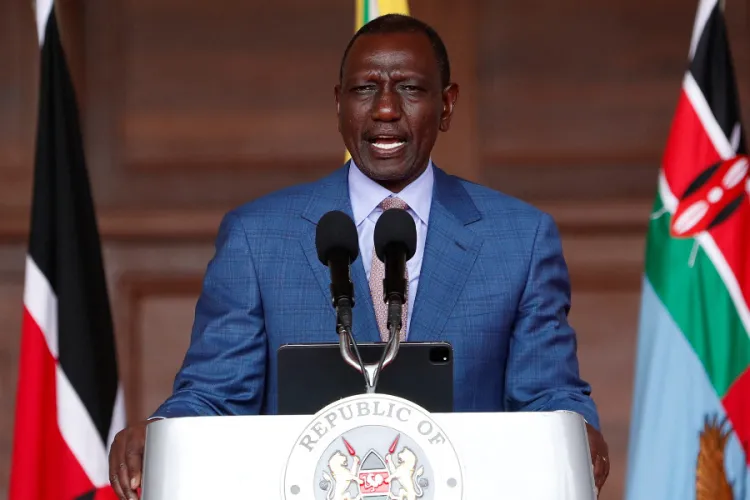
President William Ruto’s administration faces growing legal scrutiny over its governance decisions after two separate quasi-judicial and judicial bodies delivered critical rulings affecting key state policies and political realignments.
In a landmark decision delivered on Thursday, the High Court invalidated executive directives that sought to reserve 40 per cent of state-sponsored affordable housing units for specific occupational groups. Justice Patricia Nyaudi Mande ruled that presidential directives cannot alter statutory frameworks established by Parliament, declaring that the head of state lacks constitutional authority to introduce preferential allocation criteria outside the Affordable Housing Act.
The petition was brought by John Maina Ndegwa and Marshall Tito Ongoya against the State Law Office, the Kenya National Union of Teachers (KNUT) Nairobi Branch, and other respondents. The petitioners challenged directives issued on June 3 and September 13, 2025, which sought to allocate 20 per cent of housing units to teachers and another 20 per cent to police officers.
They argued that because the housing programme relies on public resources and contributions from all Kenyans, reserving units for specific groups without statutory backing or public participation violated constitutional principles of equality and non-discrimination.
Government lawyers defended the directives, arguing under Article 132(3)(b) that the President was coordinating government functions and that the case was premature since no final allocations had taken place.
However, Justice Mande rejected these arguments, emphasizing that executive authority cannot override legislation enacted by Parliament pursuant to the Constitution. She affirmed that the court retains jurisdiction to intervene when constitutional principles are threatened, ruling that the presidential declarations carried no legal effect.
Simultaneously, political realignments ahead of the 2027 general elections received a major boost after the Political Parties Disputes Tribunal (PPDT) lifted a suspension that had halted the registration of The Ukombozi Alliance (TUA). The opposition coalition, led by Wiper party leader Kalonzo Musyoka, is positioning itself to replace the Azimio One Kenya Coalition following leadership transitions from former President Uhuru Kenyatta.
The PPDT had previously issued orders on October 13, 2026, stopping the Registrar of Political Parties from registering or gazetting the name. The halt followed challenges from rival political factions, including claims involving the Ukombozi Peoples Party and competing reservations by Linda Mwananchi, led by Edwin Sifuna under The Equitable Party (TEP).
Sifuna’s camp maintained they had initiated plans to rename the United Democratic Party (UDP) to Ukombozi as early as March 2025.
Following the tribunal's decision on Thursday, October 29, 2026, to discharge the stay orders, the Registrar of Political Parties is now free to complete the registration process.
Kalonzo confirmed the decision, saying that the opposition framework is clear to proceed with incorporating additional political parties as the country approaches the next electoral cycle.





Comments
No comments yet — be the first.