


Bodies of Five Killed in Mandera Flown to Nairobi as Fresh Attack Is Foiled in Garissa

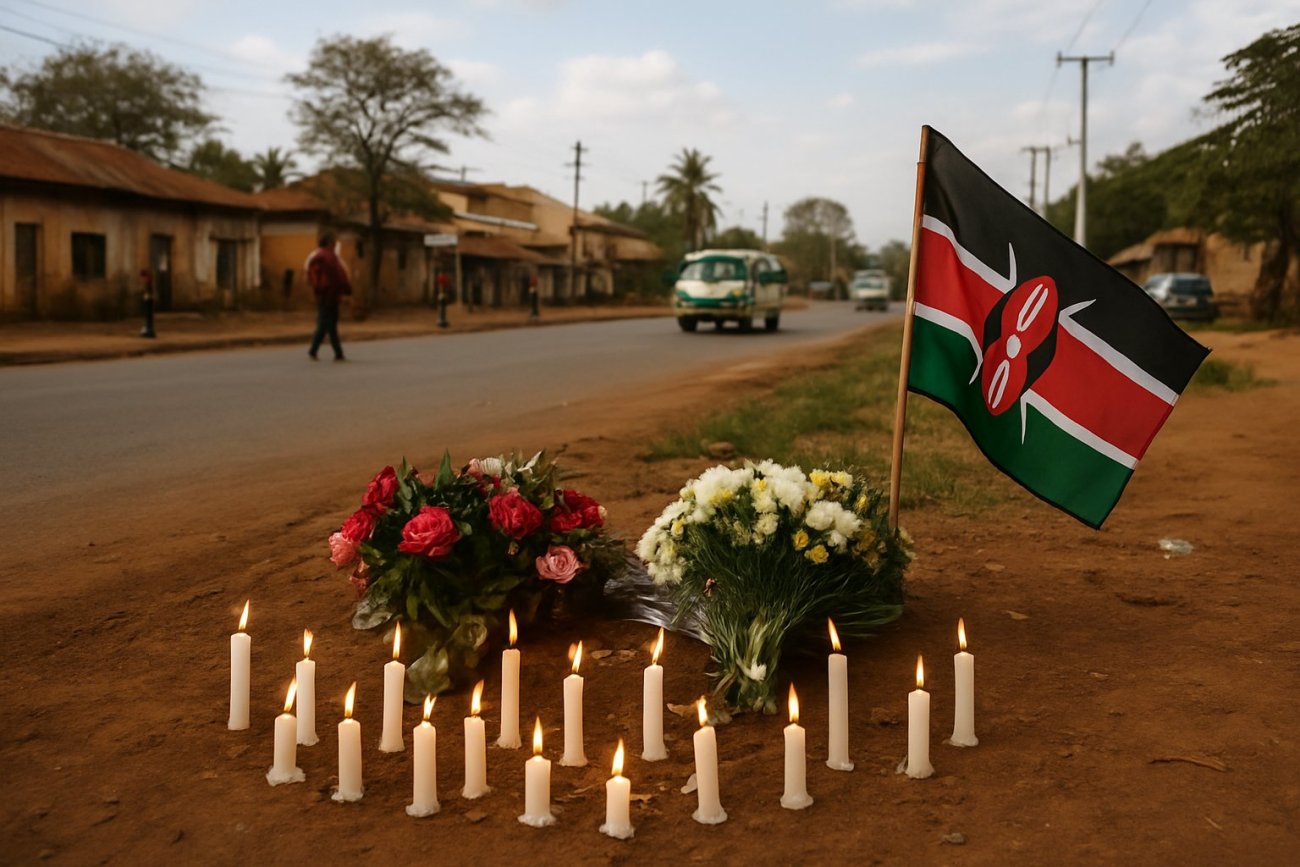
The bodies of five people killed in Mandera have been flown to Nairobi as another attack was foiled in neighbouring Garissa County. The deaths are the latest in a series of terror attacks that have struck Kenya's northeastern region along the border with Somalia.
Mandera County occupies the far northeastern corner of Kenya, at the point where the country's frontiers with Somalia and Ethiopia meet. Mandera town, the county's administrative headquarters, lies hundreds of kilometres from Nairobi, and the road route between the two runs south through Wajir and Garissa counties. The bodies of the five victims were transported to the capital by air.
Garissa County, where the second attack was foiled, lies to the south of Mandera and also borders Somalia. Garissa town sits on the Tana River along the main highway linking Nairobi to the border crossing at Liboi, the principal gateway between Kenya and Somalia. The county is home to a large ethnic Somali population, and cross-border trade in livestock and goods has long sustained its economy.
Both counties fall within a belt of Kenyan territory that has suffered repeated attacks since Kenya sent troops into Somalia in October 2011. The military intervention followed a spate of kidnappings of foreign tourists and aid workers on Kenyan soil, including from the Dadaab refugee camp in Garissa County.
Al-Shabaab, the Somalia-based militant group aligned with al-Qaeda, has claimed responsibility for most of the major attacks carried out on Kenyan territory since then. The group says the attacks are retaliation for the presence of Kenyan troops in Somalia, where the Kenya Defence Forces first crossed the border under Operation Linda Nchi and were later integrated into African Union missions supporting the Somali federal government.
Mandera County has repeatedly been among the worst-affected areas. In November 2014, gunmen stopped a bus travelling from Mandera to Nairobi and killed 28 passengers, most of them teachers heading away for the holidays. Days later, attackers raided a quarry at Korome, outside Mandera town, and killed 36 workers as they slept. Al-Shabaab claimed both attacks.
Garissa County carries its own scars from the same insurgency. In April 2015, gunmen stormed Garissa University College in the early morning and killed 148 people, most of them students, in what remains the deadliest attack in Kenya since the bombing of the United States embassy in Nairobi in 1998. Four attackers were also killed when security forces moved in.
The capital has not been spared. Al-Shabaab gunmen attacked the Westgate shopping mall in Nairobi in September 2013, killing at least 67 people during a four-day siege, and struck the DusitD2 hotel and office complex in January 2019 in an assault that left 21 people dead.
Across the northeastern counties, attackers have frequently targeted police officers, soldiers, teachers, health workers and other public servants, particularly those posted to the region from other parts of Kenya. Militants have also planted improvised explosive devices on roads used by security patrols, and such bombings have become a recurring feature of insecurity in Mandera, Wajir, Garissa and Lamu counties. During previous surges in violence, the government has withdrawn non-local teachers and civil servants from parts of the northeast.
Kenya has responded with multi-agency security operations in the northeast, the deployment of additional police and military units to border areas, and airstrikes against al-Shabaab positions inside Somalia. The frontier between the two countries runs for hundreds of kilometres through arid, sparsely populated land, and controlling movement across it has remained a persistent challenge. Work began on a concrete barrier near Liboi after the Garissa university attack, but the project was never completed.
Kenyan forces remain deployed in Somalia under the African Union Support and Stabilization Mission in Somalia, which took over from the African Union Transition Mission in Somalia at the start of 2025, and operations against the militants continue on both sides of the border.


Comments
No comments yet — be the first.