

Kenyan Youth Showcase Culture and Opportunities at Global Festival in Russia
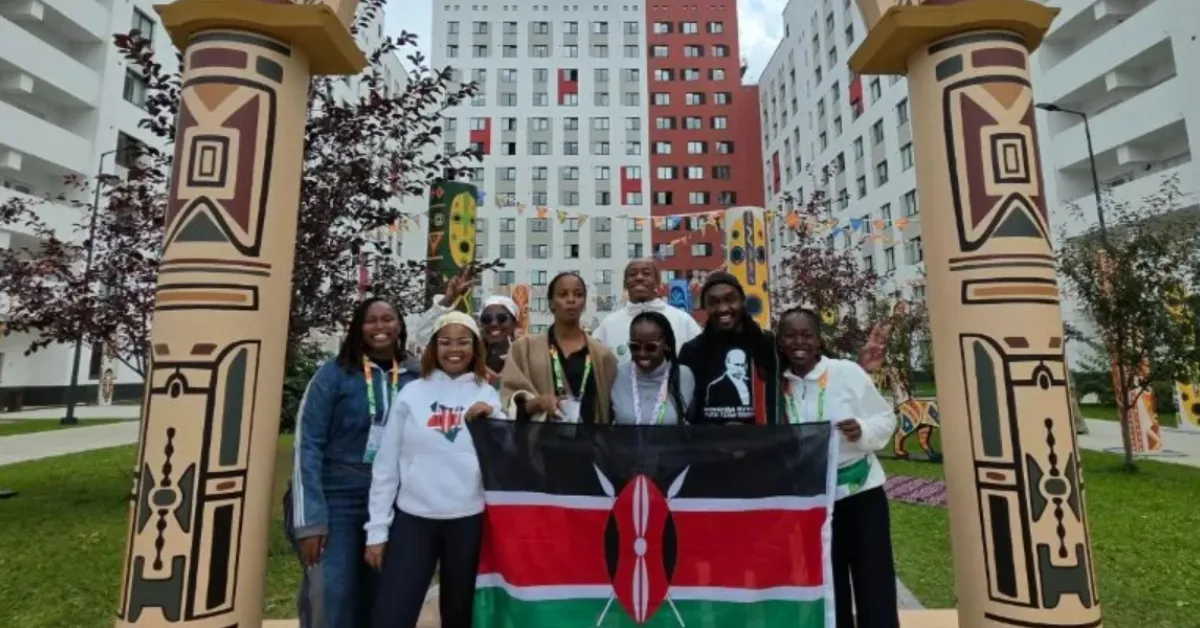
A 30-member Kenyan youth delegation has used an international festival in Ekaterinburg to build cultural, professional and personal links with young people from around the world.
The International Festival of Youth 2026, held from 11 to 17 September, brought together 10,000 young people from 191 countries. Half of the participants were from Russia, while the rest travelled from abroad. The programme brought together young people working in fields including science, education, entrepreneurship, sport, technology, media, culture and civic engagement. For the Kenyan delegation, the festival offered an opportunity to combine cultural exchange with professional networking and what its leadership describes as people-to-people diplomacy.
Richard Wambua, a Kenyan diplomat who heads the country's youth delegation, said international youth gatherings can help establish relationships that may be harder to develop through formal diplomatic channels.
“What such a platform like this one, this festival offers to our youth is a great melting point not only for cultures, but it is also a watershed moment where they can come and learn about new opportunities,” Wambua said.
“They can share their experiences with their fellow youth. They can even exchange contacts that can translate into different partnerships and ideas down the line.”
Personal interaction is a central part of the festival. At the World Cultures District at Ural Federal University, participants encounter traditions from Africa, Asia, Europe, the Americas and the Middle East through performances, games, music, crafts and other activities. The programme encourages participants to take part rather than simply observe. Young people dance together, learn traditional games and share experiences from their countries. These interactions provide a less formal setting for cultural exchange and international engagement.
For Kenya, the festival also provides an opportunity for participants to present their country to international audiences. Wambua said the Kenyan participants have a responsibility to represent Kenya while engaging with their peers.
“They are not just here on a tour and they are not just here as any other youth,” he said. “They are ambassadors of Kenya. They are leading change. They are leading agents of people-to-people diplomacy and cooperation.”
The diversity of the gathering has created opportunities for participants from different generations and professional backgrounds to meet. The programme includes 1,000 teenagers aged between 14 and 17, alongside thousands of older participants.
Students, entrepreneurs, artists, researchers and other young professionals can therefore meet people working in fields different from their own. Conversations that begin with cultural exchange can develop into discussions about business, technology, education and creative work. For the Kenyan participants, these informal contacts could lead to collaborations, visits or commercial relationships after the festival.
Language has not necessarily prevented participants from forming connections. Mahmed El-Masri, from Egypt, said he had met young people from Algeria, Argentina and Belarus. They danced, played drums and sang together despite not sharing the same first language. The Kenyan delegation's experience has also extended beyond the main festival venues. Organisers have arranged more than 70 excursions around Ekaterinburg, Sysert and Verkhnyaya Pyshma, introducing participants to the cultural, natural and industrial heritage of the Sverdlovsk Region.
The excursions include visits to Ural Federal University and the Church on the Blood. Trips to Sysert have focused on the area's natural environment and its links to writer Pavel Bazhov. In Verkhnyaya Pyshma, participants have visited industrial and museum sites. Other members of the Kenyan delegation have travelled further afield. Christine Ngatia took part in a regional programme covering the Karachay-Cherkess Republic and the Republic of Adygea, where she encountered communities with different ethnic traditions and distinctive landscapes.
“In those regions I've learned about culture and diversity. They have five ethnicities in Karachay-Cherkess Republic and it was fascinating how regardless of their diversity they still find a way to live together. And it's a small community and it was nice to share a lot with them,” Ngatia said.
She also described the mountainous landscapes and cultural traditions of Adygea, including its dances, clothing and equestrian traditions, as memorable parts of the trip. For the organisers, the excursions are intended to connect international visitors with local communities and provide direct exposure to different parts of Russia.
Olesya Brykova, general director of More Than Trip ANO, said the programme aims to connect international participants with local communities through direct interaction. The programme also introduces visitors to significant periods in Russian history. One of the attractions is the Victory Train, a moving exhibition consisting of ten themed carriages. It uses augmented reality to present the history of the Great Patriotic War from 1941 to 1945.
For international participants, visits to historical and cultural sites provide another way of learning about Russia and the country's regional, cultural and historical identity. The exchange also gives Kenyan participants an opportunity to introduce their own country to international audiences. Wambua encouraged the Kenyan delegation to use digital platforms to share their experiences and present a broader picture of Kenya.
“By you posting and talking about your stories, then shall you be paving the way for more and more youth relations,” he said.
Such outreach can introduce Kenyan culture, entrepreneurship, education and creative industries to audiences with limited direct experience of the country. Relationships formed during the festival could also encourage participants from other countries to visit Kenya and explore opportunities there.
The festival follows the World Youth Festival held in Sirius in 2024, which attracted 20,000 young leaders from 190 countries. It is linked to Russia's national Youth and Children project and is being held under the theme “Follow Your Dream”.
For the Kenyan delegation, the longer-term significance of the 2026 festival will depend on what happens after participants return home. International festivals can create a concentrated period of interaction, but their longer-term value depends on whether initial introductions develop into lasting relationships.
Contacts made during a cultural performance could develop into business partnerships, while conversations between students could lead to academic exchanges. Friendships formed during excursions could also result in future visits to Kenya. Wambua said the delegation hopes these relationships will continue beyond the festival.
“We are looking forward to seeing more and more international participants who have ended up meeting our youth here, visiting our country and also seeing what opportunities they can benefit from in the Kenyan Republic.”




















Add new comment