


US Green Card Backlog Hits 1.5 Million, New State-by-State Map Shows
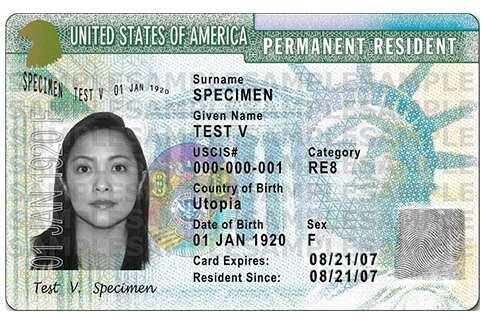
The United States green card backlog has climbed to 1.5 million applications, according to a Newsweek analysis published this week that breaks the queue down state by state, giving Kenyan applicants in employment-based and family-based lines the sharpest picture yet of where the country's pending cases are stacked.
The state-level detail is more than a curiosity. An applicant's state of residence determines which U.S. Citizenship and Immigration Services field office will handle the final adjustment-of-status interview, and caseloads vary from office to office. For Kenyan communities concentrated in states such as Texas, California, New Jersey, Minnesota and Maryland, the map works as a planning tool, one worth consulting before a family commits to a move, a job offer or a filing address.
The 1.5 million cases span the two main green card channels. Employment-based categories run from EB-1 for priority workers through EB-2 for advanced-degree professionals to EB-3 for skilled and professional workers, while the family side includes the F2A line for spouses and minor children of permanent residents, the F2B line for their adult sons and daughters, and the F3 and F4 lines for married children and siblings of U.S. citizens. Immediate relatives of citizens, meaning spouses, parents and unmarried children under 21, fall outside the numerical caps altogether.
The arithmetic behind the backlog is written into federal law. The Immigration and Nationality Act caps employment-based green cards at 140,000 a year and sets a floor of 226,000 a year for family-sponsored preference visas, while Section 202 of the same statute bars any single country from taking more than 7 percent of the visas available in either system. When demand outruns those numbers, which it does routinely in a country that issues roughly one million green cards a year according to Department of Homeland Security figures, queues form and the State Department's monthly Visa Bulletin sets cutoff dates that applicants must reach before a visa number is freed up.
Applicants inside the United States wait on two tracks at once. A Form I-485 application for adjustment of status sits in the USCIS adjudication queue, and a priority date must also become current under the Visa Bulletin before the application can be approved. Applicants overseas travel a parallel route through the National Visa Center and consular processing at a U.S. embassy or consulate. The Newsweek tally captures the combined weight of pending cases, plotted by the applicant's state of residence.
Geography shapes the final stretch of the process. The I-485 interview is scheduled at the USCIS field office with jurisdiction over the applicant's home address, and the processing times the agency publishes online differ from office to office. Federal rules also require applicants to report any change of address within 10 days on Form AR-11, a step that keeps a case from being routed to the wrong office or shelved over a missed notice.
For Kenyan applicants, the numbers cut differently across the two systems. The longest waits in the employment-based lines fall on applicants born in India and China, whose demand overwhelms the 7 percent per-country ceiling, while Kenya-born applicants generally face shorter waits for a visa number but remain subject to the same 140,000 annual cap and the same agency adjudication queue. Kenyan nurses and physical therapists often move faster on part of the road through Schedule A, a Department of Labor designation that exempts them from the PERM labor certification process, though the exemption does not shorten the visa-number line itself.
On the family side, Kenyan citizens and permanent residents who have petitioned for relatives track the F2A, F2B, F3 and F4 cutoff dates each month, and the sibling line in F4 has long carried waits measured in well over a decade. The backlog has persisted across administrations because its root cause is statutory, meaning the annual caps and per-country limits Congress wrote into law cannot simply be waived away by any agency.
Applicants can locate themselves in the queue by comparing their priority date with the final action dates in the monthly Visa Bulletin and by checking the posted processing time for the USCIS field office serving their zip code. The state map adds one more layer of information, a count of how many fellow applicants are standing in line in the state an applicant calls home, and the national figure it points to now stands at 1.5 million.




Comments
No comments yet — be the first.