
20 US Flights Land in Kenya as Ebola Facility Construction Continues Despite Court Orders
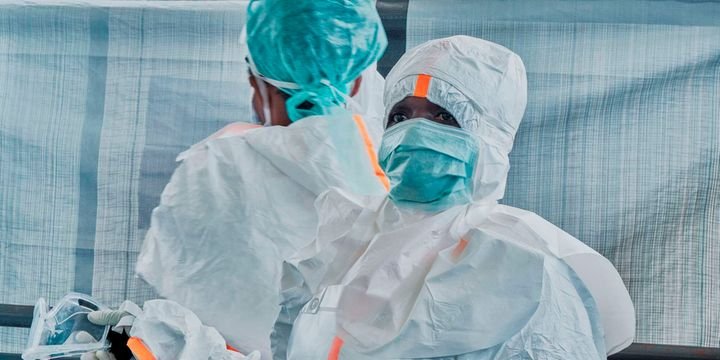
The United States has continued building an Ebola quarantine facility at a Kenyan air force base despite court orders suspending the project, with nearly 20 US military flights delivering personnel and equipment to the site in recent weeks.
The facility, located at Nanyuki, has become the focus of legal disputes, public protests and growing political pressure on President William Ruto’s government. Flight-tracking data shows that aircraft carrying American medical staff, engineers, laboratory specialists and construction crews continued to arrive after a Kenyan court first ordered construction to stop on 28 May.
Although no patients have been transported to the site, sources familiar with the project say the facility is close to completion and could be operational within days.
The 50-bed unit is intended to accommodate US citizens who may have been exposed to Ebola in neighbouring Democratic Republic of Congo and Uganda.
According to the US State Department, individuals considered at risk but not showing symptoms would spend a 21-day quarantine period in Kenya. Those who develop symptoms would be transferred elsewhere for treatment, although US officials have not disclosed where.
Kenyan authorities say the facility will also be available to Kenyan citizens, while US officials have stated that American nationals will receive priority access. The project has faced strong opposition in Nanyuki, where protests have resulted in at least two deaths.
Critics argue that the United States is transferring responsibility for quarantining its citizens to Kenya, while others question the safety of locating such a facility within the country. A diplomatic cable sent from Nairobi to Washington in early June stated that President Ruto may have underestimated public opposition.
The document noted that concerns about the facility coincide with broader public dissatisfaction over rising fuel costs and lingering anger from anti-government protests in 2024. President Ruto has defended the decision, describing the facility as part of Kenya’s wider public health preparedness strategy and an extension of long-standing cooperation with the United States.
Speaking to reporters earlier this week, he said the government understood its responsibilities and was acting accordingly. Washington has committed $13.5 million to support Kenya’s Ebola preparedness efforts, but criticism has increased as construction has continued despite court injunctions.
Kenyan courts have repeatedly ordered construction to stop. The most recent ruling extended the suspension for three weeks and required the government to disclose its agreement with Washington. However, sources involved in the project say work has continued.
According to those sources, US officials resumed flights after receiving assurances from Kenyan authorities that preparations could proceed. The US Embassy in Nairobi has said it is aware of the legal proceedings and is working with the Kenyan government to address concerns.
The continuation of construction despite judicial rulings has raised questions about the relationship between Kenya’s executive and judicial branches, as well as the extent of US influence in the region. For many Kenyans, the dispute has become linked to wider concerns about national sovereignty, government transparency and public accountability.
The debate has also attracted attention in the United States. Some public health experts argue that the quarantine arrangement could discourage American medical personnel from volunteering in Ebola-affected regions, potentially weakening international disease-control efforts.




Comments
No comments yet — be the first.