

Gachagua Proposes 'Hyena Coalition' as DCP Prioritises Party Growth
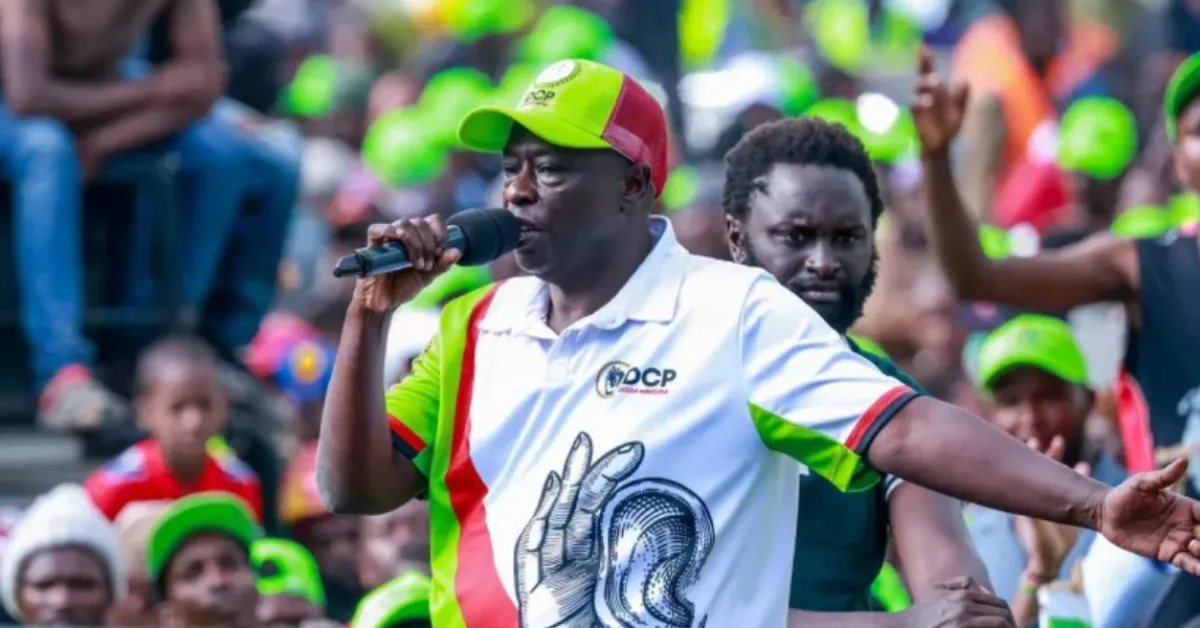
Democracy for Citizens Party (DCP) leader Rigathi Gachagua has proposed forming a coalition of political parties supporting the Mt Kenya region's "one-term" campaign while maintaining that individual parties should strengthen themselves before entering broader opposition alliance talks.
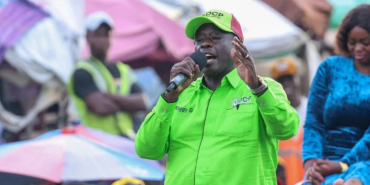
Speaking during a political engagement on Thursday, Gachagua said he would ask Democratic Party leader Justin Muturi to convene leaders of political parties from the Mt Kenya region to establish a coalition focused on denying President William Ruto a second term. He said more than a dozen parties had already expressed interest in the initiative, describing it as a step towards coordinating the region's political efforts ahead of the 2027 General Election.
Gachagua proposed naming the alliance the "Hyena Coalition", adopting a label previously used by political opponents to criticise the opposition. Speaking partly in Kiswahili, he said supporters should embrace the name instead of rejecting it, arguing that it could represent unity among parties working towards a common political goal.
He said the proposed coalition would not involve merging political parties. Instead, each party would retain its legal identity, leadership and political agenda while working together within a common framework. Gachagua argued that preserving separate parties would strengthen election preparations by increasing the number of agents available to monitor polling stations and protect votes.
According to Gachagua, coalition members should eventually agree on a single presidential candidate but remain free to field candidates for parliamentary, gubernatorial and county positions. He said limiting competition beyond the presidential race would weaken individual parties and reduce their ability to build political support.
The proposal comes as opposition leaders continue discussing how to organise ahead of the next General Election. However, Gachagua said DCP's immediate priority remains expanding its grassroots support rather than negotiating alliances.
Speaking at his Wamunyoro home earlier this week, he argued that parties could only negotiate effectively after demonstrating significant electoral strength. He said political mobilisation must come before coalition negotiations, adding that parties with limited support would have little influence during talks.
Gachagua maintained that every opposition party should first build a strong voter base before entering alliance discussions because electoral success depends on demonstrating substantial public support. Recent weeks have seen increased speculation about DCP joining a broader opposition alliance, including reports linking former President Uhuru Kenyatta to efforts to revive cooperation under the Azimio coalition.
Gachagua has not ruled out future partnerships but has continued to insist that coalition negotiations should only begin after parties have established their own political strength. His position has been echoed by DCP Secretary General-designate John Methu, who recently said every political party should compete for public support instead of expecting DCP to strengthen rival organisations.
He said the only issue requiring collective agreement is the selection of a joint presidential candidate and argued that parties should first build their own political influence before entering coalition talks. Methu also rejected claims that DCP intends to dominate politics in the Mt Kenya region. He referred to previous by-elections in which, he said, DCP supported candidates from allied parties despite criticism from political rivals.
At the same time, he defended DCP's continued focus on recruitment and grassroots mobilisation, saying the party could not serve as the political machinery for the wider opposition. The discussion has also highlighted differences over when the opposition should choose its presidential candidate.
Wiper leader Kalonzo Musyoka has supported selecting a candidate well before the election, while Gachagua believes an early announcement would expose the nominee to prolonged political pressure from the State. Instead, he has proposed choosing the candidate only a few months before polling day, drawing comparisons with the opposition's approach before the 2002 General Election. DAP-K leader Eugene Wamalwa has supported that position.
Other opposition leaders have taken different views. Democratic Party leader Justin Muturi has argued that the coalition should decide its presidential candidate much earlier, saying the current political environment differs significantly from that of 2002 because there is no widely accepted frontrunner.
Meanwhile, Jubilee figures, including Fred Matiang'i, have proposed using scientific opinion polls to identify the coalition's candidate. Martha Karua and Wamalwa have expressed varying levels of support for that proposal, while Musyoka has favoured negotiations aimed at reaching a consensus.
Differences have also emerged over DCP's relationship with other political parties in the Mt Kenya region. Gachagua recently rejected claims that DCP intends to absorb or eliminate rival parties after criticism from leaders including Justin Muturi, Peter Munya of the Party of National Unity and Democratic Empowerment Party leader Lenny Kivuti.
They argued that political parties are independent organisations governed by their constitutions and the Political Parties Act, meaning any merger or dissolution must follow established legal procedures. Meanwhile, Murang'a Governor Irungu Kang'ata defended his decision to join DCP, saying remaining in the United Democratic Alliance would have placed many of his supporters in a difficult position because of what he described as growing local support for Gachagua's party.

















Add new comment